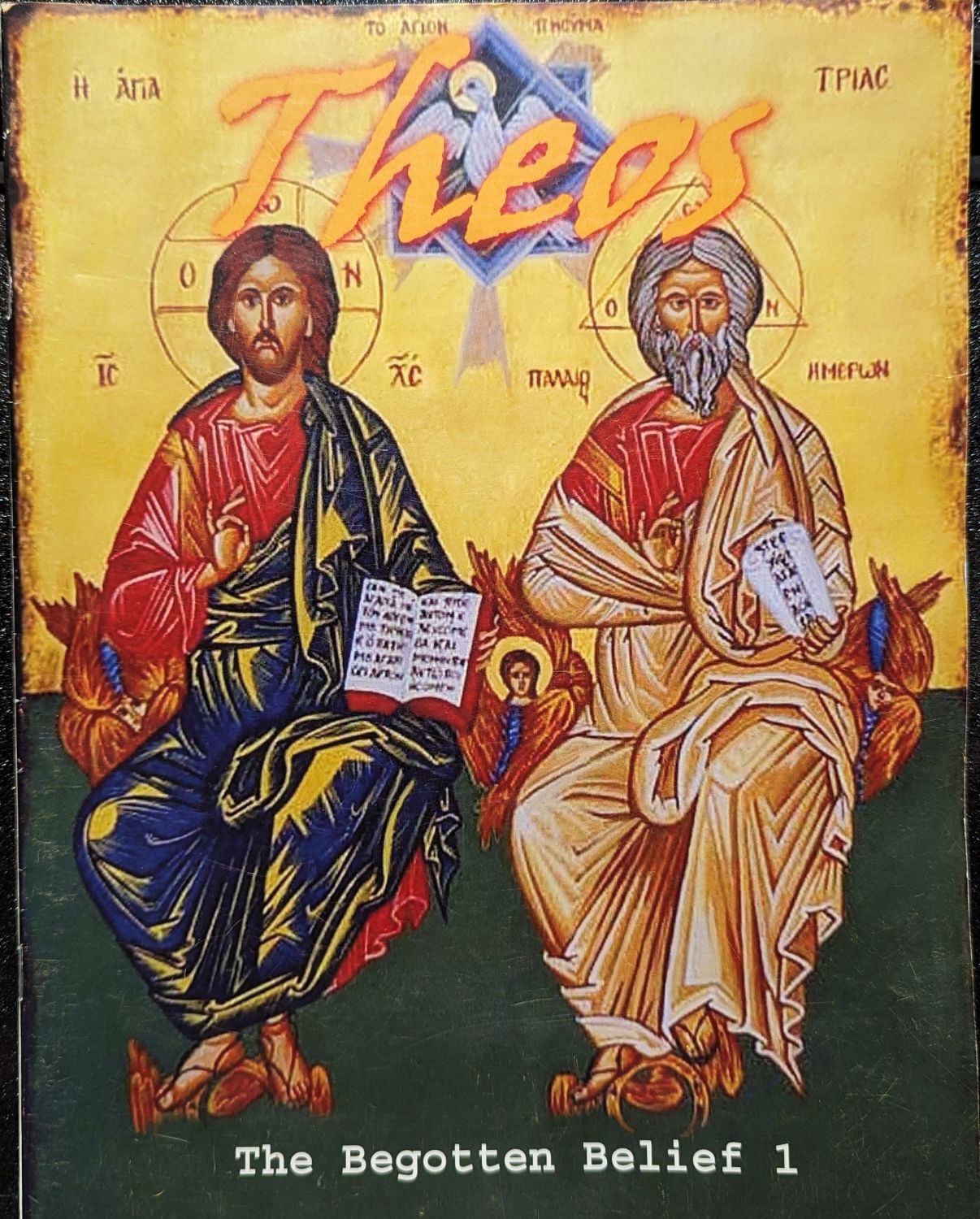
**Page2**
“Most of the founders of Seventh-day Adventism would not be able to join the church today if they had to subscribe to the denomination’s Fundamental Beliefs. More specifically, most would not be able to agree to belief number 2, which deals with the doctrine of the Trinity.”
— George Knight, Ministry, October 1993
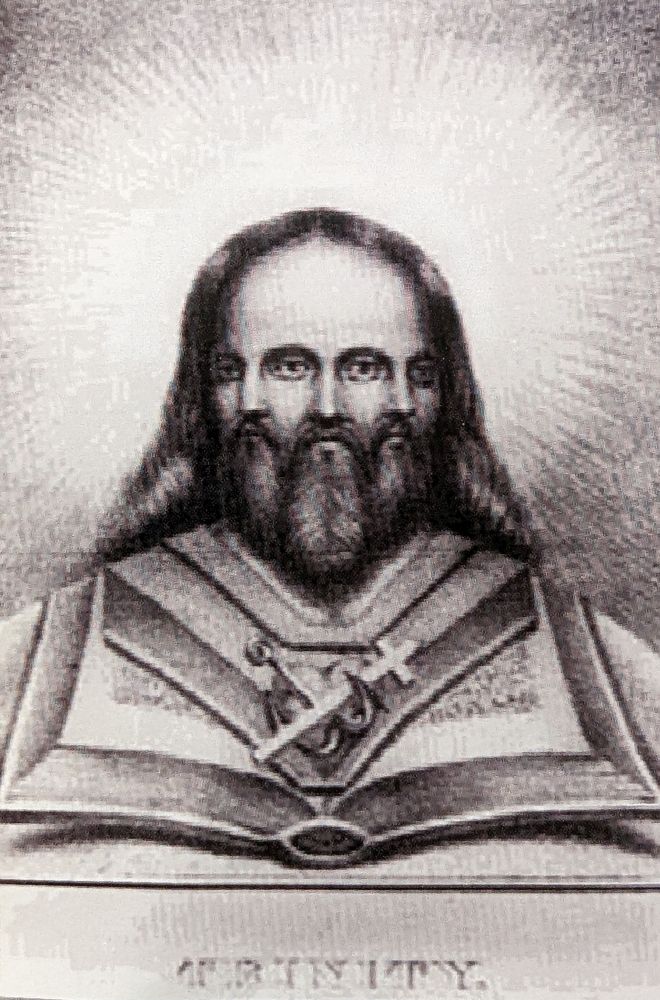
The transformation of Seventh-day Adventist doctrine from a widely held belief in the Son of God begotten of his Father (that remained uncontested for more than 50 years prior to the death of Ellen White) to our current acceptance of an unbegotten second Person of a Triune Godhead is a remarkable record of determination and perseverance that extended well into the 1940s.
Here is the story of that change.
In recent decades this dramatic reversal in the church’s fundamental faith has been credited to Ellen White. She is said to have matured into a full trinitarian understanding in her final years. Publication of the Desire of Ages is cited as the watershed event that propelled the church into accepting the “full deity” of Christ and the personhood of the Holy Spirit, critical final steps in cementing the Trinity into its rightful place in Adventist theology thus securing a welcome harmony with the rest of orthodox Christendom.
In contrast to Ellen’s alleged Trinitarian conversion, some leaders within the fledgling church are also charged with promoting Arianism, the belief that Christ was a created being rather than the divine Son of God.
In Part 1 Theos examines the writings of the earliest Adventist pioneers for evidence of belief in either a created or begotten Son of God. What’s the difference between a divinely begotten Son and a created one? Did the church’s founders teach error? Were they perpetrators of heresy? We will explore both the Scriptural witness and a candid look at the 19th century evidence.
**Page3**
James White
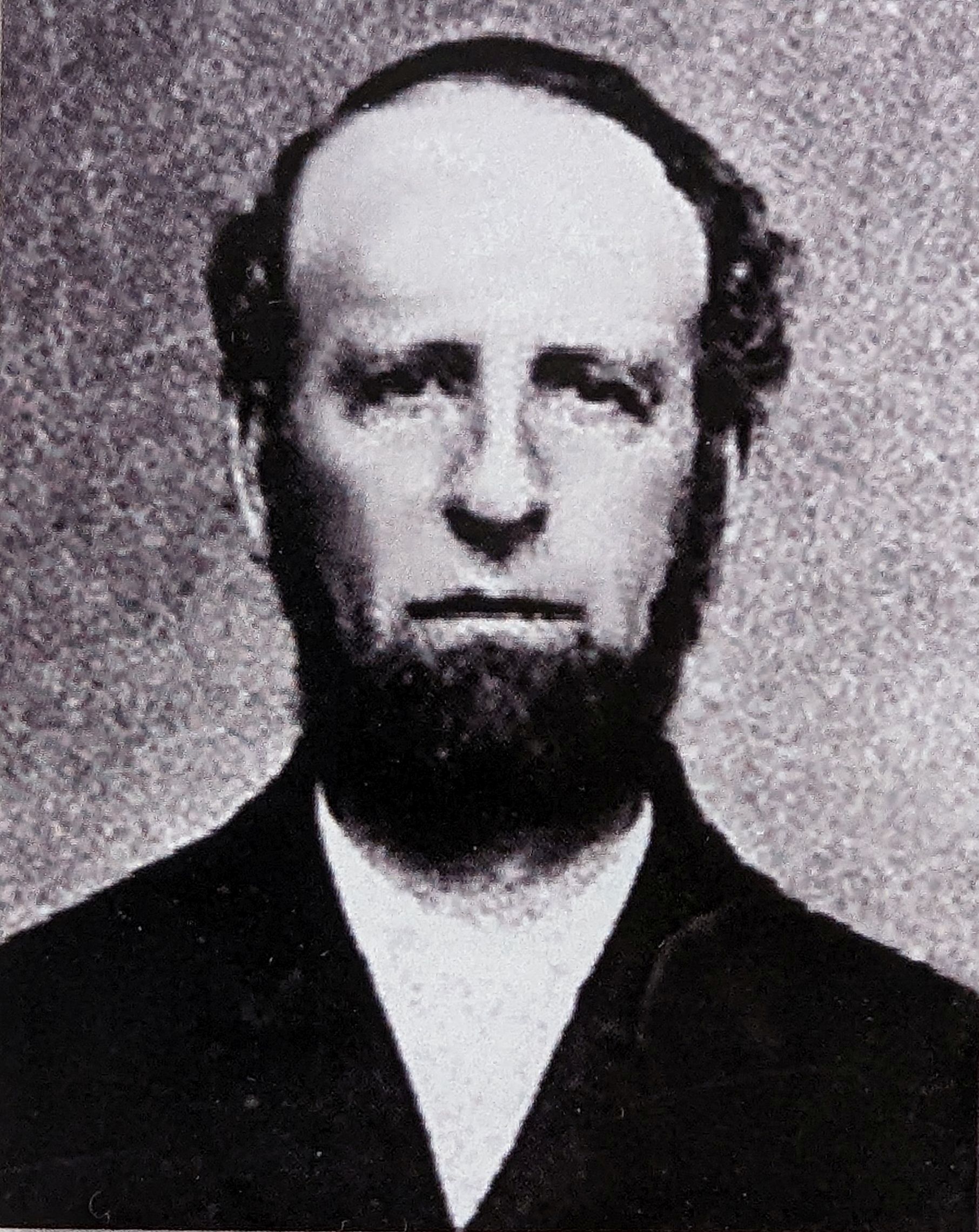
James White and Joseph Bates are commonly implicated as the prime suspects responsible for contaminating the early Advent Movement with “Arianism.” The thesis begins with their prior membership in the Christian Connection, a vocal anti-trinitarian group prominent in the early 1800’s. As editor of the Present Truth and later the Review and Herald, James White was able to spread his “personal views” on the nature of Christ to the fledgling Adventists. Because of his “outspoken and forceful” personality, he is said to have dominated and influenced his wife’s understanding on this issue for most of their married life. However, in his final years, James White supposedly began to soften and, in fact it is claimed, was essentially Trinitarian before he died in 1881.
The first printed example of James’ position on the subject surfaced in 1846. His objection was the reduction of the literal Father and the Son persons to mere “spiritualized” roles of a single being called “the eternal God.”
[There is] “a certain class who deny the only Lord God and our Lord Jesus Christ. This class can be no other than those who spiritualize away the existence of the Father and the Son, as two distinct, literal, tangible persons, also a literal Holy city and throne of David …. The way spiritualizers this way have disposed of or denied the only Lord God and our Lord Jesus Christ is first using the old unscriptural trinitarian creed, viz, that Jesus Christ is the eternal God, though they have not one passage to support it, while we have plain scripture testimony in abundance that He is the Son of the eternal God” — Day Star, January 24, 1846
Some formulations of the Trinity included expressions such as “three persons in one being.” James evidently did not believe that the Son of God was the same being as his eternal Father. Even more examples of the language used during these early years can be found within the Advent Review and Sabbath Herald issues beginning with its debut in 1851.
“Two testimonies from the Eternal Father, and one from his Son Jesus Christ, are worth more to us than ten thousand from the so called “Christian Fathers,” however near the apostolic age they might have lived.” — Review and Herald, May 5, 1851. p. 4.
He was referring to the two times in which the Father declared that Christ was His beloved Son – at his baptism and transfiguration, and the occasion when Jesus explicitly said, “I am the Son of God” John 10:36.
[Daniel 7:13,14 quoted] “His coming [Christ’s], in this text, is to the ‘Ancient of Days,’ God the Father.” “Prophets of God have represented Jehovah as dwelling above the cherubim, in the heaven of heavens, and as looking down from between them. This is the position of the ‘Ancient of days’ in the heavenly Sanctuary.” — Review and Herald, June 9, 1851 p. 8.
“Jehovah is the Great Law-giver. He alone could change or abolish his own law, and he has said “I am the Lord I change not.” Jesus did not intimate the least change in the Sabbath law, but said, “I have kept my Father’s commandments.” — Review and Herald, August 18, 1851 p. 3.
“I live in the midst of the most extravagant fable preaching of these last days, where the doctrines and commandments of men are substituted for those of Almighty God, Jesus and the Apostles.” — George Smith letter, Review and Herald, June 26, 1851 p. 7
“Now, Christ being the Son of Man, the chief man, or second Adam, the man of God’s right hand, the heir of all things, is of right Lord even of the Sabbath day.” “As Christ proves the resurrection, in Mark xii, 26, 27(Mark 7:26-27), “I am the God of Abraham, the God of Isaac, the God of Jacob; I am not the God of the dead, but of the living:” so Christ is Lord of the Sabbath day. He is not Lord of the dead types and shadows, or of that which is not in being, but he is Lord of the lively oracles, of which I consider the Sabbath to be one. Acts vii, 38(Acts 7:38).” — Review and Herald, Sept. 2, 1851 p. 1
“Christ is the “everlasting Father” of his people, [Isa ix, 6,(Isaiah 9:6)] the New Jerusalem the mother. [Gal. iv, 26.(Galatians 4:26)] and the members of the church of Christ are the children. — Review and Herald, June 9, 1851 p. 7.
This small sampling of comments dealing with the personhood and Godhead of the Father and Son during just the first year’s publication give evidence that there was no objection to these believers in saying that Christ was divine, that he was the Creator, the everlasting Father of his people, heir of all things, the God of the living. However, there is also evidence that they placed a distinction between the Eternal Father, the Ancient of Days, God the Father, Jehovah the Great Lawgiver, Almighty God and His Son.
James White resisted a blurring of the Godhead, what Gerald Wheeler calls, a “merging the members of the Trinity into an amorphous state.” It was this objection that produced the oft quoted example of James White’s anti-Trinitarian stance in 1852:
“To assert that the sayings of the Son and his apostles are the commandments of the Father, is as wide from the truth as the old trinitarian absurdity that Jesus Christ is the very and Eternal God.” — James White, Review and Herald August 5, 1852, page 52 ‘The Faith of Jesus’
**Page4**
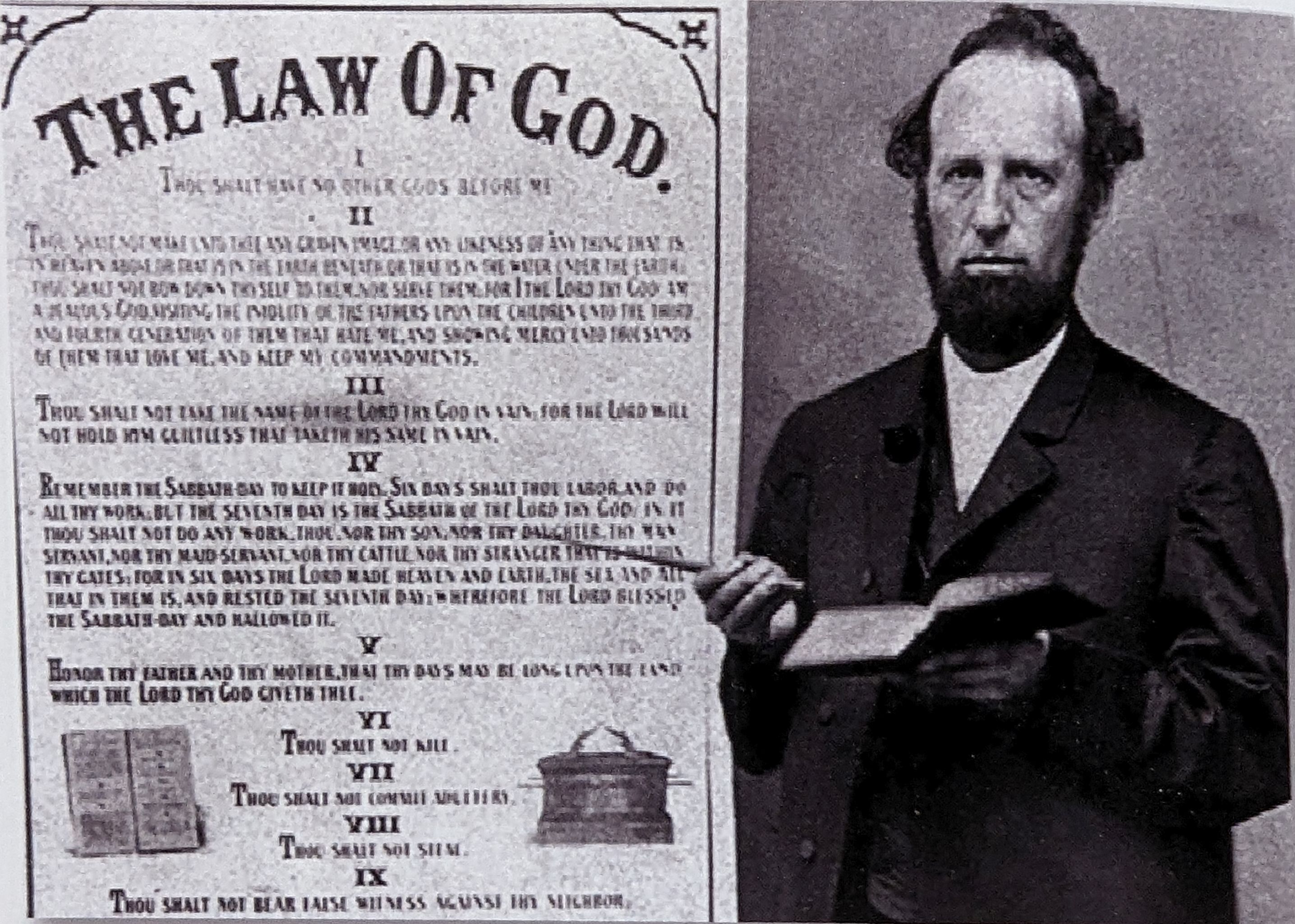
The assumption is that since James White did not accept the Trinitarian notion of Christ and the Father being the same “Eternal God” then he must also deny Christ’s equality with the Father and hence deny Christ’s divinity. But, as we have seen, he had no problem with Christ being equal with his Father; his objection was in making the Son equal to the Father.
As editor of the Review & Herald, he reprinted a portion of the Catholic Doctrinal Catechism in 1854 to demonstrate the papal claims over Scriptural authority and acceptance by Protestants of the papal traditions.
“Q. Have you any other proofs that they [Protestants] are not guided by the Scriptures?”
“A. Yes; so many that we cannot admit more than a mere specimen into this small work. They reject much that is clearly contained in Scripture, and profess more that is nowhere discoverable in that Divine Book.”
“Q. Give some examples of both?”
“A. They should, if the Scripture were their only rule, wash the feet of one another, according to the command of Christ, in the 13th chap. of St. John; – they should keep, not the Sunday, but the Saturday, according to the commandment. Remember thou keep holy the Sabbath-day; for this commandment has not, in Scripture, been changed or abrogated.”
“Q. Have you any other way of proving that the Church has power to institute festivals of precept?
“A. Had she not such power, she could not have done that in which all modern religionists agree with her; – she could not have substituted the observance of Sunday, the first day of the week, for the observance of Saturday, the seventh day, a change for which there is no Scriptural authority.
“Q. Do you observe other necessary truths as taught by the Church, not clearly laid down in Scripture?
“A. The doctrine of the Trinity, a doctrine the knowledge of which is certainly necessary to salvation, is not explicitly and evidently laid down in Scripture, in the Protestant sense of private interpretation.” — Review and Herald, August 22, 1854

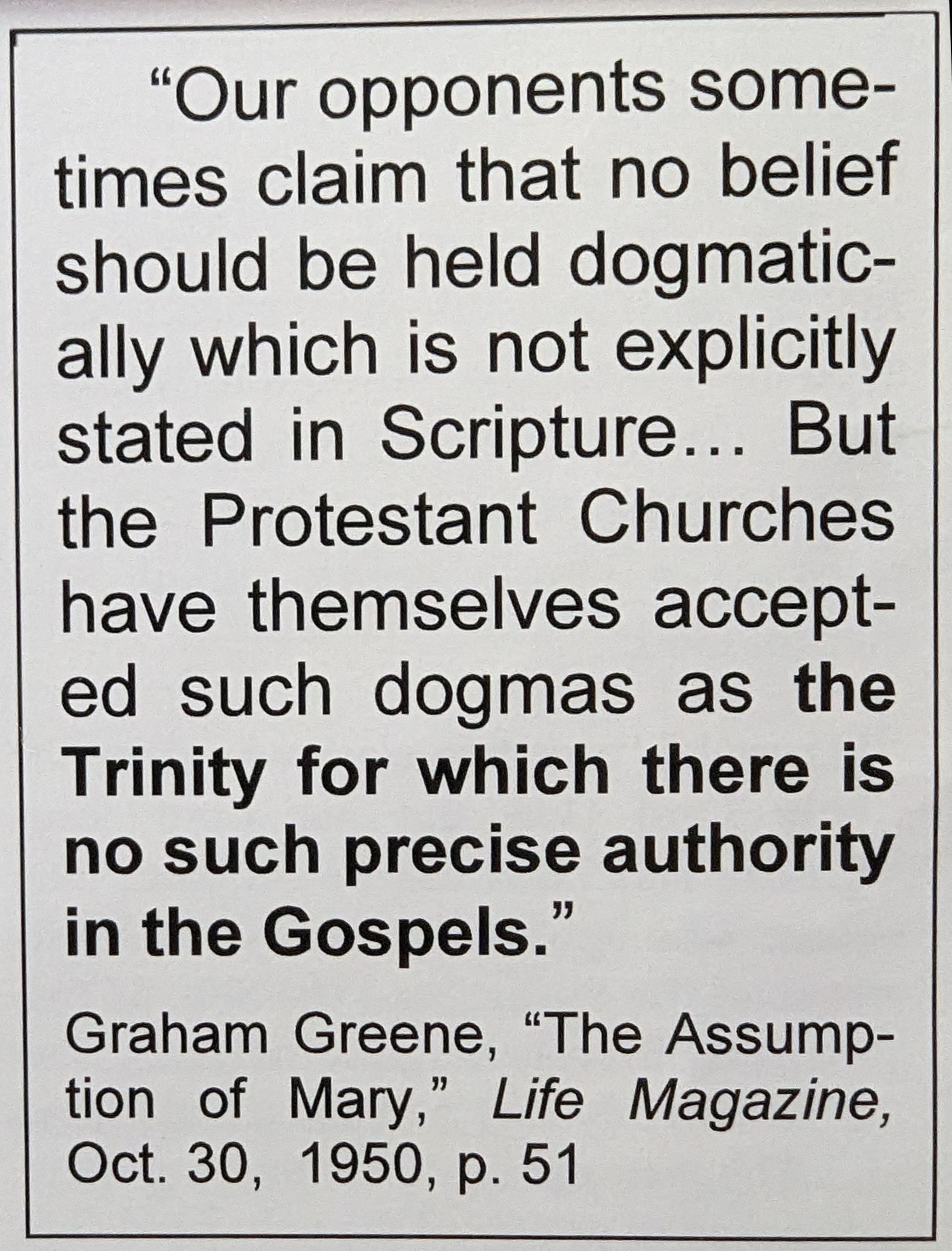
While we still prominently feature the Catholic Catechism in our evangelistic presentations to support the biblical truth that the little horn power would “think to change times and laws” in changing the sanctity of the Sabbath to the first day of the week as “a mark of her ecclesiastical authority,” it is no longer acceptable to also quote the same Catechism as a reference in condemning the doctrine of the Trinity “for which there is no biblical support.” But James White freely included the Trinity among the basic tenets of the Papacy.
“The greatest fault we can find in the Reformation is, the Reformers stopped reforming. Had they gone on, and onward, till they had left the last vestige of Papacy behind, such as natural immortality, sprinkling, the trinity, and Sunday keeping, the church would now be free from her unscriptural error.” — Review & Herald, Feb 7, 1856
Significantly, Catholic doctrine still claims ownership of the Trinity doctrine and credit for developing it as can be seen in the sidebar.
This lack of scriptural authority is a recurring theme, and is the reason that Catholicism must appeal to tradition rather than Scripture alone in support of their doctrines.
**Page5**
However, there were strong convictions expressed by the early Adventist leadership in opposition to the establishment of a “human creed” that might be based on “the traditions and fables of men.” During the organization of the Seventh-day Adventist church in 1861, there was much discussion about coming up with a creed. James White opposed what he saw as an attempt to be like other churches.
“But the Seventh-day Adventists have no human creed or discipline, therefore give room for God to teach through the gifts of the Spirit. They ardently desire to cast aside the traditions and fables of men, and keep the commandments of God and the faith of Jesus Christ. Their weekly practice in keeping the Sabbath is a standing rebuke on the churches and the world. and on almost every point of Bible truth they stand in direct opposition to the popular doctrines of the churches. And, besides this, there has been an unceasing testimony among us, warning us to stand out separate from the world.” — James White, Review and Herald, October 1, 1861
One week later John Loughborough gave the reason why:
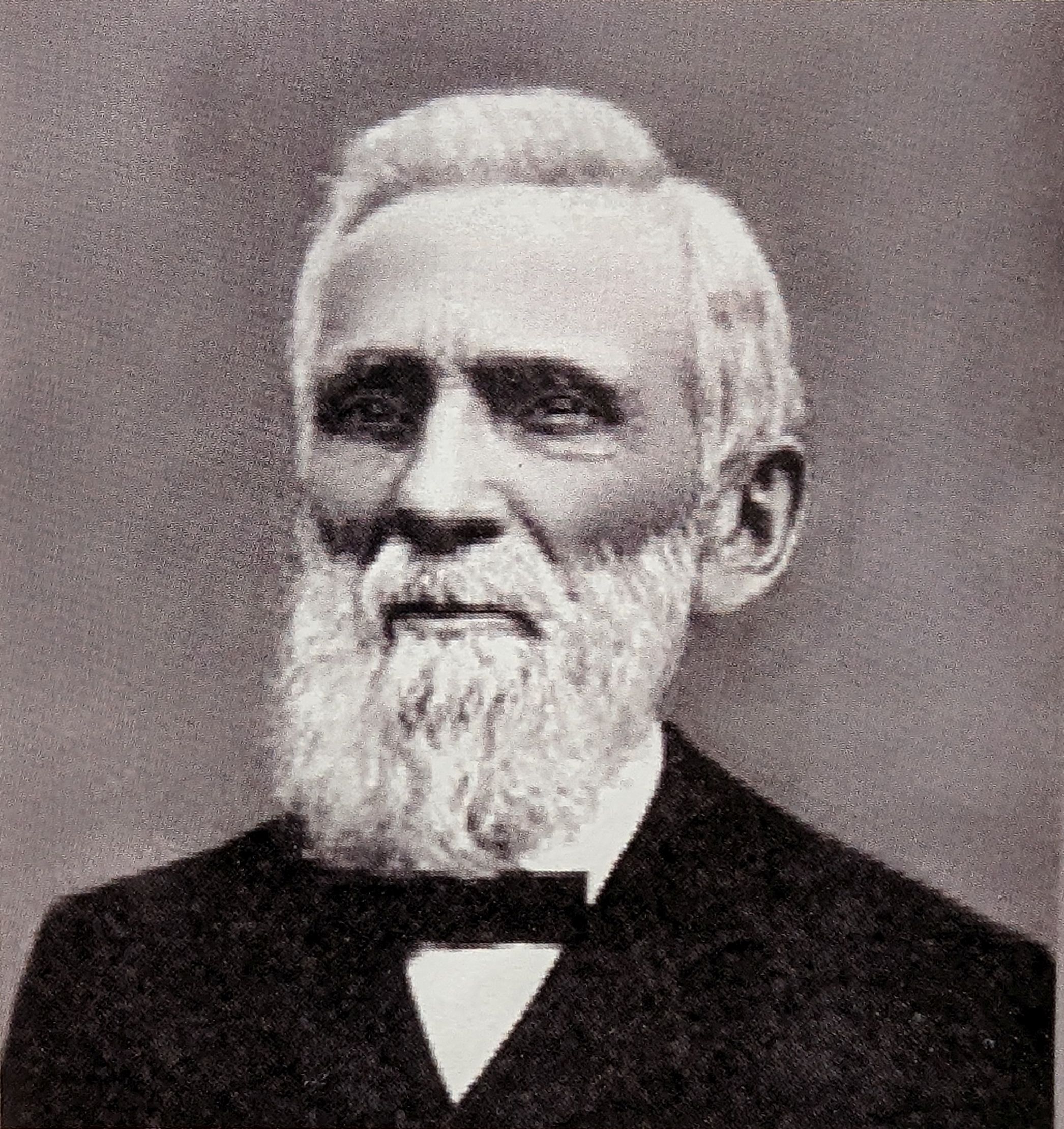
“The first step of apostasy is to set up a creed, telling us what we shall believe.
— J. N. Loughborough, Review and Herald, October 8, 1861
The second is, to make that creed a test of fellowship.
The third is to try members by that creed.
The fourth to denounce as heretics those who do not believe that creed.
And, fifth, to commence persecution against such.
I plead that we are not patterning after the churches in any unwarrantable sense, in the step proposed.”
James White agreed and then said,
“The Bible is our creed. We reject everything in the form of a human creed. We take the Bible and the gifts of the Spirit; embracing the faith that thus the Lord will teach us from time to time. And in this we take a position against the formation of a creed.” — ibid.
Since the Trinity was based in creed rather than scripture, James White was relentless in his opposition to the notion of a “three-one God.”
“Jesus prayed that his disciples might be one as he was one with his Father. This prayer did not contemplate one disciple with twelve heads, but twelve disciples, made one in object and effort in the cause of their master. Neither are the Father and the Son parts of the “three-one God“.” — James White, ‘Life Incidents‘ page 343 Chapter ‘The Law and the Gospel’ 1868
“With this view of the subject [that Christ is the very Son of God] there are meaning and force to language which speaks of the Father and the Son. But to say that Jesus Christ is the very and eternal God,’ makes him his own son, and his own father, and that he came from himself, and went to himself.” — James White, Review and Herald, June 6, 1871
Those who believed what Jesus said about himself (that he proceeded from and came out from his Father) had no difficulty with also believing that the Son of God was therefore fully divine, having within him all the fullness of the Godhead bodily.
However, others treated a begotten Son to be essentially the same as a created one because both have a beginning. For some reason, not clearly defined by Scripture, “non-inception” became a prerequisite criterium for meeting the definition of divinity. Consequently, it was a continual struggle to dispel the assumption that believers in the Begotten Son also denied his divinity. James objected to such accusations.
“We do not deny the divinity of Christ. We delight in giving full credit to all those strong expressions of Scripture which exalt the Son of God. We believe him to be the divine person addressed by Jehovah in the words, ‘Let us make man.” — James White, Review & Herald, June 6, 1871
Five years later he again affirmed the SDA position on Christ’s divinity – the Son of the living God – the same confession that Peter made, not a created being, but born of God. However, because this time it was in the setting of an exchange with a Trinitarian Seventh-day Baptist minister, his remarks are now offered as evidence that he was “coming around” to accept Trinitarianism.
“The S. D. Adventists hold the divinity of Christ so nearly with the Trinitarians that we apprehend no trial here.” — James White, Review & Herald, October 12, 1876
**Page6**
While most current Adventist theologians exhibit this isolated statement as proof that James had “softened” his position and was now “virtually” Trinitarian, the context of his entire article is one of identifying. common ground between Seventh-day Adventists and Seventh-day Baptists. He begins by saying, “The principal difference between the two bodies is the immortality question.” But he could honestly say that the divinity of Christ on the basis of His true Sonship, coming out from the Father, inheriting the very same divine nature of God was no different. The crux of the issue (then and now) hinges on the definition of divinity.
Divinity: the Nature of God
The Bible explains the nature of God in terms of His eternal existence and creative power.
“The LORD is the everlasting God, the Creator of the ends of the earth” Isaiah 40:28
“O LORD, are you not from everlasting” Habakkuk 1:12
“He is blessed from everlasting to everlasting” Psalm 12:13
“From everlasting to everlasting Thou art God” Psalm 90:2
“This God is our God forever and ever” Psalm 48:14
The realm of eternity is defined as that which exists before Earth’s creation.
“From everlasting, from the beginning, or ever the earth was…”Before the mountains were settled, before the hills Prov 8:23, 25
“The high and lofty One who inhabits eternity” Isa. 57:15
“Your years go on through all generations. In the beginning you laid the foundations of the earth, and the heavens are the work of your hands. They will perish, but you remain” Ps. 102:24-26
“Before the mountains were brought forth, or ever thou hadst formed the earth and the world” Ps. 90:2
“Known unto God are all things from the beginning of the world” Acts 15:18
God is eternal because He is immortal – He cannot die.
“The King eternal, immortal” 1 Tim 1:17
“Who only has immortality” 1Tim 6:16
“Who is, and was, and is to come” Rev 1:18
“that the purpose might not be changed” Daniel 6:8, 12, 16, 17
This was true for an earthly king. God is also distinguished by His immutability – God does not change.
“I am the LORD, I change not” Malachi 3:6
The Glory of Israel does not lie or change his mind. 1 Sam 15:29; Num 23:19
“My covenant will I not break, nor alter the thing that is gone out of my lips” Ps. 89:34
It is the divine character, as expressed in His law, that does not change. Jesus Christ is “the same yesterday, today, and forever” (Heb 13:8). because His character never changes.
But, even though his divine nature does not change, his form did: from being “made so much better than the angels” (Heb 1:4) “being in the form of God” (Phil 2:6) he was then “made a little lower than the angels” (Heb 1:9; Ps 8:6) “being found in fashion as a man” (Phil 2:8). Jesus “emptied himself” “and the Word became flesh” “God manifest in the flesh.”
His form is not immutable; but his character is. Why should Christ coming out from his Father be a threat to his unchangeable divine character or to his eternal immortality?
His “goings forth are from the days of eternity” Micah 5:2 margin. He was “brought forth,” “the beginning of His way, before his works of old” Prov. 8:22, 24.
James White never disputed the divinity of Christ. He explained this more fully the following year:
**Page7**
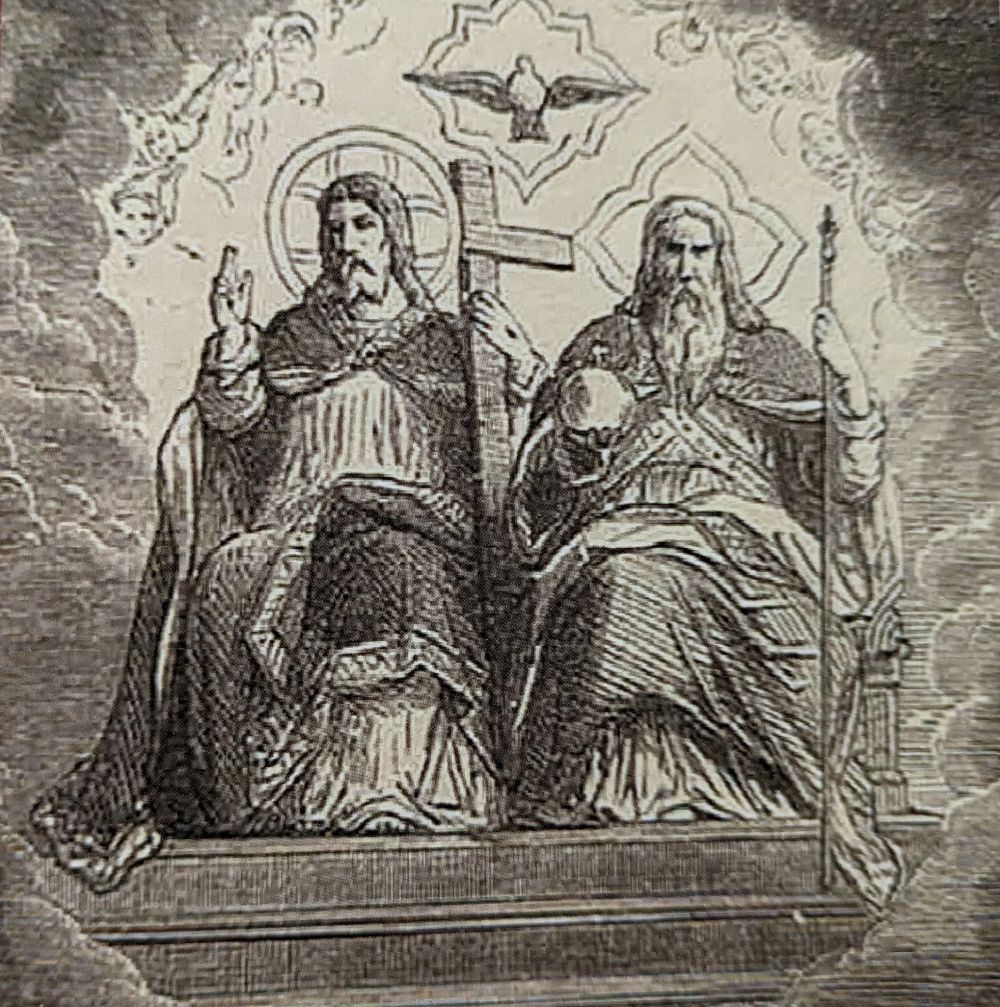
“Paul affirms of the Son of God that he was in the form of God, and that he was equal with God. “Who being in the form of God thought it not robbery to be equal with God.” Phil. 2:6. The reason why it is not robbery for the Son to be equal with the Father is the fact that he is equal. If the Son is not equal with the Father, then it is robbery for him to rank himself with the Father.” — James White, Review and Herald November 29, 1877, “Christ Equal with God’
This unmistakable confession of equality of the Son with the Father is followed in the same article by commenting on the two extremes.
“The inexplicable Trinity that makes the Godhead three in one and one in three, is bad enough; but that ultra Unitarianism that makes Christ inferior to the Father is worse.”
“The great mistake of the Unitarian is in taking Christ when enfeebled with our nature as the standard of what he was with the Father before the creation of the world, and what he will be when all divine, seated beside the Father on his eternal throne.”
“The question of the state of the dead is not a practical subject. And yet we discuss it in order to warn the people against spiritualism. The question of the trinity and the unity is not practical, and yet we call attention to it to guard the people against that terrible heresy that takes from our all-conquering Redeemer his divine power.”
“We notice the steps leading from Christ’s position with the Father before the worlds were made…he was equal with God… Redemption is then completed, and again the Son is equal with the Father.” — James White, Review and Herald November 29, 1877
“We believe that Christ was a divine being, not merely in his mission, but in his person also;” — James White, Review and Herald, June 27, 1878
Here we see that James, once again within the last four years of his life, did not question the truth of Christ’s equality with God the Father, it was the Trinitarian notion of making him equal to his Father (destroying their separate personalities) that he fiercely opposed. We note that White’s discussion of equality is restricted to power alone and is entirely correct, but he does not address the issue of relational dependence that the Son would always have regarding His Father’s blessing and approbation. Regardless of this, White clearly saw Christ’s equality with the Father as independent of a Trinity framework.
His expressions concerning equality are entirely consistent with his wife’s. The only time she ever used the expression “co-equal” was in the setting of being the Son of God, an emphasis that is difficult to ignore:
“It was to save the transgressor from ruin that he who was co-equal with God, offered up his life on Calvary. ‘God so loved the world, that he gave his only begotten Son, that whosoever believeth in him should not perish, but have everlasting life.’” — Review & Herald June 28, 1892
James White rejected both extremes of a physical oneness among the Godhead and an inferior human Christ. He never “softened” in his opposition to the concept of a three-headed deity.
“When it can be proved that the object of the prayer of the Son of God was, that the disciples might be one body with twelve heads, then it can be shown that we have a Deity which has one body and three heads.” — James White, Review and Herald, March 11, 1880
And, finally, in the year of his death he once again confessed the equality of Christ.
“In his exaltation, before he humbled himself to the work of redeeming lost sinners, Christ thought it not robbery to be equal with God, because in the work of creation and the institution of law to govern created intelligences, he was equal with the Father.” — James White, Review and Herald January 4, 1881 The Mind of Christ’
The two ways in which they are equal is “in the work of creation” and the “institution of law.” Jesus said to the Jews who objected to his healing on the Sabbath, “My Father works hitherto, and I work. Therefore the Jews sought the more to kill him, because he not only had broken the
**Page8**
Sabbath, but said also that God was his Father, making himself equal with God.” John 5:17, 18. This is why Jesus also said, “I can of mine own self do nothing.” “I do nothing of myself John 8:28. The Father works through His Son. “We have an advocate with the Father” 1 John 2:1. Both of them are on our side. “The Father Himself loves you” John 16:27.
He qualifies this equality as pertaining to sharing “in the work of creation and the institution of law.” In the same 1881article, James again expressed his life-long conviction that the Son of God was indeed the true begotten of God:
“The Father was greater than the Son in that he was first. The Son was equal with the Father in that he had received all things from the Father.”
It seems odd that this statement is so rarely quoted by those who would like to suggest that James White had a change of heart in his final years, that he discarded his belief in a begotten Son of God and in his final days came to accept the Trinity, forsaking his earlier position. This was clearly not the case.
Jesus also expressed “greater” in the sense of “older” when he said, “he that is greatest among you, let him be as the younger” Luke 22:26. This was perfectly consistent with his Father being greater or older than the Son.
But truth lies close to the track of error. One current Roman Catholic Catechism describes the “Blessed Trinity” to include the begotten Son.
“It is the Father who generates, the Son who is begotten, and the Holy Spirit who proceeds.” — St. Paul’s Catachism of the Roman Catholic Church, Strathfield, New South Wales, 1998, Pocket Edition, Complete and Unabridged
Dr. Barry Harker, writing in the ALMA Torch of Nov. 2008 notes this is “virtually indistinguishable from ideas being promoted in our midst today by those who reject the eternity of the Son and the Holy Spirit.”
This is an unfair characterization. Those who reject the Trinitarian doctrines of men do not necessarily reject the eternity of the Son nor the existence of the Holy Spirit. A divine Son (Phi, 2:6; Col. 1:15; 2:9; John 5:23; John 14:9) who comes from (John 7:29; 8:42; 16:27, 28) an Eternal Father (1Tim 1:17) must inherently possess the same eternal immortality (John 5:26) and the same eternal Spirit (Heb 9:14). This is the teaching of scripture.
But Harker’s attempt to discredit belief in the Son begotten in eternity because a distorted form (eternally begotten) is accepted by Catholicism is surprising. At the same time he intends to preserve belief in the Trinity which is not only accepted by the Roman Church but claimed as the foundation of all their doctrines.
Society of Saint Pius X in Canada
Writing in the Rosary Crusade Clarion, Abbot Vonier appeals to Psalm “109” (Psalm 109) in support of the divine birth of God’s Son. The scripture he quotes is actually from the 110th Psalm (Psalm 110) which begins, “The LORD said unto my Lord, Sit thou at my right hand.” But the focus of his comments comes in verse 3(Psalm 110:3): “Thy people shall be willing (beginning, margin) in the day of thy power…from the womb of the morning: thou hast the dew of thy youth.” He quotes a different translation which renders it: “With Thee is the principality in the day of Thy strength: the brightness of the saints: from the womb before the daystar I begot Thee.” From this he concludes:
“Birth is the only event in Christ’s career of which it can be said that it took place twice, once in eternity, and once in time…Christ is born in eternity from the Father, and in time from Mary…of Mary a Child was born who is the Son of God, born of God from all eternity.” December 2002, No. 24
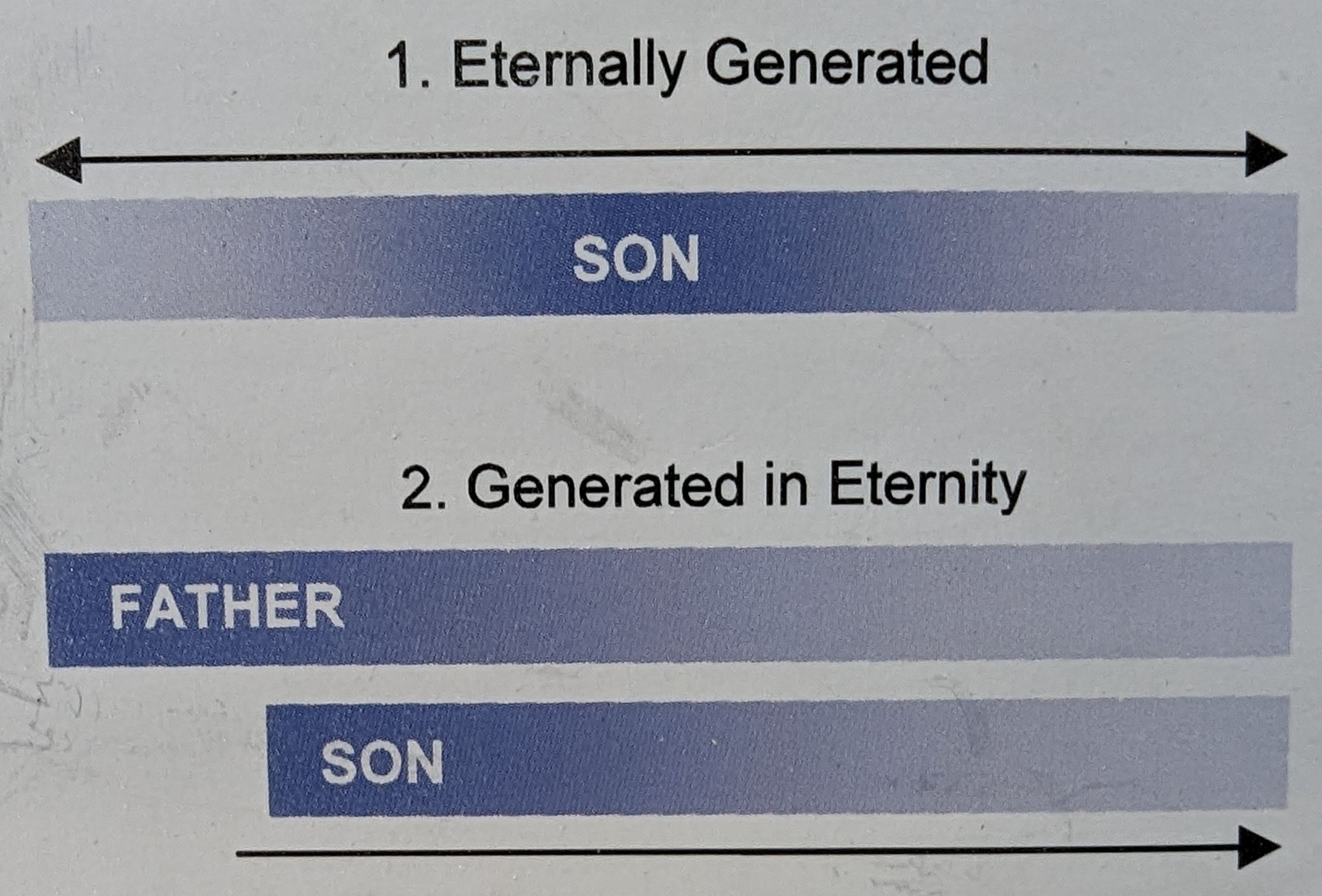
The Catholic teaching of the begotten Son of God must, however, be made to harmonize with the dictates of the Trinity tradition which requires three co-equal, co-eternal persons. In order to achieve this, they postulate an eternal birth process that began “from all eternity” and will continue for all eternity. There is no scripture to support such a mystical notion but the fabricated concept resolves, at least in their minds, the conflict between the sequential implications of a father-son relationship and the eternal parity imposed by Trinitarian theory.
Catholic and Biblical concepts of the divinely begotten Son of God:
"The World Council of Churches is a fellowship of churches which confess the Lord Jesus Christ as God and Saviour according to the Scriptures and therefore seek to fulfill together their common calling to the glory of one God, Father, Son and Holy Spirit." -- So much in Common, (co-authored by the Seventh-day Adventist Church and the World Council of Churches), p. 33, 1968

"While no single scriptural passage states formally the doctrine of the Trinity, it is assumed as a fact by Bible writers and mentioned several times. Only by faith can we accept the existence of the Trinity." -- Adventist Review, Vol. 158, No. 31, Special Edition July 30, 1981, p. 4.
**Page9**
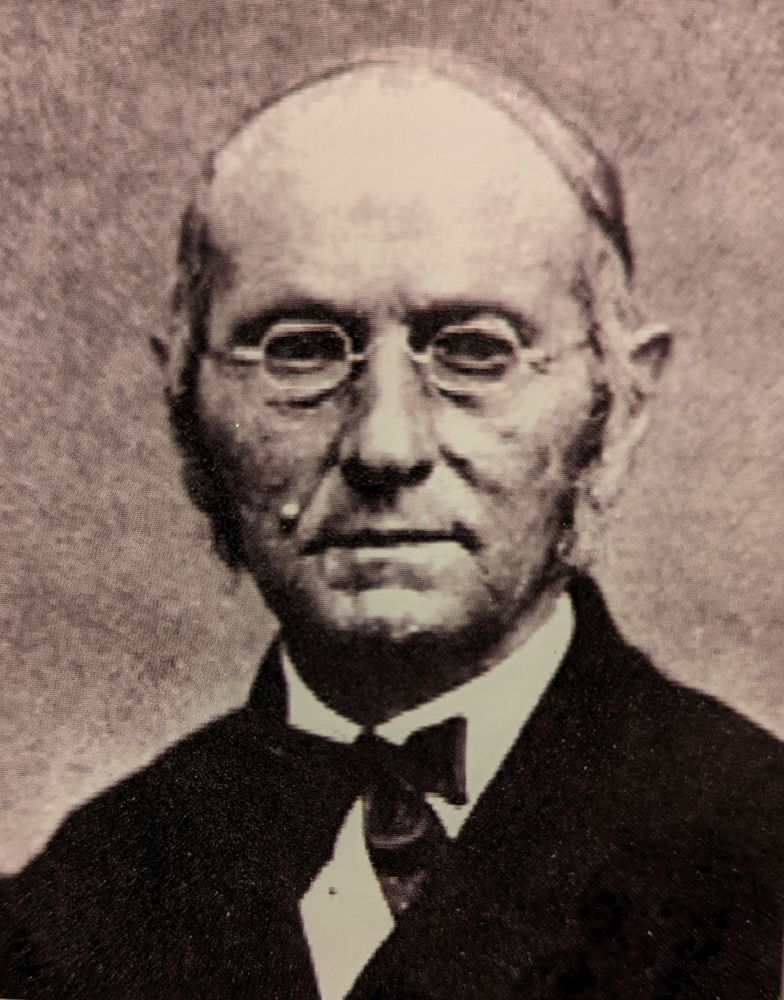
“My parents were members of long standing in the Congregational church. with all of their converted children thus far, and anxiously hoped that we would also unite with them. But they embraced some points in their faith which I could not understand. I will name two only: their mode of baptism, and doctrine of the trinity. My father, who had been a deacon of long standing with them, labored to convince me that they were right in points of doctrine… Respecting the trinity, I concluded that it was an impossibility for me to believe that the Lord Jesus Christ, the Son of the Father, was also the Almighty God, the Father, one and the same being. I said to my father, “If you can convince me that we are one in this sense, that you are my father, and I your son; and also that I am your father, you my son, then I can believe in the trinity.” — The Autobiography Of Elder Joseph Bates, 1868, page 204
Bates addressed the paradox of the Trinity’s struggle to maintain a “singleness” of God by asserting there is only one Being (a situation with confusing similarities to Unitarianism), and a Trinitarian “threeness” by asserting there are three persons (disturbingly similar to Tritheism). In order to avoid falling into the error of polytheism, the Trinity doctrine must maintain that there is only one God Being. In a letter to William Miller in 1848, Bates wrote:
Much derision is made about those of our company that have joined the Shakers. I say it is a shame to them first, to have preached so clearly and distinctly the speedy coming of our Lord Jesus Christ personally to gather his saints – and then to go and join the Shakers in their faith, that he (Jesus) came spiritually in their Mother, Ann Lee, more than seventy years ago. This, without doubt in my mind, is owing to their previous teaching and belief in a doctrine called the trinity.
How can you find fault with their faith while you are teaching the very essence of that never – no never to be understood, doctrine? For their comfort and faith, and of course your own. you say “Christ is God, and God is love.” As you have given no explanation, we take it to come from you as a literal exposition of the word;… We believe that Peter and his master settled this question beyond controversy, Matt. 16:13-19; [where Peter confessed that Jesus was “the Christ, the Son of the living God.”] and I cannot see why Daniel and John has not fully confirmed that Christ is the Son, and, not God the Father. How could Daniel explain his vision of the 7th chapter(Daniel 7), if “Christ was God.” Here he sees one “like the Son (and it cannot be proved that it was any other person) of man, and there was given him Dominion, and Glory, and a kingdom;” by the Ancient of days. Then John describes one seated on a throne with a book in his right hand, and he distinctly saw Jesus come up to the throne and take the book out of the hand of him that sat thereon. Now if it is possible to make these two entirely different transactions appear in one person, then I could believe that God [the Father] died and was buried instead of Jesus, and that Paul was mistaken when he said, “Now the God of peace that brought again from the dead out Lord Jesus that great shepherd of the sheep” &c., and that Jesus also did not mean what he said when he asserted that he came from God, and was going to God, &c.&c.; and much more, if necessary, to prove the utter absurdity of such a faith.” — Past And Present Experience, page 187
Bates used the same argument in a pamphlet which he printed in 1846:
And Daniel, the prophet, teaches the same doctrine. ‘I saw in the night visions: and behold, one like the Son of man came with the clouds of heaven, and came to the Ancient of days, (described in the ninth verse(Daniel 7:9)) and they brought him near before him; and there was given him dominion and glory, and a kingdom, never to be destroyed. Dan. 7:13,14. Now we all admit this personage was Jesus Christ; for no being on earth or in heaven, has ever had the promise of an everlasting kingdom but him. And does not the Ancient of days give it to him? Would it not be absurd to say that he gave it to himself? How then can it be said (or proved) as it is by some, that the Son is the Ancient of days; – this passage, and the one in fifth Revelations(Revelation 5), distinctly prove God and his Son to be two persons in heaven. Jesus says. ‘I proceeded forth and came from God: neither came I of myself, but he sent me.’ John 8:42. ‘I come forth from the Father, and am come into the world; again, I leave the world and go to the Father.’
It seems that he is arguing against Unitarianism as much as the Trinity. Both take extreme positions in attempting to resolve the oneness of God while accommodating at least the Father and Son. Unitarianism eliminates the persons and settles for personalities; Trinitarianism likewise eliminates the true Father-Son relationship and settles for just titles. But Bates could accept neither.
Like James White, Joseph Bates rejected the spiritualization of the distinctly separate persons of the Godhead. Both Unitarians and Trinitarians must reject the literal Sonship of Christ and the literal fatherhood of God because they conflict with the definitions which each doctrine imposes. He also complained about the efforts of “spiritualizers” to deny the literal second coming of Jesus and the kingdom of heaven. Being the sea captain that he was, Bates graphically described the dangers of such a philosophy.
“I have been thus particular in quoting the Scriptures, in answer to the questions proposed, to endeavor if possible to dispel some of the thick
**Page10**
darkness and mist of Shakerism, Quakerism, Swedenborgianism, and all the Spiritualisms that now seem to be settling down all over the moral world, and shutting out even the very light from the horizon. To my mind this spiritualizing system, when God’s word admits of a literal interpretation, and – according to rule – the literal first; is, to use a sailor phrase, like a ship groping her way into Boston Bay in the night, in a thick snow with the moon at full. Nothing could be more deceptive to the mariner; the flying clouds at one moment light up the firmament by the thinness of its vapor, (encouraging the mariner to believe that he shall now see the light house) the next moment it grows darker, and so it continues to deceive them, until of a sudden the breakers are roaring all around them – the ship is dashed upon the rocks – one general cry goes aloft for mercy! and all hope is forever gone-ship and mariners strewed all over the beach! Good God! help us to steer clear of these spiritual interpretations of Thy word, where it is made so clear that the second coming and kingdom of Christ will be as literal and real, as the events that transpired at the first Advent, now recorded in history.”
Whether a spiritual interpretation of the second coming, or a spiritual interpretation of the Son of God, Bates found no satisfaction in such ideas. He preferred to sink his anchor into the solid Rock of God’s word.
John Norton Loughborough 1832-1924
John Loughborough joined the Seventh-day Adventists in 1852 at age 20 after hearing a sermon by J. N. Andrews. Ellen White called him to the ministry that same year. He traveled extensively with the Whites during the 1850s and personally observed over 40 of Ellen’s visions. He worked with Joseph Bates in Ohio, D. T. Bourdeau in California and even spent seven years in Great Britain. In 1890 Ellen White recommended him to the General Conference as a valuable historical resource. The result was a book on denominational history called The Rise and Progress of Seventh-day Adventists. Ellen White also wrote frequently of her confidence in him:
“Elder Loughborough has stood firmly for the testimonies… The influence of Elder Loughborough is valuable in our churches. Just such a man is needed, one who has stood unwaveringly for the light that God has given to His people, while many have been changing their attitude toward this work of God. — Letter 20 pp. 2-4 to O. A. Olsen, Oct. 7. 1890 in 2MR p. 55
“Could Elder Loughborough use his talent in Michigan for a time, and in other States, his firm position on the testimonies would revive the faith of those who have been misled.” Letter 46 to O. A. Olsen, May 8, 1890 in 4MR p. 260
“While Elders Waggoner and Loughborough are here I let them do the work, and I keep all my strength for one purpose – to write.” — Letter 59. To Sister Lucinda, April 8, 1876 in 5MR p. 431.
In her dairy On Sabbath March 19, 1859, she made this entry:
“Attended meeting in the forenoon. Brother Loughborough preached with great liberty upon the sleep of the dead and the inheritance of the saints.” — Ms 5, 1859, p. 20 in 6MR p. 290.
This was the subject of a book Loughborough wrote just four years earlier. In 1855 he published An Examination of the Scripture Testimony Concerning Man’s Present Condition and his Future Reward or Punishment. On page 13 he comments on 1 Timothy 6:15,16 that Christ would show or manifest his Father, “the blessed and only Potentate,” “Who only hath immortality,” “Whom no man hath seen.”
“God is the great source of life and immortality. If any being ever has received or shall receive immortality, they must receive it from Him; and it is in His power to give or withhold it.”
“But, say you, Christ is immortal.
“He ever liveth to make intercession for us.” If you claim that he was immortal prior to his mission on earth, he must have received that immortality from the Father, for he proceeded from the Father.”
In a letter written in 1890 to a “layman in Fresno” who criticized Loughborough, Ellen reproved this unnamed person for holding “personal theories” that are not true. Apparently they dealt with the nature of Christ because she states,
“Christ did not seek to be thought great, and yet He was the Majesty of heaven, equal in dignity and glory with the infinite God. He was God manifested in the flesh.” “The divine nature in the person of Christ was not transformed in human nature and the human nature of the Son of man was not changed into the divine nature, but they were mysteriously blended in the Saviour of men. He was not the Father but in Him dwelt all the fullness of the Godhead bodily…”
“You feel at perfect liberty to complain of those whom God has ordained to work for the upbuilding of His cause. If their ideas conflict with your ideas, you criticize and condemn them; but you have no right to do this.”
Then she identifies who he was criticizing.
“God is not all pleased with your speeches against Elder Loughborough.” — Letter 8a, 1890.
Loughborough believed and taught that Christ was begotten of God, that he “proceeded and came forth from Him,” that he was a separate and distinct person from the Father and not to be confused with Him, and Ellen defended John Norton.
Why? Because she herself believed and taught that Jesus in his preincarnate condition was the divinely begotten Son of God, brought forth in “the days of eternity.” Theos will examine all her comments in Part 2 of this Series. But here we will review the biblical evidence.
Life for the Begotten Son
Besides 1Tim 6:16 which identifies the Father as the only one who has immortality, the following texts reveal Him as the source of all life, even for the Son.
**Page11**
John 5:26 He has life in himself and He has given this everlasting life to His Son that he might have it in himself.
1 John 5:11 God has given us eternal life, and this life is in His Son.
John 5:21 the Father raises up the dead and quickens (gives life to) them.
Eph 2:4-6 God the Father has “quickened” us (given us life) together with Christ Jesus.
“…through the beloved Son, the Father’s life flows out to all; through the Son it returns, in praise and joyous service, a tide of love, to the great Source of all…the great Giver.” — Desire of Ages p. 21 (1898)
“The Ancient of Days is God the Father …It is He, the source of all being, and the fountain of all law, that is to preside in the judgment.” — GC p. 479 (1911)
1Cor 8:6 To us there is but one God, the Father.
Eph 4:4-6 One God and Father of all who is above all, and through all, and in you all.
John 17:3 Father the only true God.
1 John 5:20 the Son of God is come and has given us understanding that we might know…the true God.
2Cor 1:3,4 Blessed be God, even the Father of our Lord Jesus Christ.
2John 1:3 God the Father, and the Lord Jesus Christ, Son of the Father.
Mark 12:1-8 One Son, His well-beloved, the heir.
1 John 5:5 He who overcomes the world is he who believes that Jesus is the Son of God.
John 3:18 He is the only begotten Son of God.
John 1:14 the only begotten of the Father.
1 John 5:1 Every one that loves Him that begat [God the Father] loves him also that is begotten [the Son of God].
John 8:42 the Son “proceeded forth” from his Father.
John 16:27 he “came out from God”
verse 28(John 16:28) he “came forth from the Father”
Matt 4:4 He is the Word “that proceedeth from the mouth of God”
Heb 1:5 My Son, this day I have begotten you (Ps 2:7; Acts 13:33).
Prov 8:22-25 The LORD possessed me, the beginning of His way, before His work of old, I was set up from everlasting, from the beginning. or ever the world was…I was brought forth…before the mountains, before the hills was I brought forth.
Micah 5:2 Whose going forth is from the days of eternity (margin).
Prov 30:4 Who has established the earth? What is his name, and what is his Son’s name?
Gal 4:4 God sent forth His Son.
1 John 4:9 God sent His only begotten Son into the world.
Gal 4:6 God has sent forth the Spirit of His Son into our hearts.
1John 1:3 Our fellowship is with the Father and with His Son Jesus. Christ.
The message of Scripture is that the Son of God was born in eternity, coming out of God, his Father, inheriting His life, His authority, His power and His name – His character.
Ellen White made a clear distinction between created and begotten. To her, a begotten Son, coming from and proceeding forth out of the Father, logically explains the oneness and equality.
“‘God so loved the world, that he gave his only-begotten Son,’ – not a son by creation, as were the angels, nor a son by adoption, as is the forgiven sinner, but a Son begotten in the express image of the Father’s person, and in all the brightness of his majesty and glory, one equal with God in authority, dignity, and divine perfection. In him dwelt all the fullness of the Godhead bodily.” — Signs of the Times, May 30, 1895
Scripture also provides a number of models for the begotten Son. He is the living Word, the Branch off the Root, the Arm of God, the Stone cut out of the Mountain, and the image of God.
The Word

Deut 18:18 I [Jehovah] will put my words in his mouth; and he shall speak.
John 7:16 My doctrine is not mine, but his who sent me.
John 3:34 He whom God has sent speaks the words of God.
John 14:10 The words that I speak unto you I speak not of myself, but the Father that dwells in me.
John 17:8 I have given unto them the words that you have given me.
Heb 1:2 God has in these last days spoken unto us by His Son.
Ps 33:6 By the Word of the LORD were the heavens made; and all the host of them by the breath of His mouth.
John 1:1 In the beginning was the Word, and the Word was with God, and the Word was God.
The literal Greek reading is: kai theos hen ho logos (and God was the Word).
The previous phrase, pros ton theon, is literally “with the God.” The difference is the definite article, distinguishing between identity and quality.
The Word, God’s Son, was with the Father, identifying the Father as the God; and God was the Word, the Word has the same God quality, the same divine nature, the same theos, the same “Godness” as his Father.
Theos was the Word, and obviously, so was God the Father – both are divine
God speaks His Word.
The Word is God’s word.
The Word comes out from God.
The Word proceeds from God.
**Page12**
The Branch
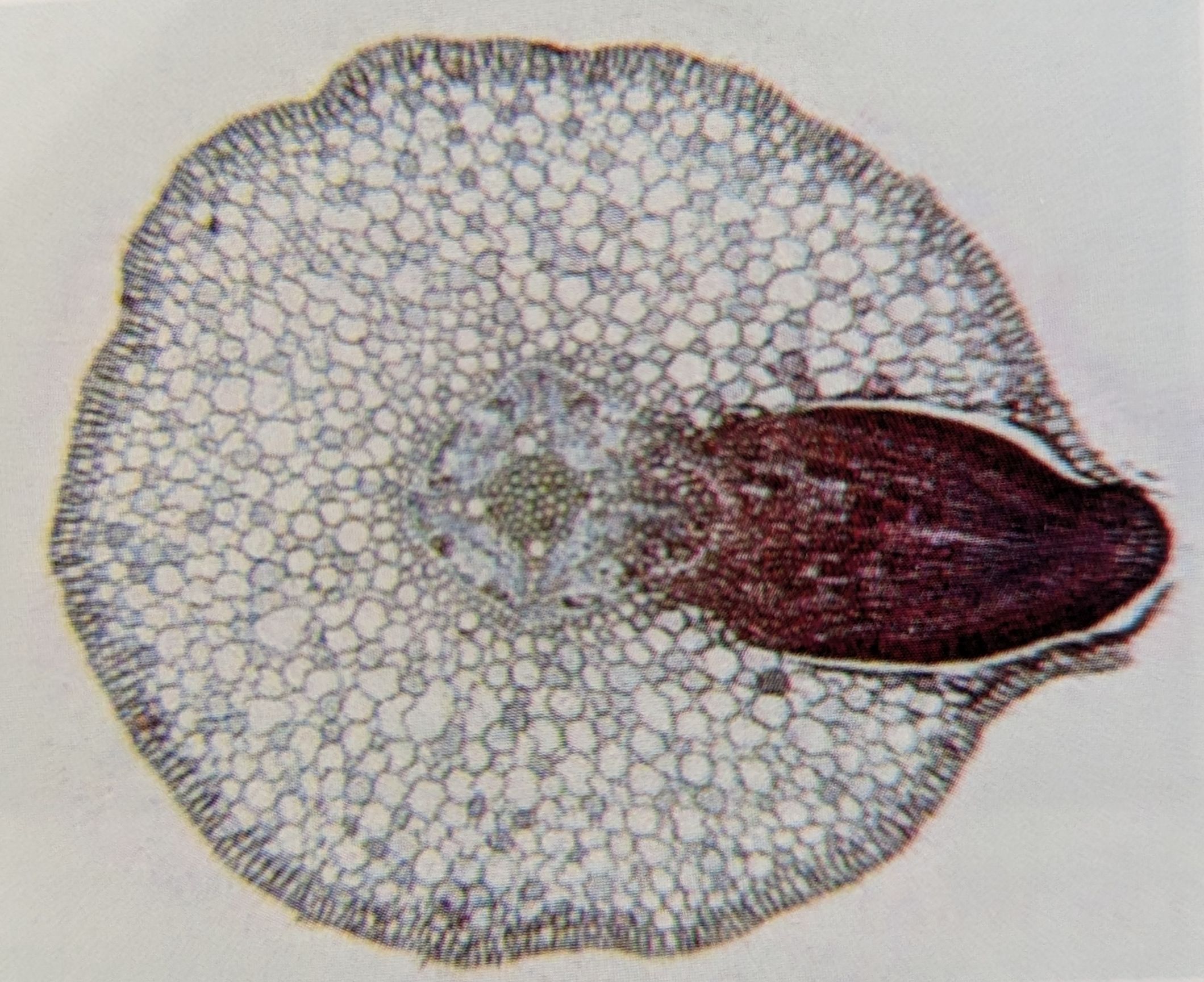
Zech 3:8 I will bring forth my servant the BRANCH.
The Branch is used in Scripture to denote royal descent. The king is the root, the princes are the branches.
Eze 17:6 a vine whose branches turned toward him, and the roots thereof were under him. Verse 12(Ezekiel 17:12): the king and the princes thereof.
Zech 6:12 the man whose name is the BRANCH shall grow up out of his place and he shall build the temple of the LORD and be a priest upon His throne.
Isa 11:1,2 a Branch shall grow out of his [Jesse’s] roots; and the Spirit of the LORD shall rest upon him.
Isa 4:2 He is the Branch of the LORD
Jer 23:5,6:33:14 the Branch of righteousness.
Rom 11:16 if the Root be holy, so are the branches.
Our Father is holy; He is the Root.
John 17:11 Holy Father, Jesus prayed
Matt 6:9 Our Father which art in heaven, hallowed be Thy name
Jesus, the Branch, is also holy.
Mark 1:24 Jesus, the Holy one of God
We are branches of Jesus, the true vine.
John 15:1 His Father is the Gardener who planted the true vine; we bear fruit as branches off the BRANCH, if we abide in the Vine, Jesus.
Rom 11:17 we partake of the Root and fatness of the olive tree
The Stone
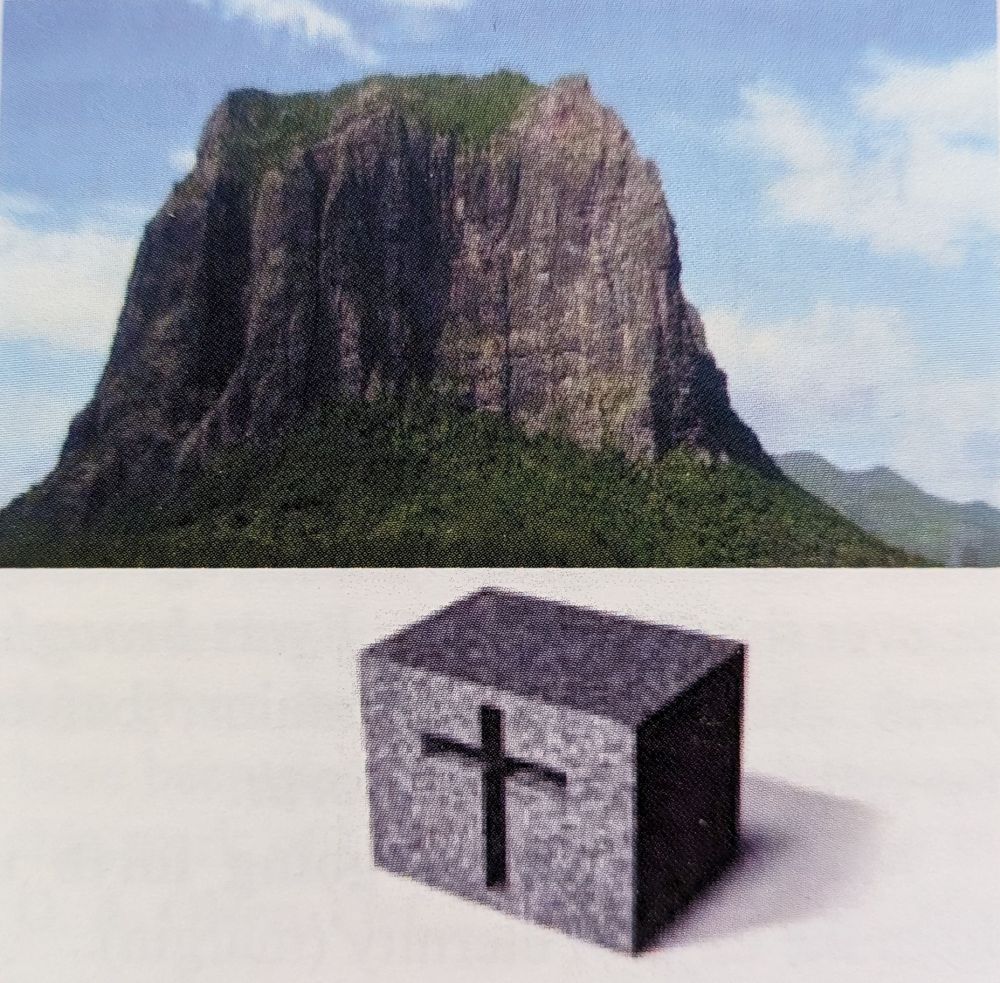
Zech 3:9 Behold the Stone which I have laid before Joshua the high priest.
Where does the Stone come from?
Zech 4:7 O great Mountain before Zerubbabel the governor…and he shall bring forth a Headstone.
Joshua the high priest (Christ), and Zerubbabel the governor (his Father) are symbolized by the Stone (Christ) and the great Mountain (his Father).
Isa 28:16 the Lord God lays in Zion a Stone, a precious corner(stone).
1Pet 2:4 a living Stone, head of the corner.
Dan 2:45 the Stone was cut out of the Mountain without hands.
Ex 31:18 the divine Word was written with the finger of God on tables of stone
Ex 3:1 from the Mountain of God
Eze 28:12 the holy Mountain of God has stones of fire (filled with His Spirit)
Just like branches of the BRANCH, so we are also lively stones cut from the Living Stone 1Pet 2:5
Isa 51:1 the Rock you are hewn from
Deut 32:18 of the Rock that begat you
2Sam 22:47 and the God of the Rock.
1Cor 3:23 You are of Christ and Christ is of God
The Rock is just as old as the Mountain. The Rock has the same substance, the same nature, the same character, it’s just as hard, just as enduring as the Mountain because it came out of the Mountain. The Rock and the Mountain are the same; they are one in quality, character, nature.
The Arm of the Lord
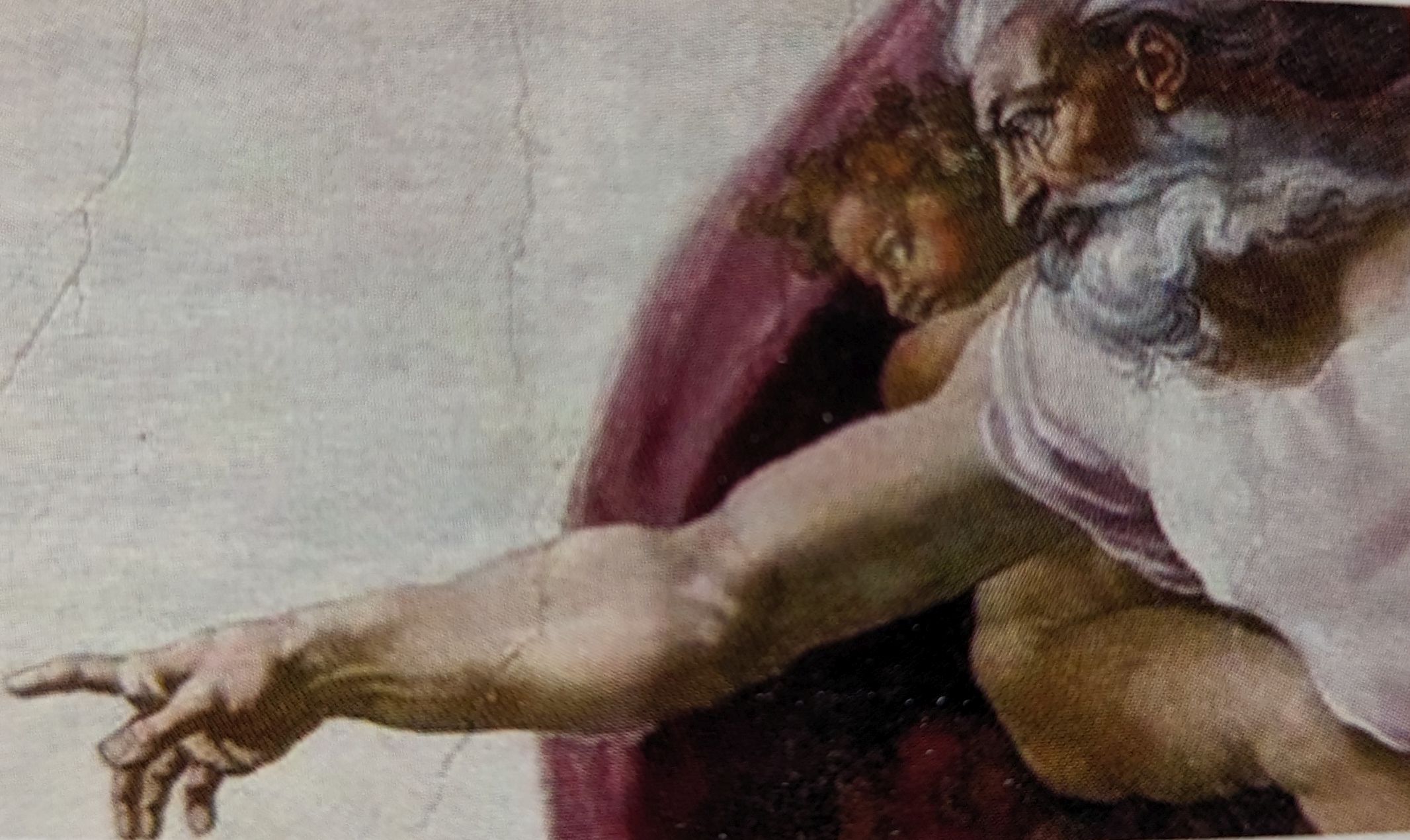
Isa 53:1 To whom is the arm of the Lord revealed?
John 12:37 Though he had done so many miracles yet they believed not
Verse 38(John 12:38): That the saying of Esaias the prophet might be fulfilled, he spake, Lord, who hath believed our report and to whom hath the arm of the Lord been revealed?
John identified Jesus as the Arm of the Lord. So did David.
Psalm 44:1-3 We have heard with our ears, O God, how thou didst drive out the heathen with Thy Hand…Thy right Hand, and Thine Arm.
Isa 63:5 Mine own Arm brought salvation unto Me.
Psalm 98:1 Sing unto the LORD… His right Hand, and His holy Arm, hath gotten Him the victory.
Jer 32:17 LORD God…Thou has made the heavens and the earth by thy great power and stretched out Arm
Isa 48:13 Mine Hand also has laid the foundation of the earth, and my right Hand has spanned the heavens
Deut 33:27 The eternal God is thy refuge and underneath are the everlasting Arms.
Jesus is God’s glorious Arm, His right Hand. He is not only our Saviour, but God’s Saviour as well. He has brought salvation to the Father; he has gotten Him the victory. He is also the Creator of all by His Father’s power.
Jesus is not only the Lamb of God, he is the holy Arm of God.
But the best model of all is the image of God in man.
**Page13**
[Image]
The Image of God

The Son is the image of his Father.
Col 1:15 Christ is the image of the invisible God
2Cor 4:4 Christ is the image of God
Heb 1:3 the express image (Greek: charakter, impress, stamp) of His (God the Father’s) person
We can better understand God’s divinity by looking at man’s creation.
Rom 1:20 The invisible things of him from the creation of the world are clearly seen being understood by the things that are made, even his eternal power and Godhead (divinity).
Gen 1:26 God said, Let us make man in our own image.
The Godhead agreed to make man just like themselves, to demonstrate to the universe their own relationship.
Gen 1:27 So God made man in his own image, in the image of God created he him.
Eph 3:9 God created all things by Jesus Christ.
Heb 1:2 by whom also he made the worlds.
John 1:3 All things were made by him
The Father said to Jesus, “Let us make man.” Then Jesus made man “in his own image.”
Gen 1:27 He created male and female
Matt 19:4 at the beginning he made them male and female
1Tim 2:13 Adam was first formed, then Eve
Eph 5:23 husband is head of the wife
1Cor 11:3 as the head of Christ is God.
Gen 5:1 In the day that God created man, he made him in His likeness
Gen 9:6 in the image of God he made man.
James 3:9 Men have been made in the likeness of God
Adam was at first alone.
God wanted Adam to experience what it was like to be incomplete. And as God had named all things in heaven (Isa 40:26), he appointed Adam the task of naming everything on earth.
At the end of each day of creation, God said, “It is good.” But then He made Adam in His own image and God said, “It is not good – that man should be alone” Gen 2:18.
Adam was alone. And it was not good. So woman came forth “out of man” as part of his very own body.
1Cor 11:12 the woman is made from the man (margin).
Gen 2:21,22 And the LORD God took one of Adam’s ribs and closed up the flesh…and made (Hebrew: builded) a woman and brought her unto the man.
Gen 2:23,24 Adam said, This is now bone of my bone and flesh of my flesh…She shall be called woman because she was taken out of man… and they shall be one flesh.
Adam and Eve were two unique human beings. There has never been another two like them both one of a kind.
Adam: the only human not begotten. Eve: the only human begotten. from another human’s side. She was not created from nothing but was taken out of Adam’s side. She existed in Adam, a part of him, before she was taken out.
“Eve was created from a rib taken from the side of Adam… to stand by his side as an equal, to be loved and protected by him. A part of man, bone of his bone, and flesh of his flesh, she was his second self, showing the close union and the affectionate attachment that should exist in this relation.” — Patriarchs and Prophets p. 46
So also the Word is the unique Son of God begotten of the Father, taken from His bosom, His side, to be the Father’s Second Self.
Adam’s side was opened and Eve came out from him. Jesus was pierced in His side on the cross “and forthwith came there out blood and water” John 19:34
Jesus “came forth from the Father” John 16:28. “They have known surely that I came out from Thee” John 17:8. Jesus is both human (life blood) and spirit (cleansing water).
Zech 13:1 In that day there shall be a fountain opened to the house of David and to the inhabitants of Jerusalem for sin (his sinless life covers our sins) and for uncleanness (his Spirit washes us).
Eve was the same substance as Adam. They were both equal in nature. She was just as human as he was. But Eve was begotten in a different manner than all other human births.
So, too, the Son of God was begotten of his Father. They both had the same divine substance, both equal in nature. Christ was just as divine as his Father.
But the Son was begotten in a different manner in eternity than he was later born of Mary in time.
Adam and Eve were essentially the same age; both appeared on day six. Father and Son are essentially of the same age; both are from eternity.
We can understand something of the relationship between the Father and the Son by studying the creation of Adam and Eve.
As Adam begat Eve, the Father begat Christ, and Christ begets us, giving us His spirit, as Adam gave his rib. We are part of Christ, we “partake” of his divine nature. We are born again; Christ is in us; we have his character.
As Christ is the Second Adam, so also Eve is also the Second Christ. As Adam and Eve were one flesh, so also the Father and Son are one spirit. Ellen White recommended this creed for our church.
“Christ’s prayer to His Father, contained in the seventeenth chapter of John, is to be our church creed.” — Signs of the Times May 2, 1900
“This is life eternal that they might know Thee the only true God, and Jesus Christ…I came out from Thee…Thou Father art in Me, and I in Thee…they may be one as we are one” John 17
**Page14**
D.M. Canright
Dudley Canright wrote frequently in defense of the begotten Son within the pages of the Review and Herald. It is a fact that he eventually left the Seventh-day Adventist Church to join the Trinitarian Baptists and wrote a book called “Seventh-day Adventism Renounced” which went through 14. editions. Significantly, it was not his original (and quite outspoken) belief in the begotten Son that led to his apostasy. In 1867 he was quite antitrinitarian. After quoting John 1:1, John 1:18 and John 3:16 he wrote:
“According to this, Jesus Christ is begotten of God in a sense that no other being is; else he could not be his only begotten Son. Angels are called sons of God, and so are righteous men; but Christ is his Son in a higher sense, in a closer relation, than either of these.”
“God made men and angels out of materials already created. He is the author of their existence, their Creator, hence their Father. But Jesus Christ was begotten of the Father’s own substance. He was not created out of material as the angels and other creatures were. He is truly and emphatically the ‘Son of God.’ the same as I am the son of my father.”
“Divinity alone is worthy of worship, and to worship anything else would be idolatry. Hence Paul places Christ far above the angels, and makes a striking contrast between them. He asks, ‘For unto which of the angels said he at any time, Thou art my Son, this day have I begotten thee?’ The implied answer is, that he was ‘made so much better than the angels.’”
“But while the Son is so plainly placed far above all created beings, he is at the same time just as plainly stated to be distinct and separate from the Father.” — Review and Herald, June 18, 1867
Early Canright was a believer in the literal Son of God who was fully divine, yet a separate and distinct person from the Father. But while Canright “converted” to a belief in the Trinity, Adventism did not, according to him, well into the 20th century.
In the 1914 edition of his book, Canright was still describing the Adventists as believing in the literal begotten Son of God.
“In doctrine they differ radically from evangelical churches. The main points are these as taught in all their books: They hold to the materiality of all things; belief in the sonship of Christ…”
This is confirmed by an experience reported by a Brother Johnson and printed in an 1867 Review issue. He was on a train ride home from a conference with another sister. They were joined by two Congregational preachers who, on learning that they were Seventh-day Adventists, asked if they believed in Christ’s divinity.
“I now thought it was my turn to join in; so I replied, Why, yes sir. We believe that Christ is all divine; that in him dwelt ‘the fullness of the Godhead bodily;’ that he is ‘the brightness of the Father’s glory, the express image of his person, up holding all things by the word of his power,’ &c., &c.” — Review & Herald June 25, 1867.
James White had a similar encounter with a Christian missionary three years later.
“This missionary seemed very liberal in his feelings toward all Christians. But after catechizing us upon the trinity, and finding that we were not sound upon the subject of his triune God, he became earnest in denouncing unitarianism, which takes from Christ his divinity, and leaves him but a man. Here, as far as our views were concerned, he was combating a man of straw. We do not deny the divinity of Christ.” — James White, Review & Herald June 6, 1871.
The Adventist position continually battled against the two extremes: Unitarianism and Trinitarianism.
“The former makes the ‘only Begotten of the Father,’ a mere mortal, finite man; the latter makes him the Infinite, Omnipotent, All-wise, and Eternal God, absolutely equal with the Everlasting Father. Now, I understand the truth to be in the medium between these two extremes.” — James White, Review & Herald Nov. 21, 1854
James. M. Stephenson
Stephenson authored a book called “The Atonement” which was also published in a series of articles appearing in several early issues of the Review and Herald. He begins:
“The question now to be considered, then, is not whether the only begotten Son of God was Divine, immortal, or the most dignified and exalted being, the Father only excepted, in the entire Universe; all this has been proved, and but few will call it in question; but whether this august Personage is self-existent and eternal, in its absolute, or unlimited sense; or whether in his highest nature, and character, he had an origin, and consequently beginning of days.” The Atonement p. 128; — Review & Herald Nov. 14, 1854.
The prevailing belief in the begotten Son understood that his origin, proceeding from the Father, would endow him with innate divinity and immortality. This was not a problem for the Adventists. But the use of the designations “Father” and “Son” was certainly problematic for Trinitarians.
“The idea of Father and Son supposes priority of the existence of the one, and the subsequent existence of the other. To say that the Son is as old as his Father, is a palpable contradiction of terms. It is a natural impossibility for the Father to be as young as the Son, or the Son to be as old as the Father. If it be said that this term is only used in an accommodated sense, it still remains to be accounted for, why the Father should use as the uniform title of the highest, and most endearing relation between himself and our Lord, a term which, in its uniform signification, would contradict the very idea he wished to convey. If the inspired writers had wished to convey the idea of the co-etaneous existence, and eternity of the Father and Son, they could not possibly have used more incompatible terms.” — Review & Herald, June 18, 1867
If God wished to convey the notion of an intimate union between Himself and His Son, why didn’t he use the terms husband and wife? They are, after all, one flesh.
**Page15**

Modern apologists dismiss the language of Father-Son as merely human attempts to express the close relationship experienced by the Godhead. But we must remember that it was God Himself who employed these terms.
At Christ’s baptism and his transfiguration, the Father spoke audibly, calling Christ His beloved “Son.” This distinction is discussed by Stephenson as Waggoner would later.
“…the Father alone is supremely, or absolutely, good; and that he alone is immortal in an absolute sense; that he alone is self-existent; and, that, consequently, every other being, however high or low, is absolutely dependent upon him for life; for being. This idea is most emphatically expressed by our Saviour himself: ‘For as the Father hath life in himself, so hath he given to the Son to have life in himself.’ John v, 26(John 5:26).” — The Atonement, p. 131.
He observed, as would Cottrell, that the Father must first have a Son to send.
“Paul says, ‘And again, when he bringeth the first-begotten into the world, he saith, And let all the angels of God worship him.’ Heb. i, 6(Hebrews 1:6). He must have been his Son before he could send him into the world. In verse 2(Hebrews 1:2), the Father declares that he made the worlds by the same Son he is here represented as sending into the world. His Son must have existed before he created the worlds; and he must have been begotten before he existed; hence the begetting here spoken of, must refer to his Divine nature, and in reference to his order, he is the first-begotten; hence as a matter of necessity he must have been ‘the first born of every creature.’ Col. i, 15(Colossians 1:15).” — ibid p. 132
Stephenson later left the Adventists over the Sabbath, believing that there would be no Sabbath in the age to come. James White tried to befriend him by printing his articles and publishing his book. But Ellen, while disapproving his position on the Sabbath, did not condemn his Christology.
“I was then shown the case of Stephenson and Hall of Wisconsin; that they were convicted while we were at Wisconsin in June, 1854, that the visions were of God; but they examined them and compared them with the Age to Come, and because the visions did not agree with their views of the Age to Come, they sacrificed the visions for the Age to Come.” — Spiritual Gifts Vol. 4b 1864 p. 4.
R. F. Cottrell 1869
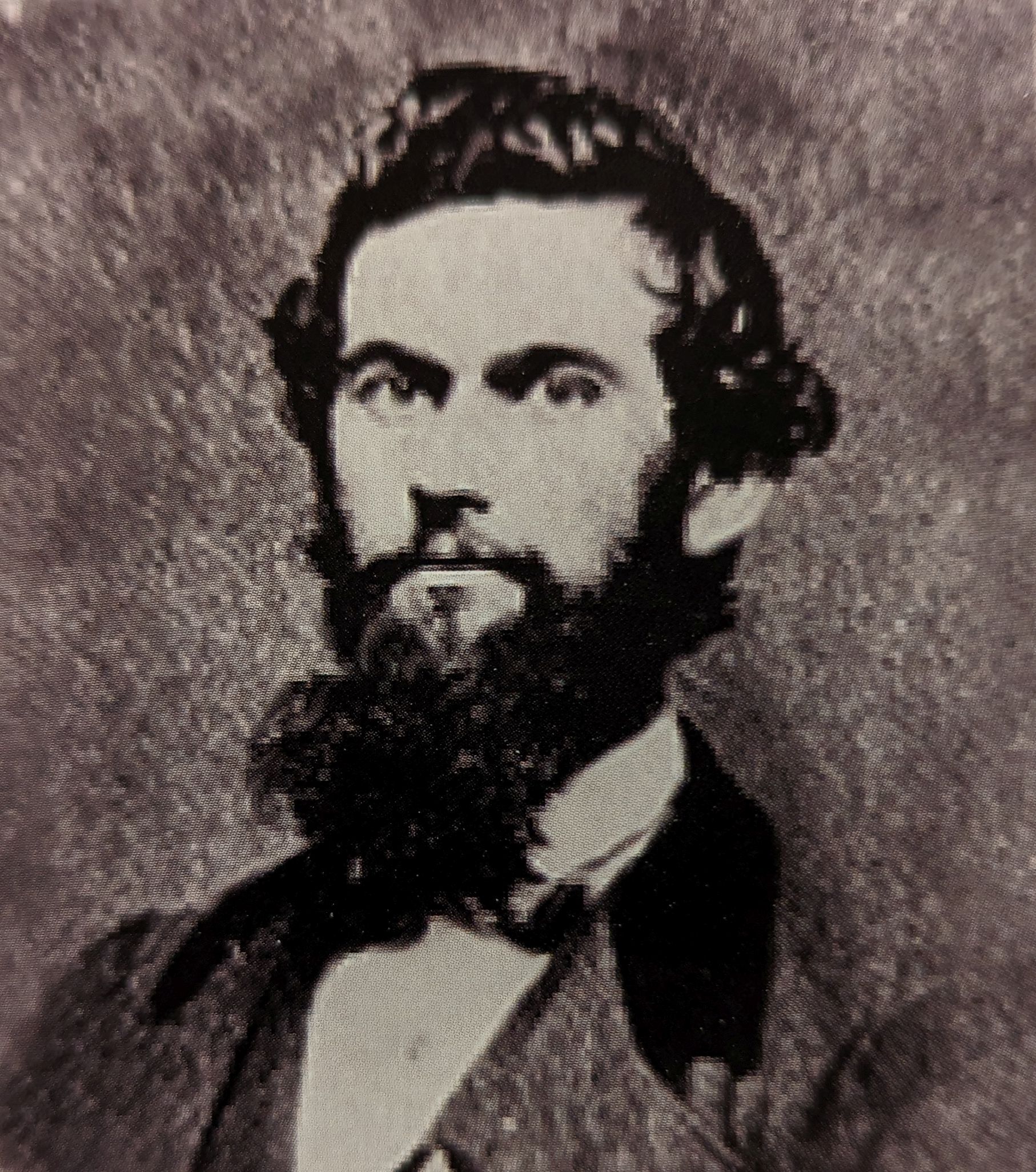
Roswell Fenner Cottrell, a former Seventh-day Baptist joined the Adventists after hearing Joseph Bates in 1849. He joined the Review & Herald editorial staff in 1855. Cottrell confessed his belief concerning the divinity and oneness of Christ and His Father while rejecting the triune concept of Deity.
“The Trinity, or the triune God, is unknown to the Bible; and I have entertained the idea that doctrines which require words coined in the human mind to express them, are coined doctrines.” — R. F. Cottrell, Review & Herald, June 1, 1869
He believed just what the Bible says.
“I believe all that the Scriptures say of him. If the testimony represents him as being in glory with the Father before the world was,
I believe it.
If it is said that he was in the beginning with God, that he was God, that all things were made by him and for him, and that without him was not anything made that was made,
I believe it.
If the Scriptures say he is the Son of God,
I believe it.
If it is declared that the Father sent his Son into the world,
I believe he had a Son to send.
If the testimony says he is the beginning of the creation of God,
I believe it.
If he is said to be the brightness of the Father’s glory, and the express image of his person,
I believe it.
And when Jesus says, ‘I and my Father are one,”
I believe it;
and when he says, ‘My Father is greater than 1,”
I believe that too;
it is the word of the Son of God, and besides this it is perfectly reasonable and seemingly self-evident.”
“If I be asked how I believe the Father and Son are one, I reply, They are one in a sense not contrary to sense. If the ‘and’ in the sentence means anything, the Father and the Son are two beings. They are one in the same sense in which Jesus prayed that his disciples might be one.” — Review & Herald, June 1, 1869
That the Father and Son are two separate identities, accepted as a real father and son because the Bible describes them that way, was the accepted belief of the early Adventists.
**Page16**
Uriah Smith 1832-1903
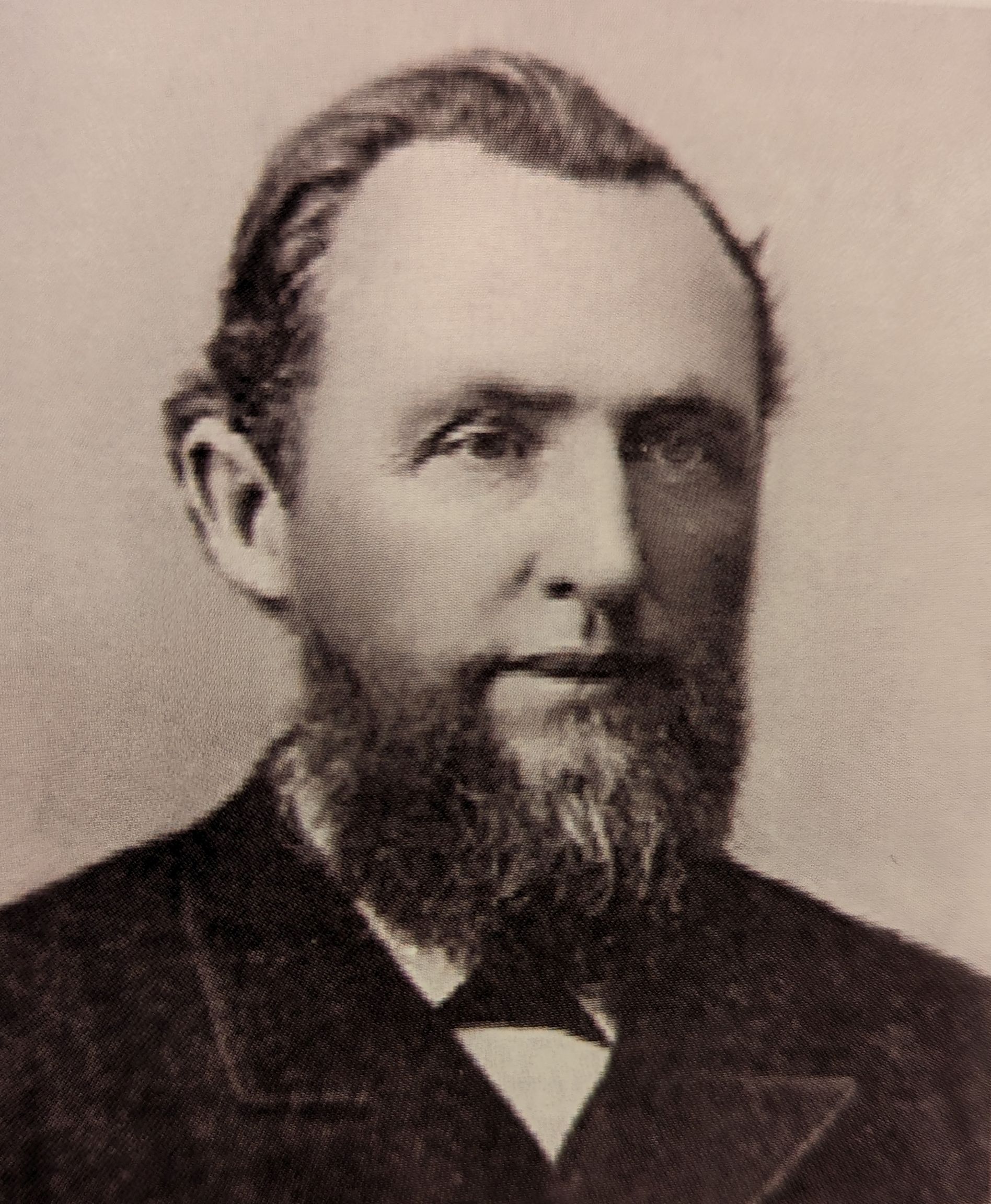
Uriah Smith, who became one of the most prominent figures in the early Adventist movement, joined the Sabbatarians in 1852 at the age of 20, following the lead of his sister Annie and parents who were first Millerites in their home state of New Hampshire. The following year James White invited Uriah and Annie to join the staff of the Review and Herald in Rochester, New York. Two years later he became editor, a post he kept for over 40 years.
Smith was a prolific writer. His first year on the job allowed him to publish a 35,000 word poem he had composed. In 1862 he began presenting a series of articles: “Thoughts on Revelation.” It is of interest that this version made no comment on Rev. 3:14. But when he published these in expanded book form three years later, he included the following comments on the message to Laodicea:
“Moreover he [Christ] is ‘the beginning of the creation of God.’ Not the beginner, but the beginning, of the creation, the first created being, dating his existence far back before any other created being or thing, next to the self-existent and eternal God.” — Uriah Smith, Thoughts Critical and Practical on the Book of Revelation, Battle Creek, Michigan: Steam Press of the Seventh-day Adventist Publishing Association, 1865/7, p. 59.
Whether Uriah equated “created” with “begotten (as many still do today) or truly espoused Arianism (as he is often charged), he quickly changed his wording (or position) in the next edition, published 10 years later:
“Moreover he is ‘the beginning of the creation of God.’ Not the beginner, but the beginning, as some understand, of the creation, the first created being, dating his existence far back before any other created being or thing, next to the self-existent and eternal God. Others, however take the word to mean…” — ibid 1875, p. 66.
In 1882 he added his commentary on Daniel with further modifications.
“Others, however, and more properly we think, take the word to mean ‘agent’ or ‘efficient cause,’ which is one of the definitions of the word, understanding that Christ is the agent through whom God has created all things, but that he himself came into existence in a different manner, as he is called ‘the only begotten’ of the Father. It would seem utterly inappropriate to apply this expression to any being created in the ordinary sense of the term.”
Even more so “Uriah Smith’s Looking Unto Jesus was the most comprehensive and carefully nuanced exposition of the non-trinitarian view among Adventists.” (Jerry Moon, ‘The Trinity’, chapter 13 ‘Trinity and anti-trinitarianism in Seventh-day Adventist history’ page 196, 2002). That Uriah Smith was indeed non-trinitarian is clearly demonstrated:
“God alone is without beginning. At the earliest epoch when a beginning could be, a period so remote that to finite minds it is essentially eternity, – appeared the Word.” “This uncreated Word was the Being, who, in the fullness of time, was made flesh, and dwelt among us.”
“His beginning was not like that of any other being in the universe. It is set forth in the mysterious expressions, ‘his [God’s] only begotten Son’ (John 3:16; 1 John 4:9), ‘the only begotten of the Father‘ (John 1:14), and I proceeded forth and came from God.’ John 8:42.”
“Thus it appears that by some divine impulse or process, not creation, known only to Omniscience, and possible only to Omnipotence, the Son of God appeared.”
“But while as the Son he does not possess a co-eternity of past existence with the Father, the beginning of his existence, as the begotten of the Father, antedates the entire work of creation, in relation to which he stands as joint creator with God. John 1:3; Heb. 1:2. — Uriah Smith, Daniel and the Revelation, 1897 edition p. 430.
Smith is clearly describing the true and literal Son of God, begotten from the Father in a unique way prior to their joint creative work. That he should be labeled as Arian or even “Semi-Arian” by modern critics for professing the statements of Scripture is akin to the unfair description of the Biblical seventh day ascribed by its present day detractors as “the Jewish Sabbath.”
The Apostolic belief in Christ as the only begotten Son of God pre-dated Arius by nearly three centuries, and God’s seventh day Sabbath existed over two millennia before the first Jew.
The assertion is frequently made that Smith’s belief in a literally begotten Son of God was merely his own personal view, was not shared by the majority of Adventists at that time, and particularly was at odds with Ellen White. However, since he employed the very same texts that Ellen White did as support for his theology, it is quite understandable that Ellen White not only failed to reprove him of his “error” but strongly endorsed the truths he presented.
“Especially should the book Daniel and the Revelation be brought before people as the very book for this time. This book contains the message which all need to read and understand. Translated into many different languages, it will be a power to enlighten the world. This book has had a large sale in Australia and New Zealand. By reading it many souls have come to a knowledge of the truth. I have received many letters expressing appreciation of this book.” — Manuscript Releases Volume one, No. 26. page 60, MS 174 1899
**Page17**
“Let our canvassers urge this book upon the attention of all. The Lord has shown me that this book will do a good work in enlightening those who become interested in the truth for this time. Those who embrace the truth now, who have not shared in the experiences of those who entered the work in the early history of the message, should study the instruction given in Daniel and the Revelation, becoming familiar with the truth it presents.”
“Those who are preparing to enter the ministry, who desire to become successful students of the prophecies, will find Daniel and the Revelation an invaluable help. They need to understand this book. It speaks of past, present, and future, laying out the path so plainly that none need err therein. Those who will diligently study this book will have no relish for the cheap sentiments presented by those who have a burning desire to get out some-thing new and strange to present to the flock of God. The rebuke of God is upon all such teachers. They need that one teach them what is meant by godliness and truth.”
“The great, essential questions which God would have presented to the people are found in Daniel and the Revelation. There is found solid, eternal truth for this time. Everyone needs the light and information it contains.” — Ibid page 61
“God desires the light found in the books of Daniel and Revelation to be presented in clear lines. It is painful to think of the many cheap theories picked up and presented to the people by ignorant, unprepared teachers. Those who present their human tests and the nonsensical ideas they have concocted in their own minds, show the character of the goods in their treasure house. They have laid in store shoddy material. Their great desire is to make a sensation.”
“As they receive the knowledge contained in this book, they will have in the treasure house of the mind a store from which they can continually draw as they communicate to others the great, essential truths of God’s Word.” — Ibid, page 62
“The interest in Daniel and the Revelation is to continue as long as probationary time shall last. God used the author of this book as a channel through which to communicate light to direct minds to the truth. Shall we not appreciate this light, which points us to the coming of our Lord Jesus. Christ, our King?”
“I speak of this book because it is a means of educating those who need to understand the truth of the Word. This book should be highly appreciated. It covers much of the ground we have been over in our experience. If the youth will study this book and learn for themselves what is truth, they will be saved from many perils.”
“Young men, take up the work of canvassing for Daniel and the Revelation. Do all you possibly can to sell this book. Enter upon the work with as much earnestness as if it were a new book. And remember that as you canvass for it, you are to become familiar with the truths it contains.” — Ibid page 63
“The grand instruction contained in Daniel and Revelation has been eagerly perused by many in Australia. This book has been the means of bringing many precious souls to knowledge of the truth. Everything that can be done should be done to circulate Thoughts on Daniel and the Revelation. I know of no other book that can take the place of this one. It is God’s helping hand.” — (Ellen G. White, Manuscript Releases Volume 21 No. 1595, 1901)
“Instruction has been given me that the important books containing the light that God has given regarding Satan’s apostasy in heaven should be given a wide circulation just now; for through them the truth will reach many minds. ‘Patriarchs and Prophets,” ‘Daniel and the Revelation,’ and ‘Great Controversy’ are needed now as never before.” — Ellen G. White, Review and Herald February 16, 1905.
There is no indication here in these recommendations by Ellen White that Uriah Smith’s theology was wrong or that he was teaching error.
Quite the contrary. She said it contains the message all need to understand as never before; it is God’s helping hand, presenting great, essential, eternal truths of God’s Word for this time.
The same year that Desire of Ages was published, Uriah Smith released his own work on the life of Christ, Looking Unto Jesus. Both books were heavily promoted, side-by-side in the Review and Herald for years. The 1913 SDA Year Book inside front cover shown here featured both Ellen White and Uriah Smith books with Daniel and the Revelation at the top of the list:
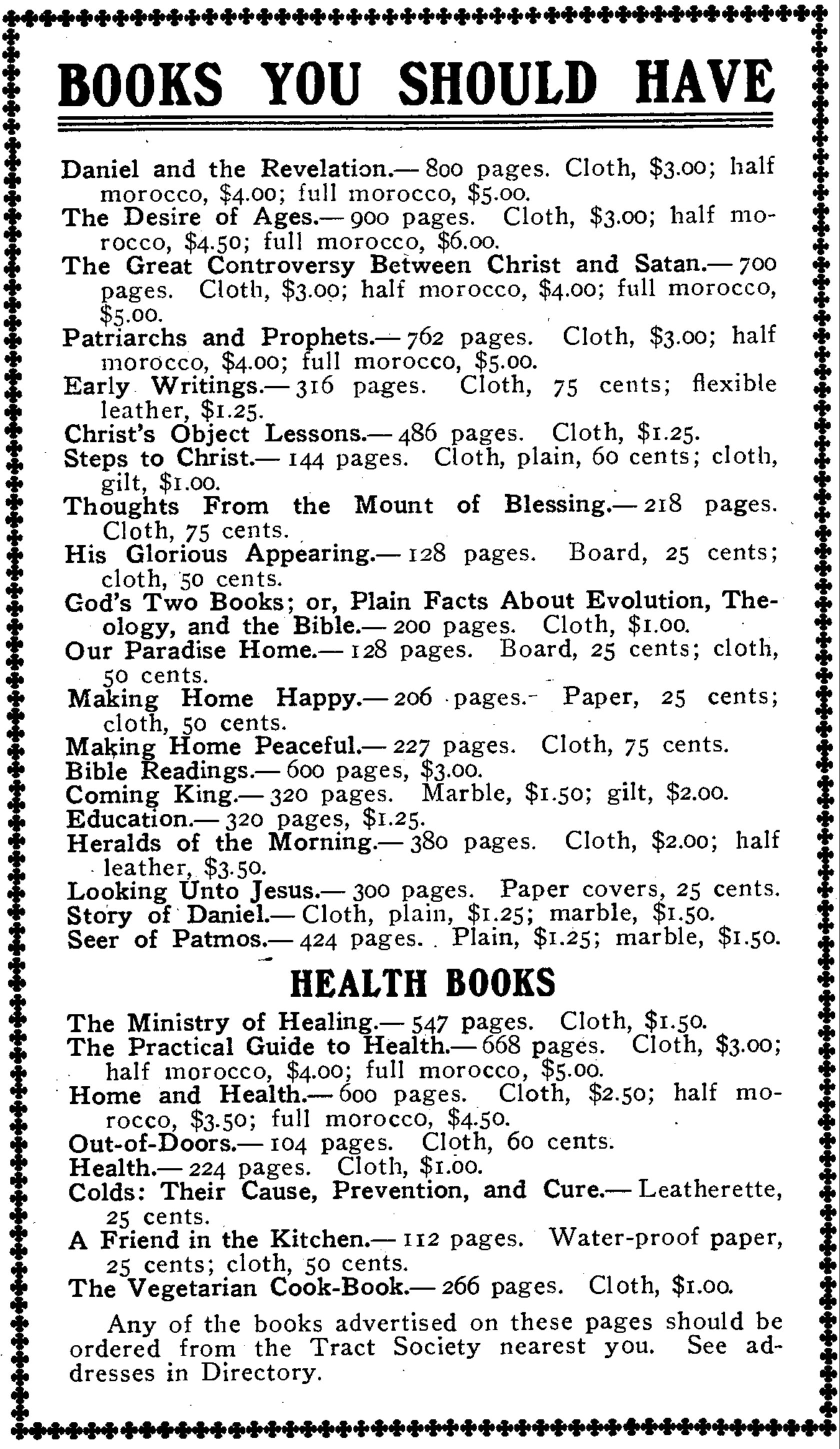
Her approval of Uriah Smith continued until at least 1905, well after she wrote the Desire of Ages in 1898, her allegedly Trinitarian masterpiece that is said to have dramatically propelled the Adventist church into conformity with the mainstream evangelical world.
E. D. Thomas, wrote the following promotional in the March 15, 1938 edition of the Eastern Tidings, Southern Asian Division, under the heading ‘Sabbath School members, attention:”
“The Sabbath school lessons for the second quarter of 1938 are on the sanctuary. These are important and much needed lessons. Among the other volumes are ‘Looking Unto Jesus,’ by Uriah Smith, and ‘The Cross and Its Shadow,’ by S. N. Haskell.”
**Page18**
As can be seen by these examples, belief in the begotten Son was pervasive and protracted throughout the years of Ellen White’s ministry. Interestingly, today it is generally said that this was only a “minority view” and that Ellen White intentionally steered the course of church thought toward a solid belief in orthodox Trinitarian dogma by emphasizing the eternal deity of Christ and explicitly identifying “the third person of the Godhead.” Today’s version of Adventist history pictures her primary protagonist to be Uriah Smith, later editor of the Review and Herald, crafter of the Church’s 25 Fundamental Beliefs, and author of the “Daniel and the Revelation,” an embarrassingly non-trinitarian work that was sold around the world and promoted by the church’s three publishing houses and Ellen White herself for at least 70 years.
Ellen White did not oppose Uriah Smith’s theology or condemn his explicit statements regarding Christ’s Son-ship “from the days of eternity” the same expression she herself used (see next section). She did, however, single out Kellogg’s Living Temple and openly denounced it at the 1905 General Conference. She also dealt with Albion Ballenger advising him that he was misapplying scripture in teaching that Christ’s atonement was finished at the cross and he directly entered the Most Holy place at His ascension.
But no words of reproof, censure, or correction came from her pen to Uriah Smith. By this time he had been publishing numerous articles and books for over 40 years, clearly presenting the begotten Son of the Father at “the earliest epoch” of time. Looking Unto Jesus had been off the press for 7 years. Yet Ellen White said nothing to discredit Uriah’s ideas about the “person and personality of God.”
The Fundamentals
Uriah Smith was also instrumental in setting forth “a synopsis” of the Adventist faith. As editor of the Review and Herald, he wrote a list of 25 “Fundamental Principles” which was first published in pamphlet form in 1872. James White subsequently reprinted them in the very first June 4, 1874 issue of the Signs of the Times. His introduction carefully stressed that the Advent people had no creed “aside from the Bible” but their system of faith enjoyed “entire unanimity” among them. Below is a reproduction as they appeared in the inaugural issue.

In 1889 it was included in the SDA Yearbook with the first two items unchanged and the introduction significantly abbreviated but still declaring “no creed but the Bible” and “entire unanimity throughout the body.”
The following propositions may be taken as a summary of the principal features of their religious faith, upon which there is, so far as we know, entire unanimity throughout the body. (The 1889 SDA Yearbook p. 147)
FUNDAMENTAL PRINCIPLES
In presenting to the public this synopsis of our faith, we wish to have it distinctly understood that we have no articles of faith, creed, or discipline, aside from the Bible. We do not put forth this as having any authority with our people, nor is it designed to secure uniformity among them, as a system of faith, but is a brief statement of what is, and has been, with great unanimity, held by them. We often find it necessary to meet inquiries on this subject, and sometimes to correct false statements circulated against us, and to remove erroneous impressions which have obtained with those who have not had an opportunity to become acquainted with our faith and practice. Our only object is to meet this necessity.
As Seventh-day Adventists, we desire simply that our position shall be understood; and we are the more solicitous for this because there are many who call themselves Adventists, who hold. views with which we can have no sympathy, some of which, we think, are subversive of the plainest and most important principles set forth in the word of God. As compared with other Advenists, Seventh-day Adventists differ from one class in believing in the unconscious state of the dead, and the final destruction of the unrepentant wicked; from another, in believing in the perpetuity of the law of God, as summarily contained in the ten commandments, in the operation of the Holy Spirit in the church, and in setting no times for the advent to occur; from all, in the observance of the seventh day of the week as the Sabbath of the Lord, and in many applications of the prophetic scriptures.
With these remarks, we ask the attention of the reader to the following propositions which aim to be a concise statement of the more prominent features of our faith.
1. That there is one God, a personal, spiritual being, the creator of all things. omnipotent, omniscient, and eternal, infinite in wisdom, holiness, justice, goodness, truth, and mercy; unchangeable, and everywhere present by his representative, the Holy Spirit. Ps 139:7.
2. That there is one Lord Jesus Christ, the Son of the Eternal Father, the one by whom God created all things, and by whom they do consist; that he took on him the nature of the seed of Abraham…
**Page19**
[Image]
It did not appear again in a Yearbook until 1905 as shown here on page 188. The same list of Fundamental Principles was reprinted each subsequent year in the SDA yearbook until 1914 when it was attributed to “the late Uriah Smith.”
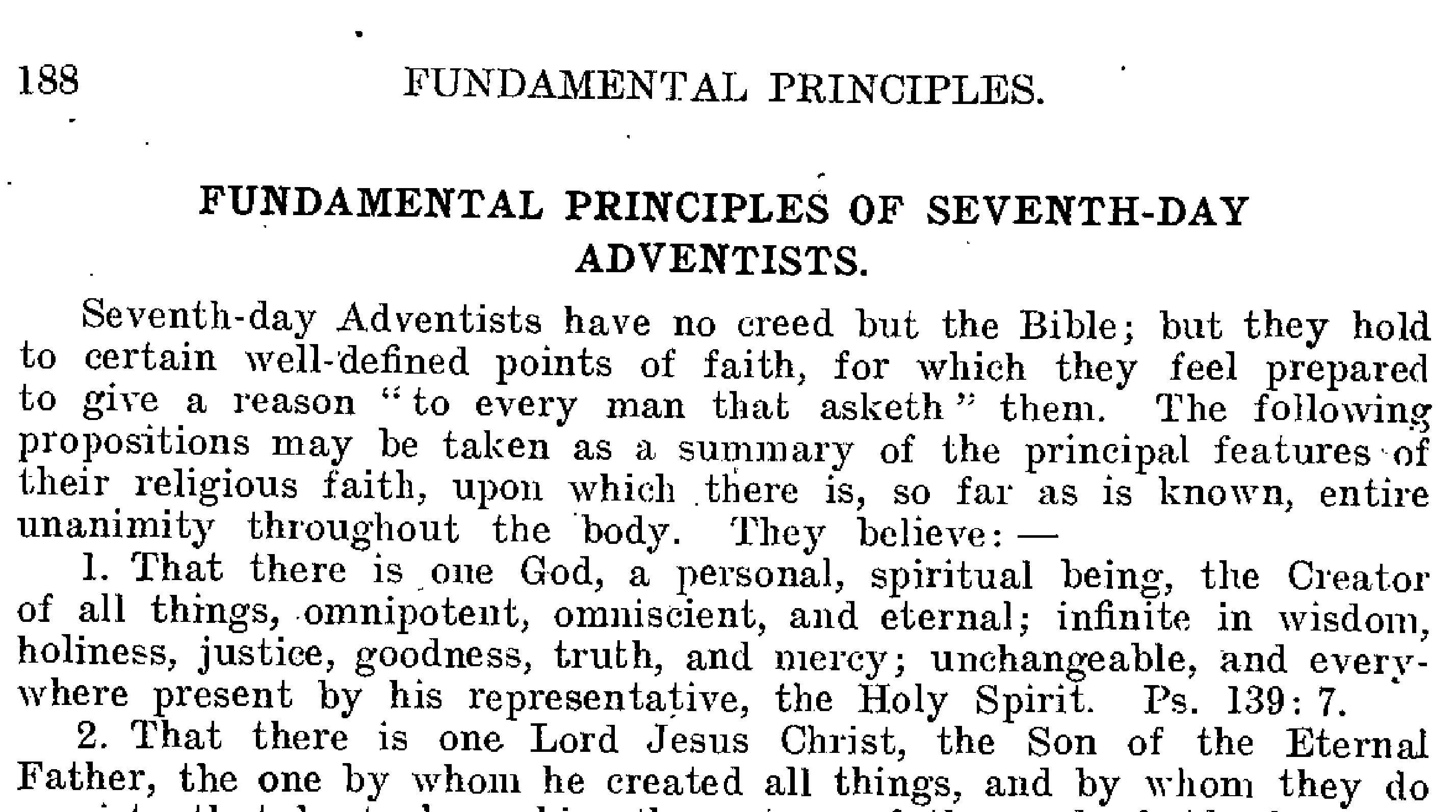
But after Ellen White’s death, it did not appear in the Yearbook until 1931 as shown here on the right. This time there is no mention of “entire unanimity” of these beliefs among the body of believers. But dramatic changes are noticed. The term Trinity is introduced as an equivalent alternative to “Godhead.” The Lord Jesus Christ is now emphasized as “very God.” What does that mean? Certainly not that the Son is actually the Father. This was objected to by every Adventist since James White!
This version was constructed by F.M. Wilcox, then editor of the Review and Herald. His inclusion of the word “Trinity” first appeared in a 1913 issue of the Review:
“Seventh-day Adventists believe, 1. In the divine Trinity. This Trinity consists of the eternal Father, a personal, spiritual being, omnipotent, omniscient, infinite in power, wisdom, and love; of the Lord Jesus Christ, the Son of the eternal Father, through whom the salvation of the redeemed hosts will be accomplished; the Holy Spirit, the third person of the Godhead, the one regenerating agency in the work of redemption.” — F.M.Wilcox, Review and Herald, October 9, 1913
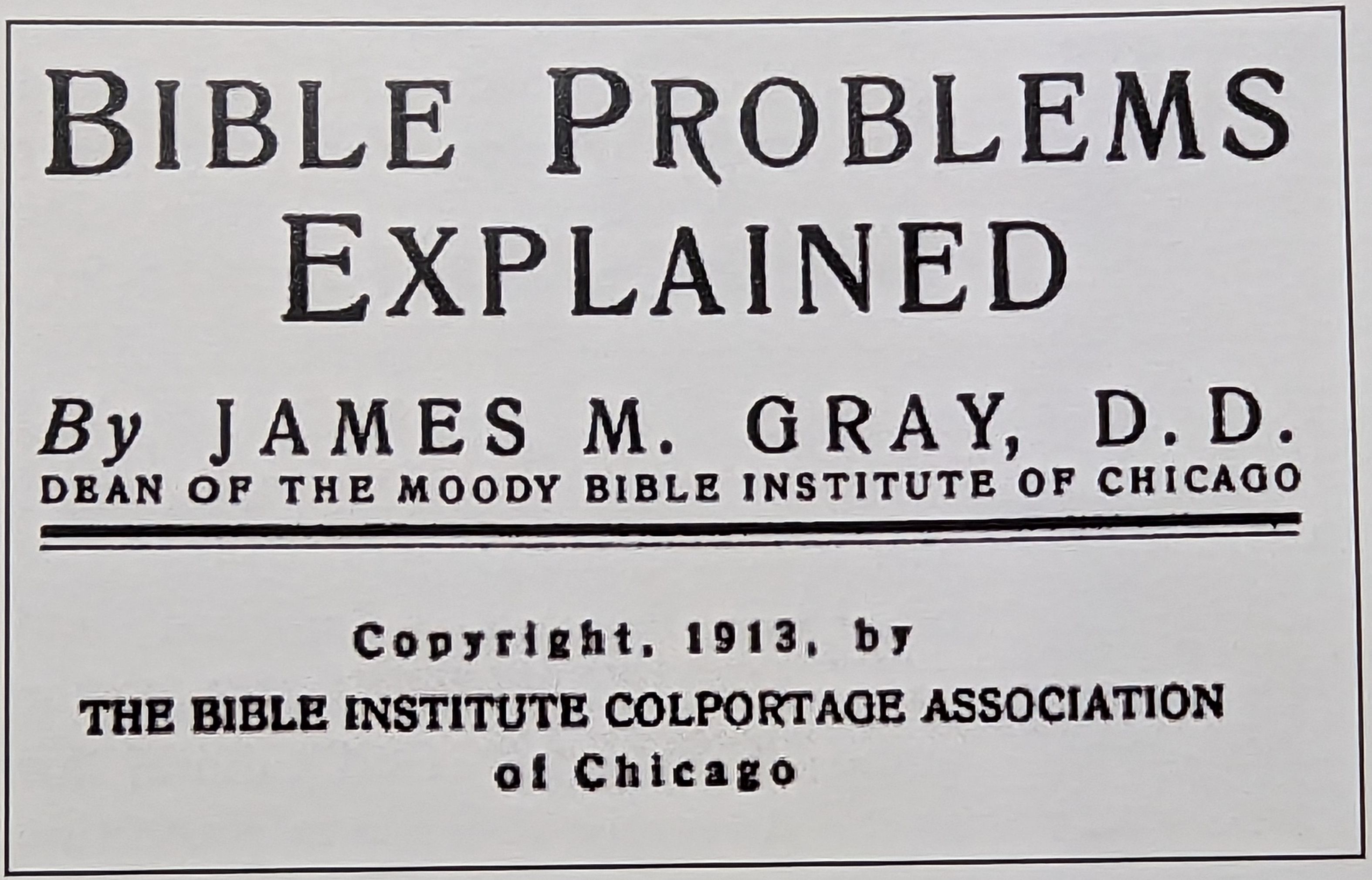
It appears that Wilcox was responding to what James Gray had written in his just published new book, Bible Problems Explained. Gray was the prestigious Dean of the Moody Bible Institute and his incriminating statement against Seventh-day Adventists could not be ignored. On page 81 of his book, Gray announced, “Seventh-day Adventists believe in the Bible.” “But,” he continued, “they reject the Trinity, which involves the deity of Christ.” Gray, as Walter Martin would some 40 years later, provoked a defensive response.
Now three persons are prominent, yet, without stating that they share one “indivisible substance,” it falls short of being fully Trinitarian – only ambiguously Tritheistic: an eternal Father being, a Son and a third person-agency. Some evidence therefore exists for the emergence of a different opinion as to just how the Church should express its belief in the Godhead.
Uriah Smith personally professed his belief in a begotten Son of God, but chose not to incorporate “begotten” into his version of the Fundamental Principles.
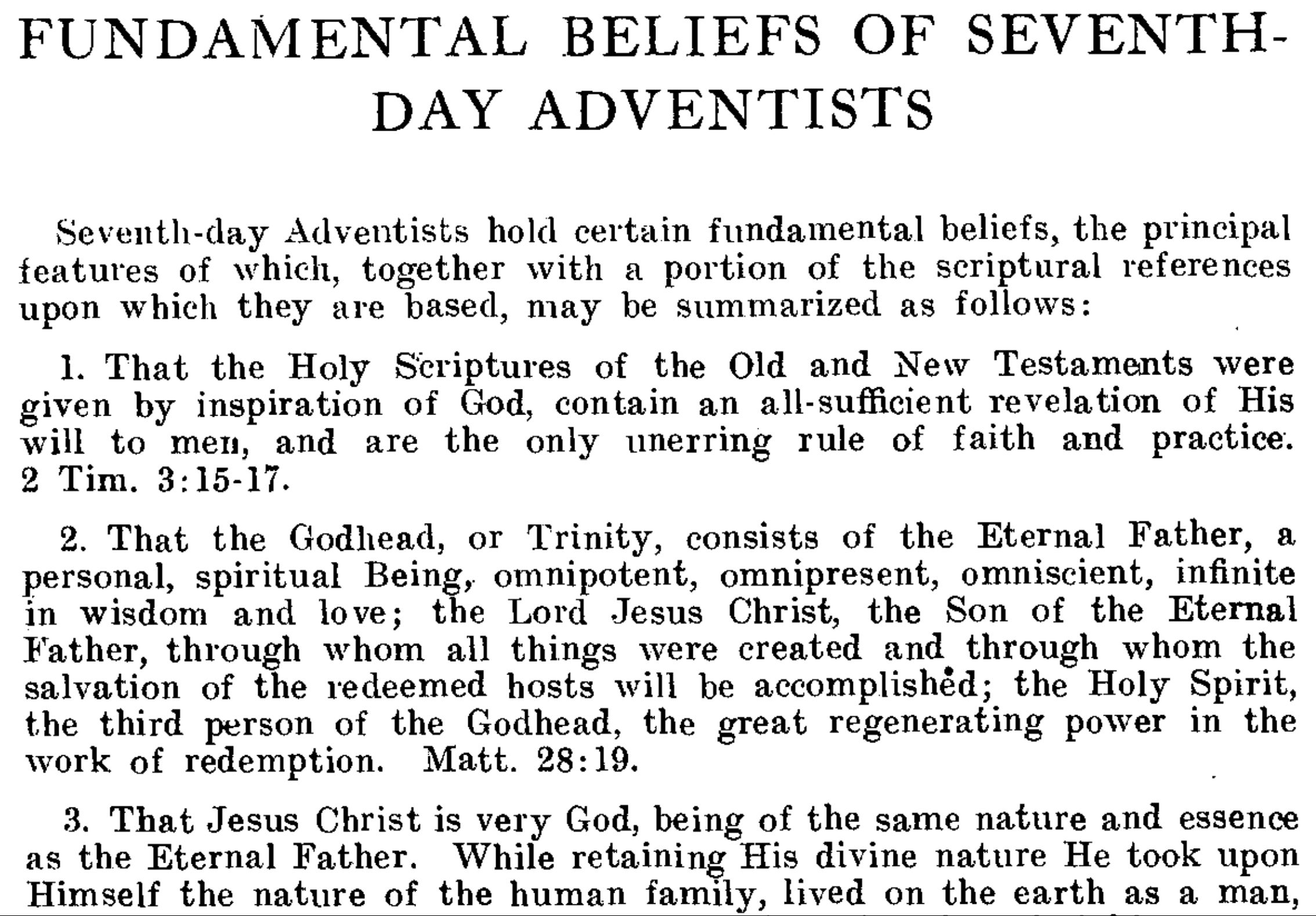
**Page20**
His reserve demonstrates a desire to avoid provocation and limit each statement to such as could be accepted by all members.
It is however a fact of history that Uriah Smith’s Fundamental Principles remained unchanged from 1872 to 1914, a period of 42 years. Besides the original Review and Herald printing in 1874, it also appeared in the Signs of the Times of Feb. 21, 1878, and Review and Herald of Aug. 22, 1912, each time with the same prolog declaring that the beliefs were unanimously held among the Seventh-day Adventist people. Smith’s list of Fundamental Beliefs were admittedly unauthorized. They had not been voted upon for a reason.
Steven Nelson Haskell
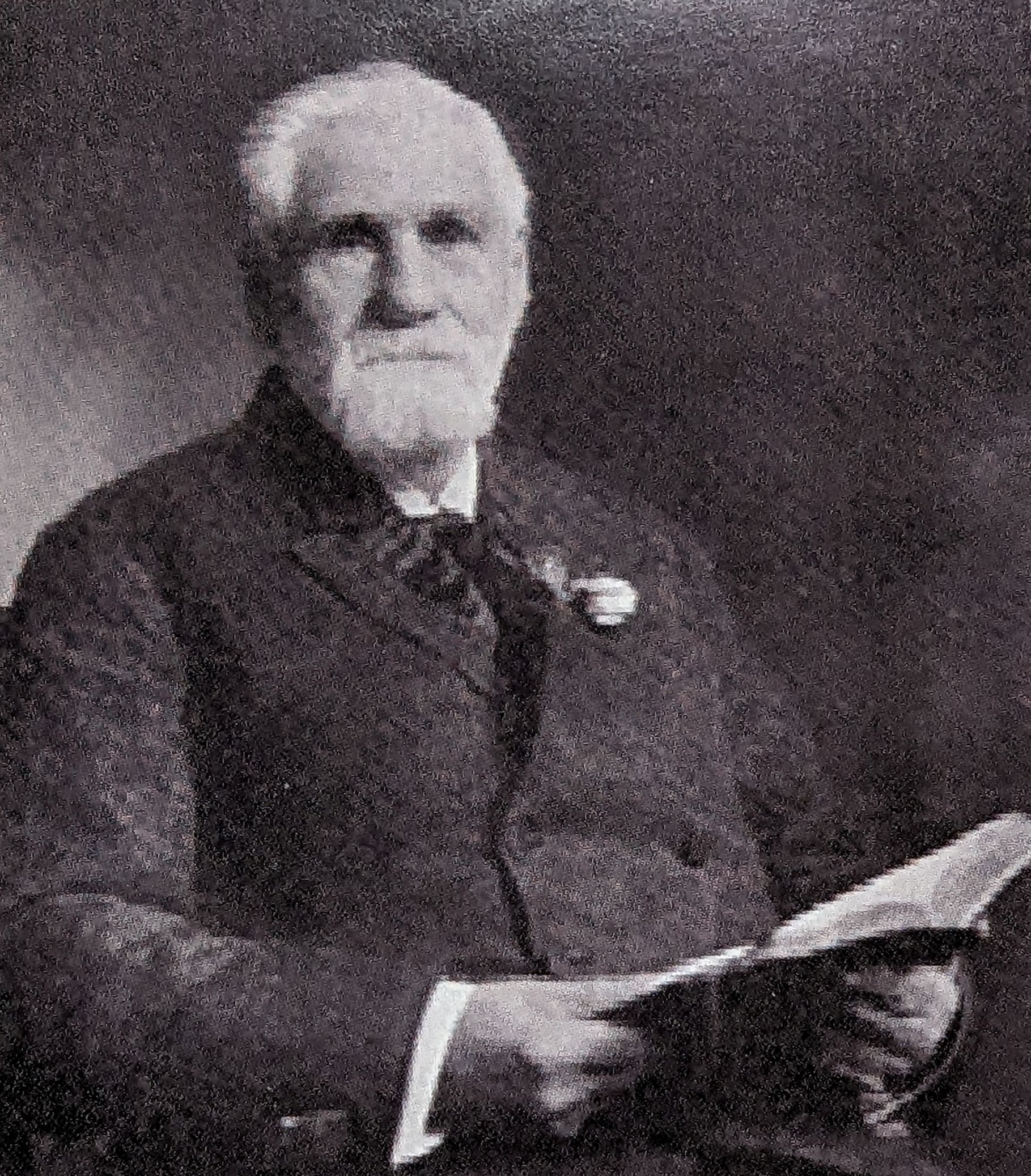
Like Uriah Smith, Haskell also wrote commentaries on Daniel and Revelation. These were published in two books, The Story of Daniel the Prophet (1901) and The Story of the Seer of Patmos (1905). It was at this time that Ellen White, who highly regarded Elder Haskell’s knowledge of the Bible and his reliability as a teacher and Bible instructor, wrote this endorsement:
“Because of the importance of this work, I have urged that Elder Haskell and his wife, as ministers of God, shall give Bible instruction to those who will offer themselves for service.” — (Ellen G. White, Review and Herald, November 29, 1906
It is evident that she had great confidence in Elder Haskell and approved of his theology at this time in his life.
Here are a few samples of Haskell’s position published just the year before on the begotten nature of Christ’s divine origin:
“Back in the ages, which finite mind cannot fathom, the Father and Son were alone in the universe. Christ was the first begotten of the Father, and to Him Jehovah made known the divine plan of Creation.”
“It was then, in those early councils, that Christ’s heart of love was touched and the only begotten Son pledged His life to redeem man, should he yield and fall. Father and Son, surrounded by impenetrable glory, clasped hands. It was in appreciation of this offer, that upon Christ was bestowed creative power, and the everlasting covenant was made; and henceforth Father and Son, with one mind, worked together to complete the work of creation.” — The Story of the Seer of Patmos, 1905 p. 94
Waggoner’s Christology 1888
The Minneapolis General Conference of 1888 featured a spirited and divisive confrontation between the aging champions of God’s moral law as the Adventist defense in protecting God’s seventh-day Sabbath and two youthful thirty-somethings who desired to promote the all sufficiency of Christ who can not only save us from sin but, because “in him dwells all the fullness of the Godhead,” can also give us divine power to overcome sin.
Ellet J. Waggoner, then editor of the new west coast publication, The Signs of the Times, presented a series of devotionals which two years later became the basis for a book entitled Christ and His Righteousness (CHR).
LeRoy Froom, in his Movement of Destiny applauds Waggoner’s presentation as a decisive change in Adventism’s concept of Christ by repeatedly featuring Him in whom “dwelleth all the fullness of the Godhead” Col 2:9 which Froom accepts as His “full divinity.” Froom suggests that this was a radical, new concept for the Advent believers.
In actuality, Waggoner upheld the very same belief that had ever been embraced from the beginning: a literal begotten Son of a real Father, separate and distinct beings, both divine, both from the days of eternity.
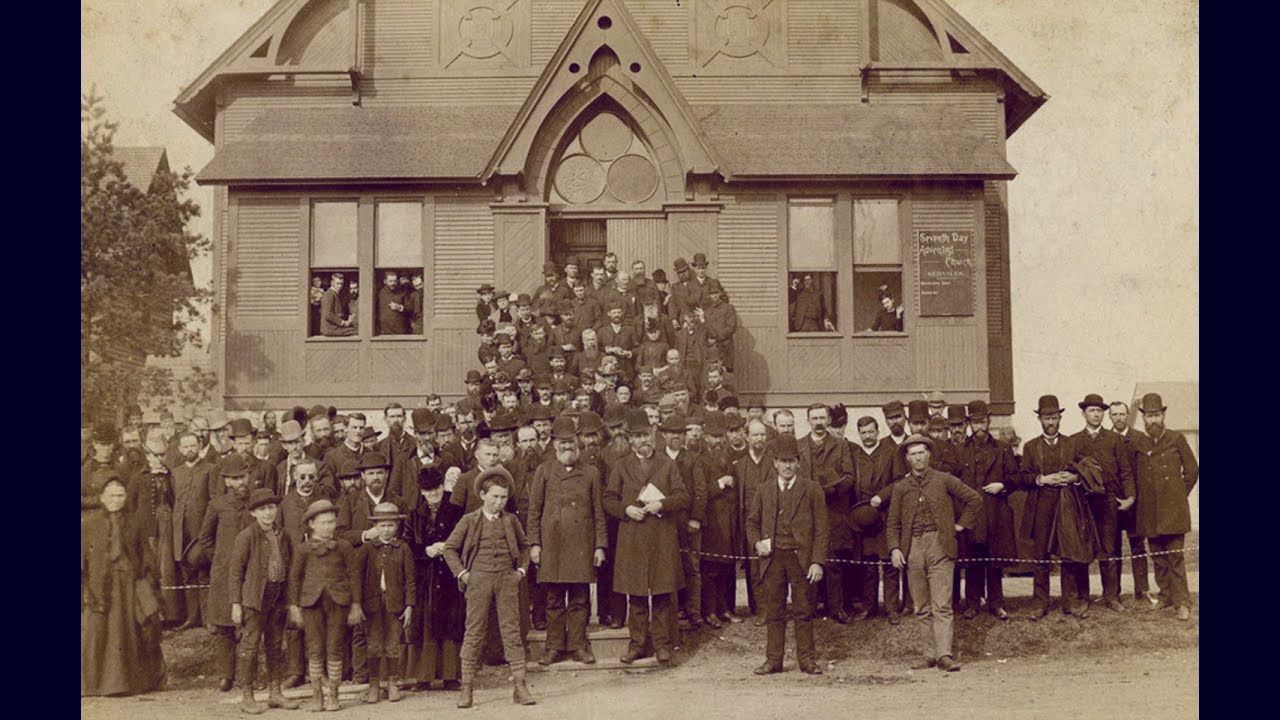
The issue which drew so much fire from “the old guard” was Waggoner’s application of this truth to the impartation of Christ’s righteousness in the life of the Christian as the source of victory over sin – not the keeping of the 10 commandments. There was no dispute over the begotten Son of God.
Waggoner begins by providing a wonderful collection of scripture from which he paints a comprehensive picture of Christ, the “only name under heaven given among men whereby we can be saved” Acts 4:12 for “no man can come unto the Father” but by Him John 14:6 so that when He is “lifted up” all men will be drawn unto Him John 12:32, the “Author and Finisher of our faith” Hebrews 12:2, “in whom are hid all the treasures of wisdom and knowledge” Col 2:3 since “all power
**Page21**
in heaven and earth is given” to Him Matt. 28:19, thus Christ is “the power of God and the wisdom of God” 1Cor. 1:24 “who of God is made unto us. wisdom, and righteousness, and sanctification, and redemption” 1Cor 1:30. Waggoner considered this the “one text which briefly sums up all that Christ is to man.” — CHR pp. 6, 7.
Waggoner also concurred with James and Uriah that Christ is fully. divine by quoting John 5: 22, 23 “For the Father judgeth no man, but hath committed all judgment unto the Son: that all men should honor the Son, even as they honor the Father.” He then concludes “To Christ is committed the highest prerogative, that of judging. He must receive the same honor that is due to God, and for the reason that He is God.” The Bible says so. “In the beginning was the Word, and the Word was with God, and the Word was God.” John 1:1. This “Divine Word is none other than Jesus Christ.” “And the Word was made flesh, and dwelt among us (and we beheld His glory, the glory as of the Only-begotten of the Father), full of grace and truth” vs 18(John 1:14).
Waggoner next probes the meaning of two words: beginning and begotten.
The Word was “in the beginning.” The mind of man cannot grasp the ages that are spanned in this phrase. It is not given to men to know when or how the Son was begotten; but we know that He was the Divine Word, not simply before He came to this earth to die, but even before the world was created. Just before His crucifixion He prayed, “And now, O Father, glorify thou Me with Thine own self with the glory which I had with Thee before the world was.” John 17:5. And more than seven hundred years before His first advent, His coming was thus foretold by the word of inspiration: “But thou, Bethlehem Ephratah, though thou be little among the thousands of Judah, yet out of thee shall He come forth unto Me that is to be ruler in Israel; whose goings forth have been from of old, from the days of eternity.” Micah 5:2, margin. We know that Christ “proceeded forth and came from God” (John 8:42), but it was so far back in the ages of eternity as to be far beyond the grasp of the mind of man.” — CHR p. 9 To “finite comprehension it is practically without beginning.” p. 22.
At the very beginning of his discourse Waggoner plunges into the eternal origins of God’s Son. He does not shy away from invoking the word. “begotten.” In fact, he exploits it to establish the undeniable fact that Christ, the Word, is both God and eternal. To bolster this, he displays a host of scriptural evidence.
“The mighty God… Our God shall come, and shall not keep silence” Ps. 50:1-6. For “the Lord Himself shall descend from heaven with a shout, with the voice of the archangel, and with the trump of God” 1Thess. 4:16. The voice of the Son of God will be heard by all that are in the grave. John 5:28, 29. And “His name shall be called Wonderful, Counselor, the mighty God, the everlasting Father, the Prince of Peace” Isa. 9:6. “Thy throne, O God, is forever and ever.” Ps. 45:6. When “we turn to the New Testament” “We find that God the Father is the speaker, and that He is addressing the Son, calling Him God.” Heb. 1:1-8.
Waggoner next examines the significance of the title “Son of God” by focusing on Heb. 1:4. “He hath by inheritance obtained a more excellent name than they,” the angels. Waggoner italicized these words to make this point.
“A son always rightfully takes the name of the father; and Christ, as “the only begotten Son of God,” has rightfully the same name. A son, also, is, to a greater or less degree, a reproduction of the father; he has, to some extent, the features and personal characteristics of his father, not perfectly, because there is no perfect reproduction among mankind. But there is no imperfection in God, or in any of His works; and so Christ is the “express image” of the Father’s person. Heb. 1:3. As the Son of the self-existent God, He has by nature all the attributes of Deity.”
“It is true that there are many sons of God; but Christ is the “only begotten Son of God,” and therefore the Son of God in a sense in which no other being ever was or ever can be. The angels are sons of God, as was Adam (Job 38:7; Luke 3:38), by creation; Christians are the sons of God by adoption (Rom. 8:14, 15); but Christ is the Son of God by birth.” — CHR p. 12
This last statement was not original with Waggoner. The English Baptist-Calvinist, John Gill said much the same thing over one hundred years earlier in his commentary on Hebrews discussing chapter 1 verse 5(Hebrews 1:5):
“Christ is the Son of God, not by Creation, nor by adoption, nor by office, but by nature; he is the true, proper, natural, and eternal Son of God; and as such is owned and declared by Jehovah the Father, in these words; the foundation of which relation lies in the begetting of him”
Nor was Waggoner the last to employ this same logical-literary pattern. As we saw earlier, Ellen White echoed his same words five years later in the very periodical he was editing.
“God so loved the world, that he gave his only-begotten Son,’- not a son by creation, as were the angels, nor a son by adoption, as is the forgiven sinner, but a Son begotten in the express image of the Father’s person…” — Signs of the Times May 30, 1895
To Waggoner, Christ was God because He said, “I and My Father are one” John 10:30. “When the Father brought the First-begotten into the world, He said, ‘And let all the angels of God worship Him’ Heb. 1:6.”
**Page22**
“Because that Thou, being a man, makest Thyself God” John 10:33. Because “the only-begotten Son, which is in the bosom of the Father, He hath declared Him.” John 1:18. “He has His abode there, and He is [sic] there as a part of the Godhead, as surely when on earth as when in heaven. The use of the present tense implies continued existence. It presents the same idea that is contained in the statement of Jesus to the Jews (John 8:58), ‘Before Abraham was, I am.’” — CHR p. 13-15
More than any other text, Waggoner featured the “fullness” statements of Paul in Col. 1:19; 2:9: “it pleased the Father that in Him [Christ] should all fullness dwell” for “in Him dwelleth all the fullness of the Godhead bodily.” To Waggoner “This is most absolute and unequivocal testimony to the fact that Christ possesses by nature all the attributes of Divinity.” — CHR p. 16.
“And since He is the only-begotten Son of God, He is of the very substance and nature of God, and possesses by birth all the attributes of God.” “So He has ‘life in Himself;” He possesses immortality in His own right, and can confer immortality upon others.” — CHR P. 22.
But Waggoner is careful to assure his readers that a “begotten” Son is not a “created” Son.
“He is begotten, not created” p. 21.
Although Revelation 3:14 calls Christ “the Amen, the faithful and true Witness, the Beginning of the creation of God” it does not mean “that God’s work of creation began with Him. But this view antagonizes the scripture which declares that Christ Himself created all things.” — CHR p. 20.
Christ is the “Beginning of the creation of God” in that He is “head” or “chief” (Greek arche) as in “archbishop, and the word archangel. Take this last word. Christ is the Archangel. See Jude 9; 1 Thess. 4:16; John 5:28, 29; Dan. 10:21. This does not mean that He is the first of the angels, for He is not an angel, but is above them. Heb. 1:4. It means that He is the chief or prince of the angels, just as an archbishop is the head of the bishops. Christ is the commander of the angels. See Rev. 19:14. He created the angels. Col. 1:16 …He is Alpha and Omega, the beginning and the end, the first and the last. Rev. 21:6; 22:13. He is the source whence all things have their origin.”
Here Waggoner pauses to restore balance. The Father must not be ignored. “Let no one imagine that we would exalt Christ at the expense of the Father.” “We honor the Father in honoring the Son. We are mindful of Paul’s words, that ‘to us there is but one God, the Father, of whom are all things, and we in Him; and one Lord Jesus Christ, by whom are all things, and we by Him” 1 Cor. 8:6. He then ends by hoisting up the epitome of begotten proof texts, John 8:42.
“All things proceed ultimately from God, the Father; even Christ Himself proceeded and came forth from the Father; but it has pleased the Father that in Him should all fullness dwell, and that He should be the direct, immediate Agent in every act of creation.” CHR p. 19
This beautiful and logical conclusion that Christ is the self-existent Son of God because he was begotten and born from God is dismissed by Froom as a “regrettable venture into unsound. speculation,” that Waggoner was “confused” by the words “proceeded forth,” so that he “ventured out onto the thin ice of speculation.” Froom prefers to attribute all “proceeded forth” “problem statements” regarding the origins of the Son to that of His incarnation. Froom then indulges in his own speculation stating that Waggoner is “clearly breaking away from the semi-Arian views” (Movement of Destiny p. 271) and instead “clearly used the word Godhead in the sense of Trinity” (ibid p. 273). Because Waggoner confirms the oneness of two (the Father and Son), Froom claims he espouses three! But this is quite different from Waggoner’s own conclusion:
“Finally, we know the Divine unity of the Father and the Son from the fact that both have the same Spirit. Paul, after saying that they that are in the flesh cannot please God, continues: ‘But ye are not in the flesh, but in the Spirit, if so be that the Spirit of God dwell in you. Now if any man have not the Spirit of Christ, he is none of His. Rom. 8:9. Here we find that the Holy Spirit is both the Spirit of God and the Spirit of Christ. Christ is [sic] in the bosom of the Father;’ being by nature of the very substance of God, and having life in Himself, He is properly called Jehovah, the self-existent One, and is thus styled in Jer. 23:56, where it is said that the righteous Branch, who shall execute judgment and justice in the earth, shall be known by the name of Jehovah-tsidekenu THE LORD, OUR RIGHTEOUSNESS.” — CHR p. 23, 24.

Waggoner is thus seen to continue in the same belief of the begotten Son who shares the same Spirit with His Divine Father. The two are one. Because He “came out” from God, as Eve came out from Adam, He has the “very substance of God” and thus the same self-existent life within Himself. He is the Branch from His Father, the Divine Root, the great Source of life, power and all righteousness.
**Page23**
George Butler
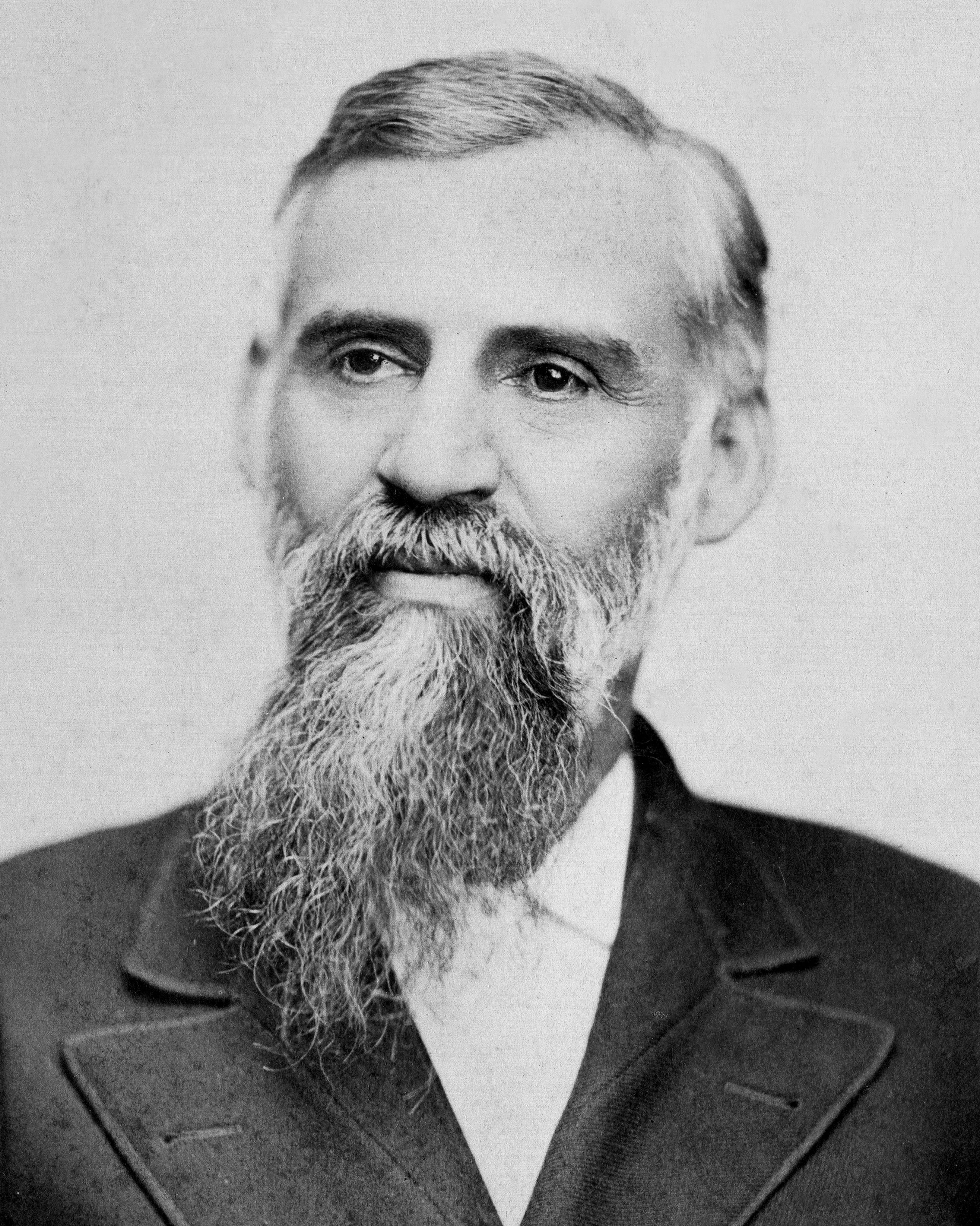
While not actually present at the 1888 General Conference, President George I. Butler sided with Uriah Smith in opposition to Jones and Waggoner but for a different reason. The pair made a perfect match. Waggoner was then editor of the west coast Signs of the Times; Smith was editor of the east coast Review and Herald. Jones came to present his discovery that the Alemanni and not the Huns (as proposed by Smith) were one of the horns of Daniel chapter 7(Daniel 7). Butler was opposed to Waggoner’s position on the law in Galatians, fearing an admission that the schoolmaster was indeed the moral law of the ten commandments would be a concession to the church’s opponents who insisted that the law was abolished at the cross thus destroying the claims of the seventh day Sabbath.
Butler and Smith were convinced that both Jones and Waggoner were presenting heresy and threatened the doctrinal foundations of the church. The young troublemakers were not welcome, sides were taken, division brewed. Debate ensued and Jones and Waggoner prepared. They presented a purely biblical support, which was approved by Ellen White. She described their message as a balanced treatment of Revelation 14:12, respect for the commandments of God and the faith of Jesus:
“The Lord in His great mercy sent a most precious message to His people through Elders Waggoner and Jones. This message was to bring more prominently before the world the upliftted Saviour, the sacrifice for the sins of the whole world.” — Testimonies to Ministers, p. 91
But the debate was not over the nature of God or the pre-existence of Christ. Belief in the divinely begotten Son remained unchanged during and after the historic meetings. Butler, himself, wrote the following year of the amazing stability of the Adventist doctrines in a Review & Herald article entitled “A Harmonious Faith.”
“IN things of religion, the heart requires something stable. It reaches out after that which is reasonable, consistent, and enduring, upon which to found an abiding faith.”
“Truth will always be in harmony with itself. We may be sure that if one portion of our doctrinal belief contradicts some other portion, there is a fallacy – a false-hood – somewhere involved. Error is contradictory and multi-form in its various efforts to adapt itself to varying shades of belief”
“One potent reason why many questioning minds reject the Christian religion, and become chronic doubters, is the lack of harmony in the theology of the orthodox churches.” — Review & Herald Oct. 1, 1889, p. 9
He then lists some examples: eternal torment in hell versus complete destruction of the wicked, immortality of the soul or soul sleep, different days of worship. In contrast to the current revisionist ideas that our theological development was slow and progressive, Butler marvels at the speed with which the early Adventists reached complete doctrinal maturity.
“We can regard it little short of the miraculous that the system of doctrine held by S. D. Adventists was so soon developed into its present completeness after the great disappointment of 1844. It was brought about through the agency of persons then unknown to fame – humble, earnest, devoted souls, who loved the appearing of Jesus. They were poor in this world, but rich in faith. They studied with wonderful intensity the book of God for light in that dark hour of disappointment and sorrow, and it came to their minds, bringing great relief, and joy unspeakable. Oh! how precious did the truth seem as the beautiful system which we denominate “present truth” unfolded before their minds, the fog of tradition clearing away, and the firm pillars of eternal truth appearing, securely resting upon the living rock of God’s holy word.” — ibid.
And these pillars didn’t change for the next forty years.
It is certainly remarkable that thus far we have not had to change a single position decidedly taken after faithful investigation. Every one stands firmly after more than forty years of opposition from bitter opponents, growing more and more bright as these gems of truth are rubbed and scoured in the conflict.” — ibid.
Uriah Smith’s Fundamental Principles had been in print for over twenty years. Butler now briefly summarizes them.
“Let us consider briefly some of the truths held by this people, as parts of their religious system of doctrine. They believe in the general truths of inspiration held by Christian denominations in all parts of the world; such as, the existence, sovereignty, holiness, and perfection of God the great Creator, and the pre-existence and glory of his Son Jesus Christ, by whom the worlds were created before man had an existence on this earth; man’s creation by the Saviour; man’s subsequent fall, and the introduction of the plan of salvation, an essential part of which was the Saviour’s giving himself to die a sacrifice for sinners…” — ibid.
Interestingly, the Sabbath School Notes for Sabbath, Oct. 12 in this same issue commented on Hebrews chapter 1(Hebrews 1):
“The angels are sons by creation, just as Adam was, who was created a little lower than they. But Christ is the ‘only begotten Son of God,’ having “by inheritance a more excellent name than they.” — ibid.
**Page24**
Let’s Review
In summary, we have seen that the early Adventists consistently believed in the Son of God, begotten in the days of eternity, who was fully divine, one with his Father, equal in power and authority, one in character, mind, and Spirit. We examined the words of ten pioneers.
- James White
- Joseph Bates
- J.N. Loughborough
- D.M. Canright
- J.M. Stephenson
- R.F. Cottrell
- Uriah Smith
- Steven Haskell
- E.J. Waggoner
- George Butler
They agreed that:
- The Bible was their creed
- The prayer of Christ to the Father in John 17 is to be our church creed
- The Trinity or the triune God is not explicitly “laid down” in Scripture
- Trinity and Unity diminish the divine power of Jesus
- There is one God, the Father
- God the Father is the Ancient of Days
- The great Source of all being.
- The great Creator
- He alone is without beginning.
- There is one Lord Jesus Christ
- Going forth from the days of eternity
- Practically without beginning
- He had an origin or beginning of days
- He appeared in the beginning.
- He was the first-begotten of the Father
- Begotten of the Father’s substance
- The very substance and nature of God
- He was begotten not created
- A Son begotten of God
- In the image of the Father’s person
- In a sense that no other being is
- The Father was greater than the Son because He was first.
- He had priority of existence
- The Son is equal with the Father for he received all things from Him
- He received his immortality from Him
- Proceeded and came forth from him
- The Father has life in himself and gave the Son to have life in himself
- Possesses immortality as his own right
- He is the Son of the Eternal Father
- He has all the attributes of Deity
- He inherited them
- He is Son of the self-existent God
- He is by nature God
- He is the Son of God by birth
- There are thus two persons in heaven
- The Father and Son are two distinct, literal, tangible persons
- The Son of God is a divine person
- This they did not deny
- He is the wisdom and power of God
- He is in the bosom of the Father
- Through him all things were created
- By him all things consist Father and Son worked together
- They created man in their own image
- The Son of God was sent to the world
- He was God manifested in the flesh
- In him dwelt the fullness of the Godhead bodily
- Christ’s divinity and humanity were mysteriously blended
- But Christ is the ‘everlasting Father’ of his people
- The Father is Lord God Almighty
- The Son is the mighty God
- The Father and Son are not part of a “three-one” God
- Son is equal in rank with the Father
- Equal in dignity, glory, authority, and divine perfection with the infinite God
- Christ isn’t equal to the eternal Father
- They are not the same being or person
- Christ is also Michael, the archangel
- He is not an angel, but above them
- He is commander of the angels
- The Holy Spirit is the Spirit of God
- The Holy Spirit is the Spirit of Christ
- The medium of their power
- The representative of them both
- Both have the same Spirit
- This is the source of their Divine unity
- Jesus is thus properly called Jehovah
These are the confessions of faith made by the ten pioneers featured in volume 1. Their remarkably coherent understanding of the begotten Son, of God the Father and their shared Spirit certainly is consistent with the conviction that these beliefs were held with “entire unanimity by the entire body” of early Adventist believers for more than 40 years.
In Part 2, Theos continues the Begotten Belief with the consistent Christology of
- R.A. Underwood
- J.N. Andrews
- J.G. Matteson
- W.H. LittleJohn
- H.C. Blanchard
- C.W. Stone
- D.T. Bourdeau
- A.T. Jones
- J.H. Waggoner
- W.W. Prescott, and
- E.G. White
Theos brings together over 50 years of doctrinal unity in one compact collection, the testimony of 21 pioneers in their own words.