{Page 2}
“The fundamental principles that have sustained the work for the last fifty years would be accounted as error. A new organization would be established. Books of a new order would be written. A system of intellectual philosophy would be introduced.”
E.G.White, Special Testimonies, Series B (1905) no. 2, p.
Volume 1 of this series examined the doctrinal position on the begotten Son of God among the early pioneers during the formative years of the Seventh-day Adventist movement from 1844 -1888. We noted their unanimity in rejecting both the Unitarian and Trinitarian teachings popular among other churches. During this time a consistent belief in a literal Son begotten of God in eternity, two separate persons who shared the same spirit was traced through the writings of James White, Joseph Bates, S.N. Haskell, Uriah Smith, E.J. Waggoner and George Butler. Volume 2 continues this amazing story through an even greater cloud of witnesses. These include R.A. Underwood, D.T. Bourdeau, H.C. Blanchard, J.N. Andrews, J.G. Matteson, W.H. Littlejohn, C.W. Stone, A.T. Jones, W.W. Prescott, and E.G. White.
R.A. Underwood 1889
Writing in two 1889 issues of the Review and Herald (August 6 and September 17), R. A. Underwood spoke of “Christ and His Work.” He was clearly influenced by Waggoner’s presentations in Minneapolis the year before. While he promised to simply “quote a few texts and leave the reader to form his own opinions,” Underwood couldn’t resist italicizing important words and commenting on their significance. All italicized emphasis that follows is his alone.
“There is no being in all the universe worthy of so much study as Christ. Though we think with care of Christ, we cannot comprehend his greatness, his love, his infinite sacrifice for sinners. The Bible and the Holy Spirit reveal him to us. On three occasions the voice of the eternal God is heard calling our attention to Christ as the One in whom he is well pleased, and bids us, “Hear ye him.” Matt. 3:17; 17:5; John 12:28. “For in him dwelleth all the fullness of the Godhead bodily.” Col. 2:9.
“First, we will consider Christ and his work by viewing him as the only being delegated to represent the eternal Father in name, in creating the worlds, and in giving the law; second, as the author and finisher of the plan of salvation, the one who gave the Bible, both the Old and the New Testament; the one that made the old as well as the new covenant, a Prophet, a Priest, and a King.”
Ellen White also singled out Christ in a number of statements as “the only being” beside the Father,
“The only being who was one with God lived the law in humanity, descended to the lowly life of a common laborer, and toiled at the carpenter’s bench with his earthly parent.” Signs of the Times, Oct. 14, 1897
{Page 3}
Did she mean the only human being? Not in these next statements:
“The Sovereign of the universe was not alone in His work of beneficence. He had an associate—a co-worker who could appreciate His purposes, and could share His joy in giving happiness to created beings. (John 1:1, 2). Christ, the Word, the only begotten of God, was one with the eternal Father—one in nature, in character, in purpose—the only being that could enter into all the counsels and purposes of God. (Isaiah 9:6) (Micah 5:2)” Patriarchs and Prophets p. 34
“—the only being in all the universe that could enter into all the counsels and purposes of God.” Great Controversy p.493
“To know God is to love Him; His character must be manifested in contrast to the character of Satan. This work only one Being in all the universe could do. Only He who knew the height and depth of the love of God could make it known.” Desire of Ages p. 22
The Son is the only being in all the universe who could enter into all the counsels of God and manifest the character of God and knew the height and depth of God’s love. These are very exclusive declarations. No other being is included. Consequently, she positions the Son next to the Father as the only two rulers of heaven.
“The Son of God was next in authority to the great Lawgiver. ..He was in the express image of his Father, not in features alone, but in perfection of character.” R&H Dec 17, 1872; SP vol. 2, p, 9
“Christ is our Example. He was next to God in the heavenly courts. But He came to this earth to live among men.” Notebook Leaflets from the Elmshaven Library, Vol. 1, pp. 114, 115 – Letter 48, 1902
Here she simply quotes three texts: John 1:18; John 5:26; 1Cor. 11:3.
“No man hath seen God at any time; the only begotten Son, which is in the bosom of the Father, he hath declared him,” “For as the Father hath life in himself; so hath he given to the Son to have life in himself; and hath given him authority to execute judgment also, because he is the Son of Man.” The head of every man is Christ, as the head of Christ is God. “And ye are Christ’s, and Christ is God’s.” Home Missionary, June 1, 1897
The begotten Son in the bosom of the Father has received life and authority from the Father who is Christ’s head. Ellen described a Godhead of only two.
Underwood also identified a Godhead of two: the Son and his eternal Father. Following Waggoner’s lead, he covers the same issues placing repeated emphasis on the Father and Son.
“The question is sometimes raised, Was Christ a created being? All we may know of this is simply what the Bible says.”
“We quote a few texts, and leave the reader to form his own opinions.
“And unto the angel of the church of the Laodiceans write; These things saith the Amen, the faithful and true witness, the beginning of the creation of God.” Rev. 3:14. The word here rendered “beginning” is arche; and the second definition of this word, according to Thayer’s Greek-English Lexicon of the New Testament, is, “The person or thing that commences, the first person or thing in a series, the leader.” According to this, we might read it, “The beginner of the creation of God.” “In whom we have redemption through his blood, even the forgiveness of sins: who is the image of the invisible God, the firstborn [Gr. prototokus, first in dignity, chief] of every creature,” Col. 1:14, 15. “For as the Father hath life in himself; so halls he given to the Son to have life in himself.” John 5:26. Whatever construction may be placed upon the first two texts quoted the last one shows clearly that the Son of God received his life, and all his mighty creative power as a gift from the Father.”
“The apostle Paul contrasts Christ with the angels, as follows: “Being made so much better than the angels, as he hath by inheritance obtained a more excellent name than they.” Heb. 1:4. The inheritance of Christ from God the Father was such as no other being in the universe received. God the Father delegated to the “beginning of the creation,” “the first-born of every creature,” his own name, and his own almighty, creative, life-giving power. We are in ignorance of when this was done. We only know that it was in the eternity of the past; before the worlds and all that in them is, were created.”
This is no different from what Waggoner taught just the year before at Minneapolis. Like Waggoner he too equates “eternity of the past” with that epoch that existed “before the worlds …were created.” And like Waggoner he quotes the same texts to prove the divinity of Christ:
It was this last text that concerned Underwood during his childhood. He relates the following incident to make his point:
“When a small boy, I learned this chapter in the Sunday-school. I was confused because the teacher could not explain the first verse—”In the beginning was the word,” etc. “The Word is Christ,” said the teacher; that was plain. “And the Word [Christ] was with God [the Father].” I understood that; but the next statement, “and the Word was God,” was the mystery I could not understand, nor could the teacher give me any light upon it. If he shown me that one of the names by which Christ is known is God, all would have been clear; I would not have confounded Christ with God the Father as being the same, and only one being. While they are one in that unity of work which Christ prayed that his disciples (John 17:11) might experience, they are two beings as much as a father and his son are two.”
{Page 4}
Underwood confesses his belief that Christ, the Word, is God because that is his name, his nature; but Christ is not just a son by name, nor is he the same being as the Father. They are two separate beings, not confounded into only one being.
“Before we leave this text that declares that all things were made by Christ n the beginning, we inquire, What beginning? For an answer we turn to the statement, “In the beginning God created the heaven and the earth.” Gen. 1:1. The Hebrew word elohim, translated “God” in Gen. 1:1,2, is plural, and the text would be properly translated, “In the beginning the Gods created,” etc. This same idea is sustained in the 26th verse, when the Gods said, “Let us make man in our image, after our likeness: and let them have dominion,” etc., as well as by John 1:1, and many other texts of the Bible. When the Gods (God the Father and God the Son) had wrought six days in creating, the statement is made, “Thus the heavens and the earth were finished, and all the host of them. And on the seventh day God ended his work which he had made; and he rested on the seventh day from all his work which he had made. And God blessed the seventh day, and sanctified it; because that in it he had rested from all his work which God created and made.” Gen 2:1-3. The Gods (elohim) rested on the seventh day, and blessed the seventh day, and sanctified it, or set it apart for a holy purpose.”
Instead of attributing plurality to a Trinity, Underwood identified Father and Son—two. He is thus not presenting anything new. He is not insisting that the Son is absolutely co-eternal with the Father, requiring that their filial-paternal relationship be reduced to one of mere title only. His title is God not Son, but his nature is as truly God as he is truly a Son. He accepts that “the beginning” was the creation of heaven and earth. He appreciates the fact that Christ is equal with the Father because he was born of God, and the Son inherits all things from the Father.
H. C. Blanchard 1867
“We are well aware that there has been much disputation on the subject of the sonship of Christ in the religious world, some claiming that be is nothing but a man as to origin, being only about eighteen hundred years old; others that he is the very and eternal God, the second person in the trinity. This last view is by far the most widely entertained among religious denominations. We are disposed to think that the truth lies between these views.” Review and Herald, September 10, 1867
This is a reoccurring theme for the begotten Son believers. The constant struggle is to distinguish themselves from two extremes. The Son is not the Father yet has the same divine nature, the same eternal immortality, the same authority as the Father.
Blanchard wrote this article about six years after joining the Adventists. He was dismissed from the ministry in 1874 over his personal disagreement with health reform and the inspiration of Ellen White’s visions. He did not leave because of differences in theology regarding Christ’s sonship.
J. N. Andrews 1869
Referring to Melchizadek, the namesake for the premier Adventist Seminary wrote:
“Even the angels of God have all had beginning of days, so that they would be as much excluded by this language as the members of the human family. And as to the Son of God, he would be excluded also, for he had God for his Father, and did, at some point in the eternity of the past, have beginning of days.” Review and Herald, September 7, 1869
J. G. Matteson 1869
Danish Baptist jointed [sic] the church 1863.
“Christ is the only literal son of God. `The only begotten of the Father.’ John 1:14. He is God because he is the Son of God; not by virtue of His resurrection. If Christ is the only begotten of the Father, then we cannot be begotten of the Father in a literal sense. It can only be in a secondary sense of the word.” Review & Herald, October 12, 1869 p. 123
W. H. Littlejohn 1883
A subscriber to the Review asked,
“Will you please favor me with those scriptures which plainly say that Christ is a created being?
Littlejohn responded:
“Answer: You are mistaken in supposing that S. D. Adventists teach that Christ was ever created. They believe, on the contrary, that he was ‘begotten’ of the Father, and that he can properly be called God and worshiped as such… They believe, however, that somewhere in the eternal ages of the past there was a point at which Christ came into existence. They think that it is necessary that God should have antedated Christ in his being, in order that Christ could have been begotten of him, and sustain to him the relation of son. They hold to the distinct personality of the Father and Son, rejecting as absurd that feature of Trinitarianism which insists that God, and Christ, and the Holy Spirit are three persons, and yet but one person.” Review and Herald, April 17, 1883.
C. W. Stone 1883
Charles Wesley Stone was Secretary to the General Conference, and teacher at Battle Creek College. After his death in a tragic train accident, Uriah Smith published his book in 1886.
“The Word then is Christ. The text speaks of His origin. He is the only begotten of the Father. Just how he came into existence the Bible does not inform us any more definitely; but by this expression and several of a similar kind in the Scriptures we may believe that Christ came into existence in a manner different from that in which other beings first appeared; That He sprang from the Father’s being in a way not necessary for us to understand.” C. W. Stone, The Captain of our Salvation, p. 17, 1883
Stone went on to say that “the Son of the living God” “sprang from the Father’s being” in “the distant past” “a period of time before creation”, “that time when no being existed beside himself and God the Father”, “only two beings in the universe” “both of whom are called God” (pages 12-40). Yet, he explicitly denied that Christ was himself a “created being.”
{Page 5}
[Image]
D. T. Bourdeau 1890
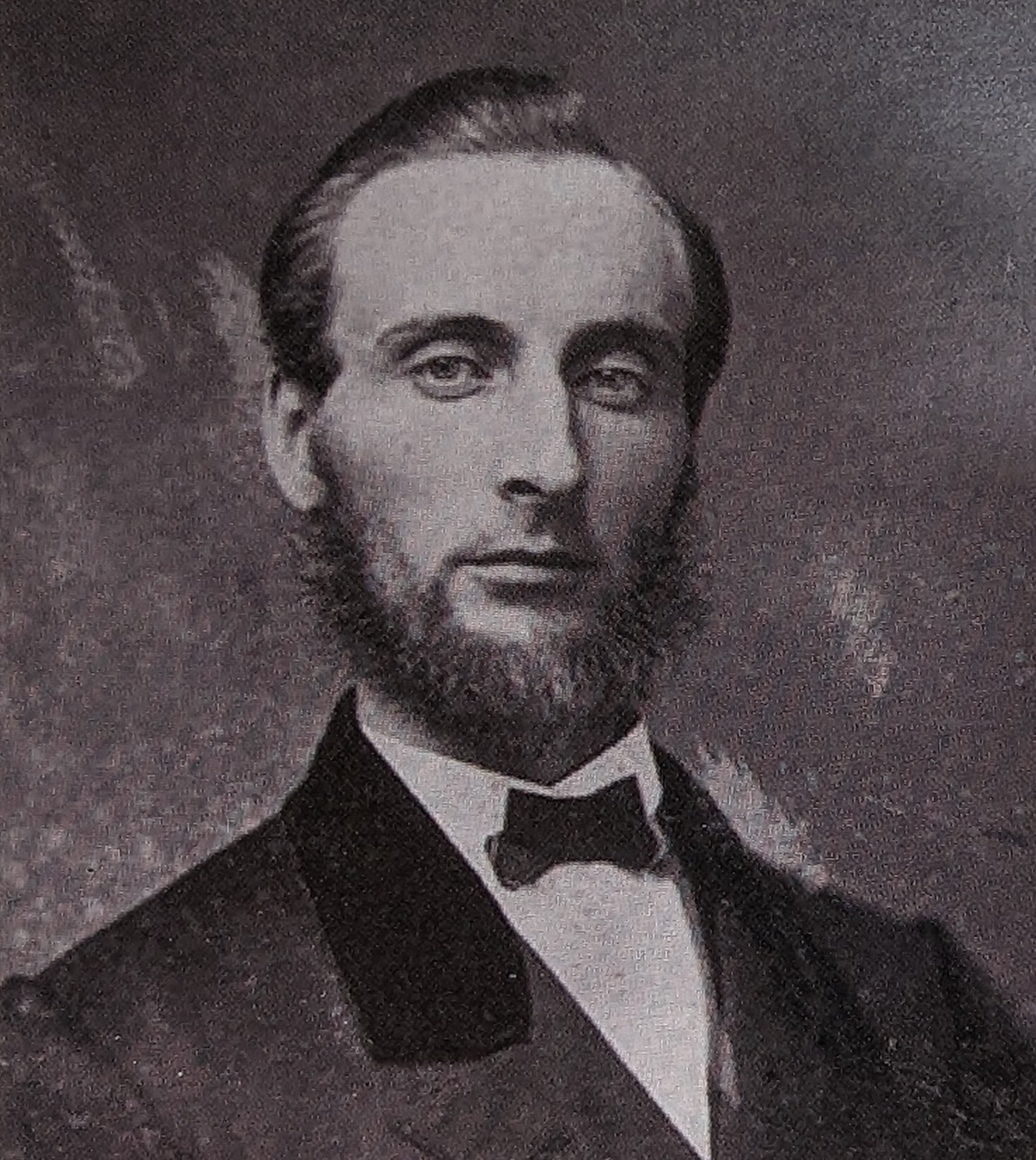
A single statement buried in an 1890 Review and Herald article (November 18) by D. T. Bourdeau has caught the eye of Neo-Trinitarians looking for some evidence of divergence within the staunchly non-trinitarian Adventists of the mid to late 19th century. The article, whose title is “We may partake of the Fullness of the Father and the Son,” does not discuss the Godhead, nor the Trinity; the Holy Spirit is not even mentioned. Bourdeau, who in 1890 had been an Adventist for 35 years, an ordained SDA minister for 32 years, wrote about how an individual’s concept of the character of God can affect one’s behavior. In this context he said,
“Although we claim to be believers in, and worshippers of, only one God, I have thought that there are as many gods among us as there are conceptions of the deity.” D.T. Bourdeau, Review & Herald November 18, 1890.
Gane and Moon are split on whether Adventists at this time were united or not on their understanding of God. Gane wants to believe there was none; Moon only that it was crumbling.
“There can be no doubt but that in 1890 there was no unity of understanding in regard to the nature of God, in Adventist circles.” Erwin Gane, Masters Thesis, June 1963.
“…the collective confidence in the anti-Trinitarian paradigm was showing some cracks.” Jerry Moon, The Trinity, page 195, 2002.
Gane says there is no unity; Moon says there is but it’s starting to weaken. So, because he thinks Bourdeau is talking about a vast multitude of concepts regarding the Godhead, rather than of God’s character, Jerry Moon calls it a “provocative statement.” Ibid, 2002.
But Bourdeau explains himself.
“We do not half study the character of God the Father and of God the Son, and the result is that we make God and Christ such beings as ourselves.”
“In approving sin in ourselves, we sometimes make God a sinner. This is true when we would make it appear by an appeal to God or to the Bible, that wrong is right, and that when we are tempted to do evil, we are tempted of God to do right.” Ibid, 1890.
Gane wondered why Bourdeau didn’t elaborate in more detail about “the prevailing conceptions of the Deity”
“Unfortunately for our purpose Bordeau [sic] does not elaborate on the nature of the prevailing conceptions of the Deity. Whether he is referring to an Arian verses [sic] Trinitarian disagreement among believers is difficult to say.” Erwin Gane, Masters Thesis for the Seventh-day Adventist Theological Seminary, June 1963.
The reason it’s “difficult to say” is because Bourdeau wasn’t addressing this issue at all. His point was that the character of God (not the nature of God) is vital for believers to understand because it affects our lifestyle and behavior which cannot reflect God’s character when we have a distorted understanding of it. If we perceive of Him as avenging, mean and ruthless, our treatment of others will be affected as well.
A. T. Jones 1895
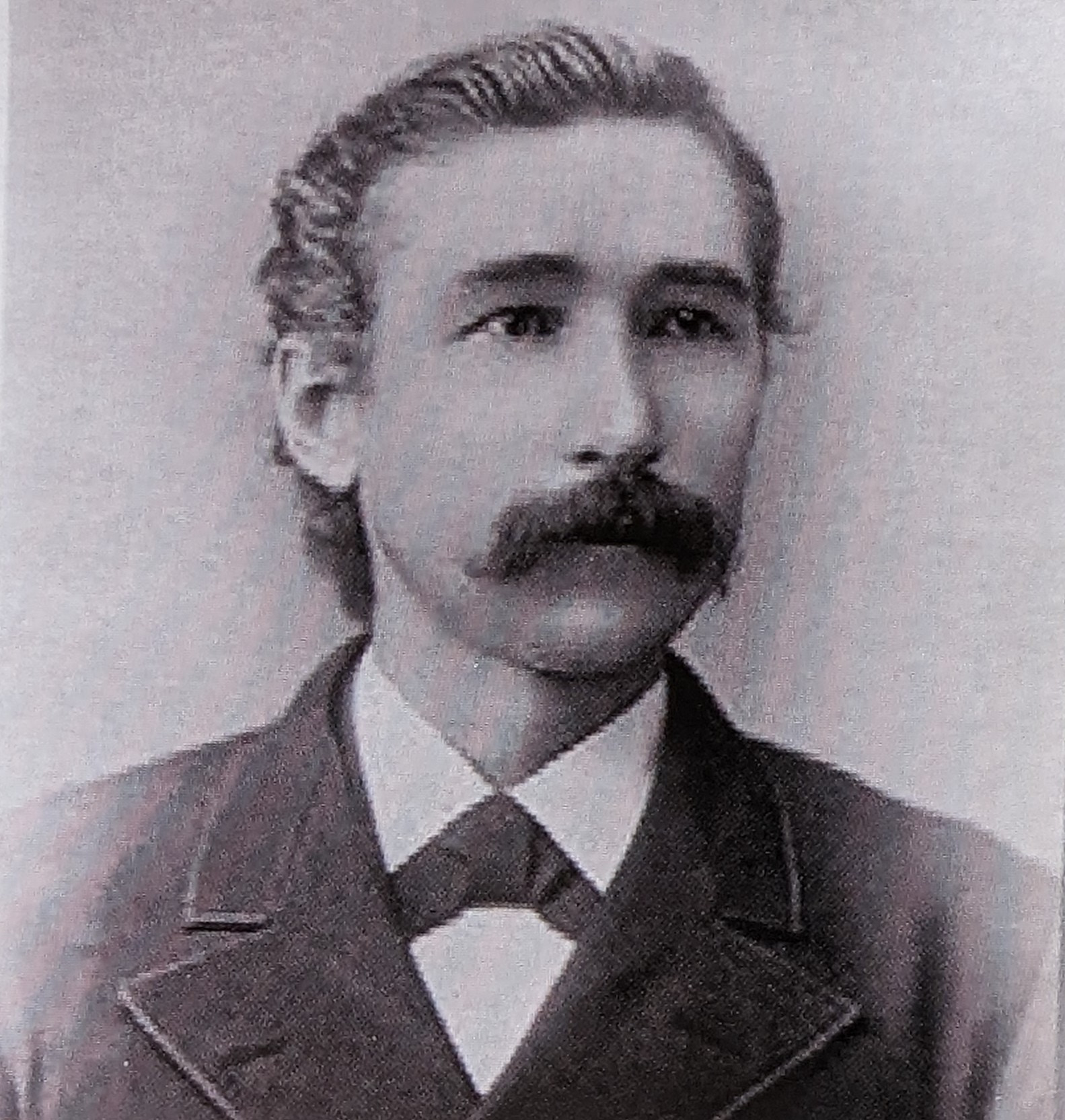
Alonzo synthesized all the elements of the Adventist faith in the begotten Son and the shared Spirit, pulling together the Biblical basis for the church’s belief in a 26 part presentation on “The Third Angel’s Message” which appeared in the first volume of the General Conference Bulletin. Notice how he repeats the same convictions that had been previously expressed by James White, Uriah Smith, Haskell, Canright, Blanchard, Littlejohn, Snow and Waggoner.
“Let us now consider further how the word was given. It is the word of God proceeding forth and coming from God, just as Jesus Christ, the living Word, proceeded forth and came from God.” General Conference Bulletin, February 24, 1895, ‘The Third Angel’s Message’ p. 318
“In the epistle to Titus, first chapter, verses one and two, we read:—Paul, a servant of God, and an apostle of Jesus Christ, according to the faith of God’s elect, and the acknowledging of the truth which is after godliness; in hope of eternal life, which God, that cannot lie, promised before the world began.
The thought that I want from that text is that God cannot lie. The same thought is brought out in Heb 6:17, 18:—Wherein God, willing more abundantly to show unto the heirs of promise the immutability of his counsel, confirmed it by an oath: that by two immutable things, in which it was impossible for God to lie, we might have a strong consolation, who have fled for refuge to lay hold upon the hope set before us. It is impossible for
{Page 6}
God to lie. God cannot lie. Everything depends upon his word; and being a God of truth, and Jesus Christ the truth, the spirit, the spirit of truth, God cannot lie. That is to say, God is infallible, and God’s word therefore is an infallible word. He cannot lie. But that word is also the word of Jesus Christ, and he, equally with the Father, is infallible. So this word is the infallible word of the infallible God, given to us through the infallible Son, Jesus Christ.” p. 319
He equates Christ with “the spirit of truth” leaving God to swear by only two immutable things: the Father and the Son. Jesus said the same thing in John 8:17, 18: “the witness of two men is true. I am one that bear witness of myself, and the Father that sent me bears witness of me.” Why not the Spirit? Because:
“Christ is the one through whom the Father is reflected to the whole universe.” “He alone could reflect the Father in His fullness, because His goings forth have been from the days of eternity, and as it says in the eighth of Proverbs, ‘I was with him, as one brought up with him.’ He was one of God, equal with God and His nature is the nature of God.” “In Christ God is manifested to the angels and reflected to men in the world in a way in which they cannot see God otherwise.” General Conference Bulletin February 27, 1895 p. 378
Jones described Christ, the Son of God, in his role as Mediator to the angels, the archangel Michael—one who is like God. Though he appeared to the angelic host in angelic form, as commander of the angels, he was like God because he was God. Then, in the fullness of time the Son of God became the Son of man.
“Study the process. There is the Father, dwelling in light which no man can approach unto, whom no man hath seen, nor can see, of such transcendent glory, of such all-consuming brightness of holiness, that no man could look upon Him and live. But the Father wants us to look upon Him and live. Therefore the only begotten of the Father yielded Himself freely as the gift and became ourselves in human flesh that the Father in Him might so veil His consuming glory and the rays of His brightness, that we might look and live. And when we look there and live, that bright, shining glory from the face of Jesus Christ shines into our hearts and is reflected to the world.”
“He who was born in the form of God took the form of man. “In the flesh he was all the while as God, but he did not appear as God.” “He divested himself of the form of God, and in its stead took the form and fashion of man.” “The glories of the form of God, He for awhile relinquished.”
“Note the difference: The glories of the form of God He for awhile relinquished. But the form of God itself, He to all eternity relinquished.” General Conference Bulletin March 4, 1895 p. 449 [italicized by Jones]
To dispel any thought that forsaking the form of God might diminish in any way Christ’s divinity, Jones assures his listeners to the contrary:
“Instead of Christ’s being lowered, we are exalted. Instead of divinity’s being lowered or lessened, humanity is exalted and glorified. Instead of bringing Him down to all eternity to where we are, it lifts us to all eternity to where He is.” ibid
The birth here described is the divine birth of the Son of God in eternity. He then relinquished the glories of his divinity and took the form of man, born a second time in Bethlehem as the Son of man.
“He was born of the Holy Ghost. In other words, Jesus Christ was born again. He came from heaven, God’s first-born, to the earth, and was born again. But all in Christ’s work goes by opposites for us: he, the sinless one, was made to be sin, in order that we might be made the righteousness of God in him. He, the living one, the prince and author of life, died that we might live. He whose goings forth have been from the days of eternity, the first-born of God, was born again, in order that we might be born again, If Jesus Christ had never been born again, could you and I have ever been born again?—No. But he was born again, from the world of righteousness into the world of sin; that we might be born again, from the world of sin into the world of righteousness. He was born again, and was made partaker of the human nature, that we might be born again, and so made partakers of the divine nature. He was born again, unto earth, unto sin, and unto man, that we might be born again unto heaven, unto righteousness, and unto God.” Review & Herald August 1, 1899.
W. W. Prescott 1895
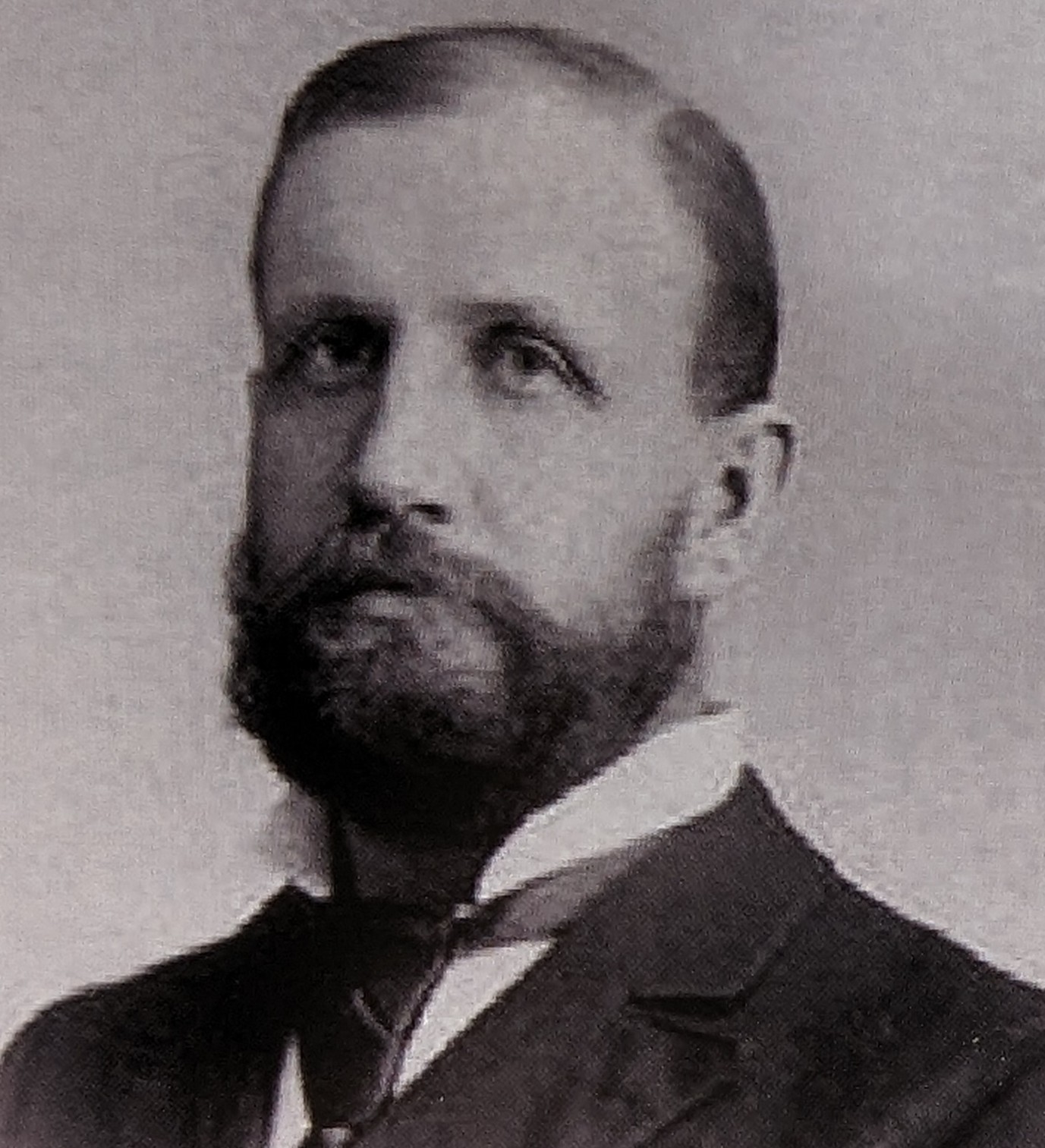
William Warren Prescott graduated from Dartmouth College in 1877 and began his career as principal of high schools in Vermont. He became president of Battle Creek College in 1885, helped establish Union College in 1891 and then Walla Walla College the following year. In 1894 he went on a world tour to hold Bible institutes and bolster the educational work in Europe, South Africa and Australia. It was here that he connected with Ellen White to assist in editing the Desire of Ages and holding evangelistic meetings. She was impressed.
“I have been just listening to a discourse presented by Professor Prescott” “The word is presented in a most powerful manner, The Holy Spirit has been poured out upon Brother Prescott in a great measure” “Brother Prescott has been bearing the burning words of truth such as I have heard from some in 1844. The inspiration of the Spirit of God has been upon him. Unbelievers say, ‘These are the words of God. I never heard such things before.'” Letter 19 to S. N. Haskell, Nov. 6, 1895 in MS 19.
{Page 7}
A week later she wrote Kellogg,
“Another says, ‘The Bible seems to be a treasure-house full of precious things.’ After the meetings close many testimonies are born of the great good this meeting is doing. As they see Maggie Hare taking the precious truths in shorthand, they act like a flock of half-starved sheep, and they beg for a copy. They want to read and study every point presented. Souls are being taught of God. Brother Prescott has presented truth in clear and simple style, yet rich in nourishment.” Letter dated Nov. 13, 1895 to J. H. Kellogg in 2MR No. 122, p. 165.
It is clear that Ellen fully supported the message that Prescott was presenting at the Armandale meetings. The talks were transcribed and printed in the Bible Echo and later in part in the Review & Herald. Here are some excerpts from those sermons.
“He was a member of the divine family, that family of the Father of whom the whole family in heaven and earth is named. But he gave up his divine mode of existence, and came to this world, and took upon himself the human mode of existence.” The Christ of Judea, Review & Herald March 10, 1896.
“He has become one with us, and joined himself to us by ties which will never be broken, because today and for eternity Jesus Christ is one with us in humanity, still bearing this human flesh. ‘For there is one God, and one mediator between God and men, the man Christ Jesus.’ 1 Tim. 2:5.”
These familiar sounding expressions would find their way into the Desire of Ages and Steps to Christ. But then he takes up the same idea, as we have seen, that A.T. Jones later presented at the General Conference—that Christ was “twice born,” once in eternity and once in time.
“Jesus Christ was God in heaven, and he came to this world, and was born of the flesh, and thus he who had been born of the Spirit, was afterward born of the flesh, and by this double birth this family was established—the divine-human family of which he is the head—in order that we who have already been born of the flesh, may by his grace and the power of the same Spirit, be born of the Spirit—that is, every member of this divine-human family is twice born.” Review & Herald March 17, 1896.
Prescott clearly taught the truth of Christ’s dual nature and “double birth.” He is both the literal begotten Son of God, his original divine birth was in eternity of his Father’s Spirit, and the Son of man born of the flesh.
Prescott in the April 14 issue continued to speak of His double birth.
“Now as Christ partook of our nature by birth, so we must partake of his nature by birth. As Christ was twice born—once in eternity, the only begotten of the Father, and again here in the flesh, thus uniting the divine with the human in that second birth—so we who have been born once already in the flesh, are to have the second birth, being born again of the Spirit, in order that our experience may be the same—the human and the divine being joined in a life union.” Review & Herald April 14, 1896
Prescott also identified the Spirit that is sent to dwell in us as the very life of Christ himself.
“Christ by his spirit dwells in the inner life, and the organs of sense are used to give expression to his words and acts. We submit everything, that he shall express himself in our life. That is the Christian life. This life is made possible to us from the fact that that was the very life that Christ lived himself. He wrought into humanity a divine life. The life which he imparts unto us for living this life, is the resurrection life, the life of victory.” Review & Herald, April 21, 1896
As Christ was born twice, so also he died twice—once in eternity by promising to one day sacrifice his life as an omnipresent Spirit, and once in time by sacrificing his mortal human life to save us. Though his human life was resurrected and his immortal life restored, his omnipresent Spirit is an eternal gift to his redeemed children saving them from the eternal consequences of sin. While he will forever retain his human form, his Spirit will forever dwell within saved humanity.
Ellen White
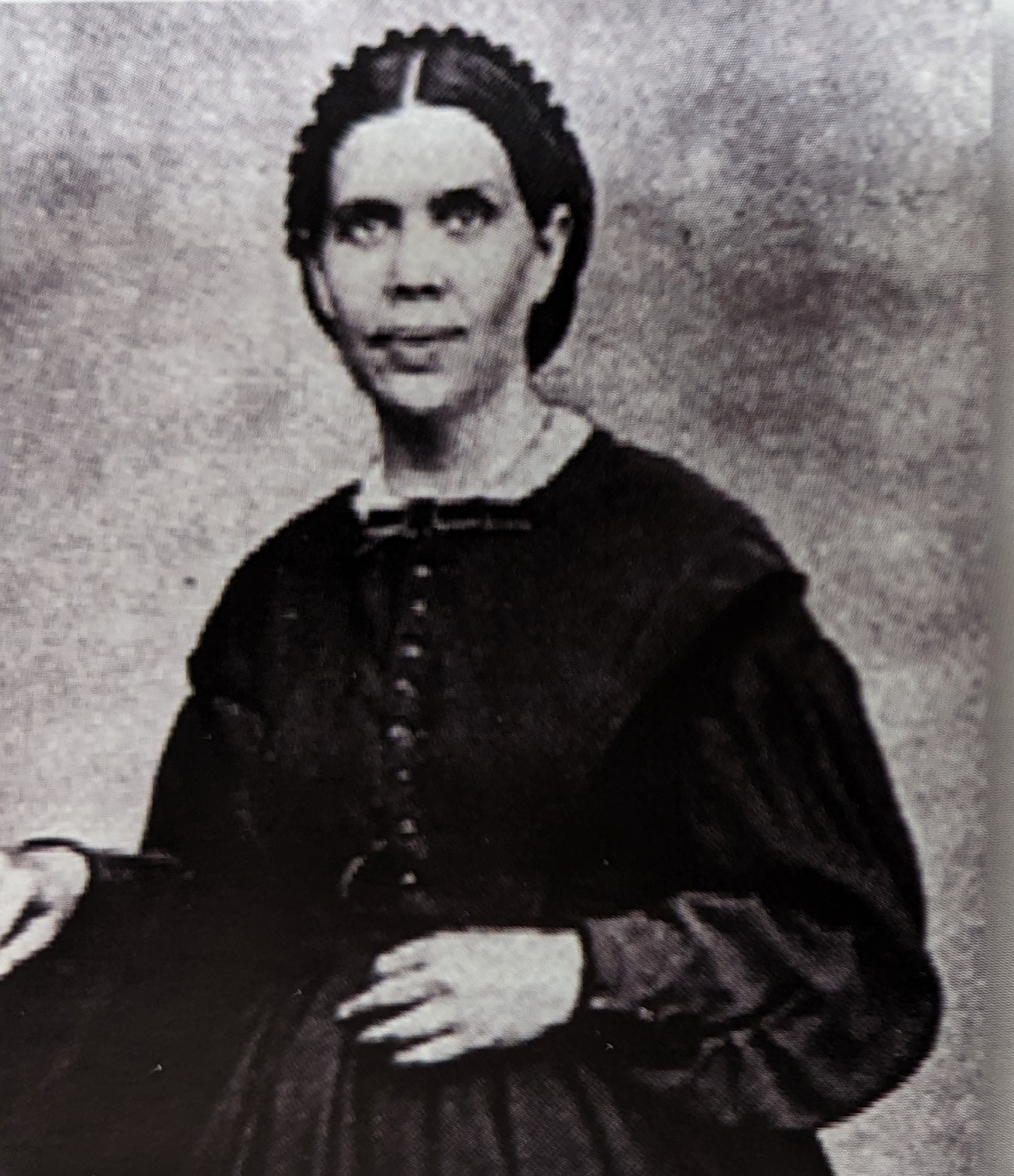
The modern view of Ellen White’s Christology is that she experienced a fundamental reversal in her theology during the final years of her life, from an initial belief in a begotten Son of God, heavily influenced by her domineering husband, to an absolutely co-eternal second person of a triune God.
We will examine the evidence in her own words of a consistent, persistent position, and continued belief in the literal begotten Son of God who proceeded from and came out of the eternal Father before the angels or anything else was created, having the same self-existent life, and sharing the same eternal Spirit, and given the same authority, dignity, power and divine perfection of his Father.
“Says the true Witness, the only Begotten of the Father, ‘Blessed are they that do his [the Father’s] commandments, that they may have right to the tree of life, and may enter in through the gates into the City.’ Rev. xxii, 14.” Ellen White, Review and Herald, June 10, 1852
“And the Son of God declares concerning Himself: “The Lord possessed Me in the beginning of His way, before His works of old. I was set up from everlasting… When He appointed the foundations of the earth: then I was by Him, as one brought up with Him: and I was daily His delight, rejoicing always before Him.” Proverbs 8:22-30.” Patriarchs and Prophets p. 34 1890
Like Waggoner and Smith before her, Ellen also applied Proverbs 8 to
{Page 8}
the pre-existent Christ. Though she initially left out in the ellipsis those references to his being brought forth, in following years she freely quoted the entire passage.
“‘The Lord possessed Me in the beginning of His way, before His works of old,’ Christ says. ‘When He gave to the sea His decree, that the waters should not pass His commandment; when He appointed the foundations of the earth; then I was by Him, as one brought up with Him; and I was daily His delight, rejoicing always before Him.’ ” Signs of the Times, February 22, 1899
“Through Solomon Christ declared: `The Lord possessed Me in the beginning of His way, before His works of old. I was set up from everlasting, from the beginning, or ever the earth was. When there were no depths, I was brought forth; when there were no fountains abounding with water. Before the mountains were settled, before the hills was I brought forth.'” Signs of the Times Aug 29, 1900
“The Lord Jesus Christ, the divine Son of God, existed from eternity, a distinct person, yet one with the Father. He was the surpassing glory of heaven. He was the commander of the heavenly intelligences, and the adoring homage of the angels was received by him as his right. This was no robbery of God. ‘The Lord possessed me in the beginning of his way,’ he declares, `before his works of old. I was set up from everlasting, from the beginning, or ever the earth was. When there were no depths, I was brought forth; when there were no fountains abounding with water. Before the mountains were settled, before the hills was I brought forth; while as yet he had not made the earth, nor the fields, nor the highest part of the dust of the world. When he prepared the heavens, I was there: when he set a compass upon the face of the depth.”” E. G. White, Review and Herald, April 5, 1906
Notice that in each case she states that “Christ says,” “Christ declared,” “the Lord Jesus Christ, the divine Son of God…declares” that he was brought forth. As late as 1906 she was still applying the Wisdom of Proverbs chapter 8 to Christ.
Richard M. Davidson from Andrews University confirms the application of this passage to the pre-incarnation birth of the Son which is “reinforced in Prov 30:4 (with possible allusion to Father and Son Co-Creators): ‘Who has ascended into heaven, or descended? Who has gathered the wind in His fists? Who has bound the waters in a garment? Who has established all the ends of the earth? What is His name, and what is His Son’s name, if you know?”‘ “Thus, one cannot avoid the language of ‘birth’ in reference to Christ long before His incarnation.” Journal of the Adventist Theological Society, Spring 2006, p. 33-54. Alas, Davidson regards this as only a metaphoric reference to his installation as mediator, not to a literal birth.
Ellen White’s use of “begotten,” however did not cease with her 1888 epiphany in Minneapolis.
“Before the assembled inhabitants of heaven the King declared that none but Christ, the Only Begotten of God, could fully enter into His purposes…” Patriarchs and Prophets p. 36 1890
“he was the only-begotten Son of the Father” Signs of the Times, November 23, 1891
“The Majesty of heaven, the only begotten of the Father, responds to Satan’s claims.” Review and Herald, June 20, 1893
“He was the only-begotten Son of God, who was one with the Father from the beginning.” Signs of the Times, May 28, 1894
“Who is Christ? He is the only begotten Son of the living God.” Youth Instructor, June 28, 1894
During the time that Prescott was in Australia, she wrote of the begotten Son “made” in the Father’s image.
“The Eternal Father, the unchangeable one, gave his only begotten Son, tore from his bosom Him who was made in the express image of his person, and sent him down to earth to reveal how greatly he loved mankind.” Review and Herald, July 9, 1895
Christ should be uplifted as the first great teacher, the only begotten Son of God, who was with the Father from eternal ages.” Special Testimonies On Education, p. 230 1895
But the Lord’s arrangement, made in council with his only begotten Son, was to leave men free moral agents to a certain length of probation.” Review and Herald, December 21, 1897
“Christ, the only begotten Son of God, was the delegated messenger… And in this gift the Father gave all heaven to the world.” Review and Herald, February 15, 1898
“The dedication of the first-born had its origin in the earliest times. God had promised to give the First-born of heaven to save the sinner.” Desire of Ages, p.51 1898
“The apostle Paul speaks of our Mediator, the only-begotten Son of God, who in a state of glory was in the form of God, the Commander of all the heavenly hosts, and who, when He clothed His divinity with humanity, took upon Him the form of a servant.” Youth ‘s Instructor, October 13, 1898
“Christ, the only begotten Son of God, left the royal courts and came to this world, and through him God poured forth the healing flood of his grace.” The Youth’s Instructor, March 30, 1899
“Before the foundations of the world were laid, Christ, the Only Begotten of God, pledged Himself to become the Redeemer of the human race, should
{Page 9}
Adam sin.” Signs of the Times, August 2, 1905
“In order fully to carry out his plan, it was decided that Christ, the only begotten Son of God, should give himself an offering for sin.” Review and Herald, May 2, 1912
In agreement with Waggoner and Jones, Smith, Underwood and Prescott, she too describes the Father as the source of all life, even for the Son. “For as the Father hath life in himself; so hath he given to the Son to have life in himself” John 5:26. She quoted John 8:28; 6:57; 8:50; 7:18 then said,
“In these words is set forth the great principle which is the law of life for the universe. All things Christ received from God, but He took to give. So in the heavenly courts, in His ministry for all created beings: through the beloved Son, the Father’s life flows out to all; through the Son it returns, in praise and joyous service, a tide of love, to the great Source of all. And thus through Christ the circuit of beneficence is complete, representing the character of the great Giver, the law of life.” Desire of Ages p. 21, 1898
This quotation, taken from the first chapter of Desire of Ages, describes what Ellen White called “the circuit of beneficence.” The Father is the source of all life; it flows out from Him through the Son who was begotten from the Father, who proceeded forth (John 8:42) for the very purpose of revealing Him to the creatures of His universe. The Spirit of God likewise flows, or proceeds (John 15:26) from the Father, through the Son, to bring the Father’s life to all His creatures. Our communion is with the Father and the Son (1John 1:3) by means of their Spirit which returns through the Son back to the Father.
Ellen also maintained throughout her life a firm conviction in the separate, individual persons of the Father and the Son.
“I have often seen the lovely Jesus, that He is a person. I asked Him if His Father was a person and had a form like Himself. Said Jesus, “1 am in the express image of My Father’s person.” Early Writings, p. 77 1851
“From eternity there was a complete unity between the Father and the Son. They were two, yet little short of being identical; two in individuality, yet one in spirit, and heart, and character.” Youth’s Instructor Dec. 16, 1897
“In the depths of omnipotent wisdom and mercy the Father took the work of salvation into His own hand. He sent His only begotten Son into the world to live the law of Jehovah.” The Bible Echo, November 20, 1899
The Father and Son are not identical. They are thus not absolutely coequal in all aspects. But in John 10:15 Jesus said that he “knows the Father” even as the Father knows him. In complete harmony with her husband, she insisted that their unity is not physical but in character, heart and mind because they share the same Spirit. She applied Zechariah 6:12 to the Father and Son, a Godhead of two.
“The relation between the Father and the Son, and the personality of both, are made plain in this scripture also: `Thus speaketh Jehovah of hosts, saying,
- Behold, the man
- whose name is the Branch: And He shall grow up
- out of His place;
- And He shall build
- the temple of Jehovah…
- And He shall bear the glory, And shall sit and rule
- upon His throne;
- And He shall be a priest
- upon His throne;
- And the counsel of peace
- shall be between Them both.'”
Testimonies to the Church Vol. 8, p. 269 1904;
Review & Herald March 3, 1904.
This was still her position in 1905.
“Christ is one with the Father, but Christ and God are two distinct personages. Read the prayer of Christ in the seventeenth chapter of John, and you will find this point clearly brought out.” 1905 General Conference of Seventh-day Adventists, Takoma Park Washington a C,, May 19, 1905, Review and Herald, June 1, 1905
There is a plain and consistent continuity of belief in the begotten Son of God throughout the course of Ellen’s ministry. The Son received all things from the Father: His eternal life and spirit, divine character, His own name, creative power, authority, glory and honor. He is not a son by creation or adoption, but a Son begotten.
This Satan would seek to hide and obscure.
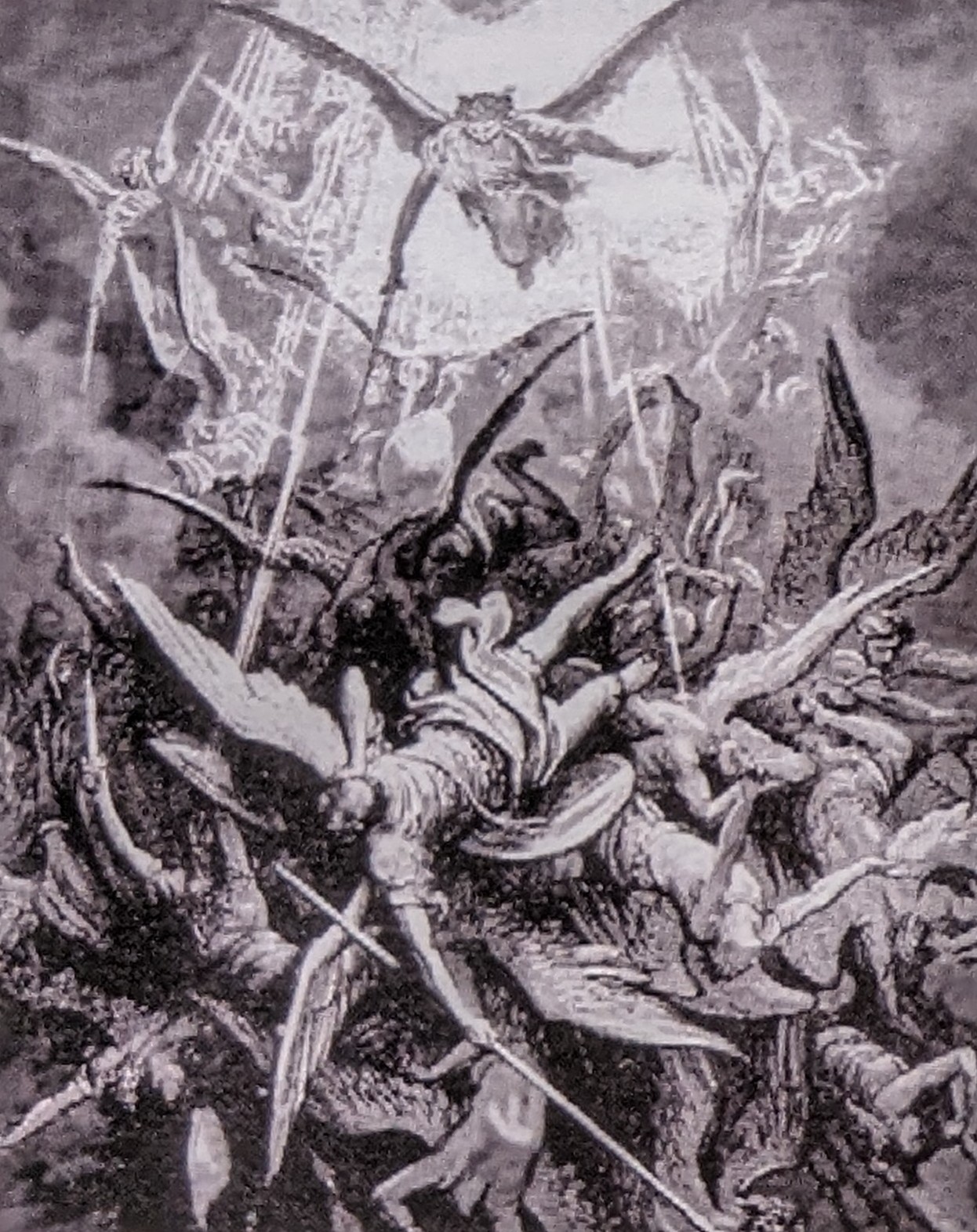
“Angels were expelled from heaven because they would not work in harmony with God. They fell from their high estate because they wanted to be exalted. They had come to exalt themselves, and they forgot that their beauty of person and of character came from the Lord Jesus, This fact the angels would obscure, that Christ was the only begotten Son of God, and they came to consider that they were not to consult Christ.” Letter 42, April 29, 1910, to Elder D. A. Parsons, in This Day with God p. 128
Ellen said it was a fact that Christ is the only begotten Son of God. Long before his human birth in Bethlehem, rebellious angels in heaven conspired to obscure this fact. We can clearly see how this actually transpired twice.
After Peter’s confession of faith in the Son of the living God, “grievous wolves” came in and changed the faith once delivered to the saints into a mystical union of persons within one being. Others obscured the fact of the divinely begotten Son by recognizing only his human birth. By the 4th century the new doctrines of Modalism and Trinitarianism were fully devel-
{Page 10)
oped. But following the Reformation, the truth of God’s Fatherhood and Christ’s Sonship was rediscovered by a study of God’s Word.
“Many of our people do not realize how firmly the foundation of our faith has been laid. My husband, Elder Joseph Bates, Father Pierce, Elder Edson, and others who were keen, noble, and true, were among those who, after the passing of the time in 1844, searched for the truth as for hidden treasure. I met with them, and we studied and prayed earnestly. Often we remained together until late at night, and sometimes through the entire night, praying for light and studying the Word.” Selected Messages Vol. 1 p. 206, 1904
Ellen White stood firm on maintaining the original “pillars of the faith” established in those early years after 1844.
“That which was truth in the beginning is truth now. Although new and important truths appropriate for succeeding generations have been opened to the understanding, the present revealings do not contradict those of the past. Every new truth understood only makes more significant the old.” Review and Herald, March 2, 1886
The “present revealings” refers to the message being developed by Jones and Waggoner in their pre-888 Signs of the Times articles which focused on the power of Christ as Creator to recreate in us his own life of righteousness by placing our faith in him even as he placed his faith in the Father.
Ellen White’s sons followed her advice and did not change their belief in either the literal Sonship or the identity of the Spirit:
“Christ is the only being begotten of the Father.” James Edson White, Past, Present and Future, p. 52. 1909
For over fifty years this fact was treasured by the church.
“The past fifty years have not dimmed one jot or principle of our faith as we received the great and wonderful evidences that were made certain to us in 1844, after the passing of the time.” Letter 326 Dec 4, 1905 to W. C. White in The Upward Look Chp. 338, p. 352
Then, slowly over many decades the fact was obscured once again for the second time. An entire generation emerged from our schools without a knowledge of these historical teachings. Theos Part 3 reviews that part of the Begotten Son story.
John 1
it begins first with a statement of what Christ was, what Christ had become, and at once he presents the Redeemer entering on his official ministry, and says nothing about his birth, which bad been fully and minutely delineated by previous evangelists. And you will be struck, it’ you will take up it comparison of the Gospels written by any one who has paid attention to the subject,— with the perfect harmony that subsists between each of the faur evangelists, writing from different countries, viewing the Saviour at different angles, and each stating the facts which came before his own personal and immediate inspection.
Now, John says nothing about the birth of Christ, but be proceeds at once to state the sum and the substance of the ministry of Jesus, as preceded by John the Baptist, according to the prophecy in the last chapter of the book of Malachi, — that God should send his messenger before him, to prepare the way of the Lord. He at once begins by asserting the Deity of Christ as God and Lord of all and he states, “In him was life,” — that is, original„ unborrowed, underived. In us there is a streamlet from the Fountain of Life ; in him was the Fountain of Life. Our life is some. thing we receive, something that the Giver takes back again to himself, —over width we have no control, and for which we must give God the account and the praise. But in Jesus was life underived, unborrowcd; be was the Life; and that Life, it is said, was the light of men.” Itis remarkable, in this Gospel, that life is constantly associatedwith light: that is at great analogy that we can discover in world ourselves. If there were no light, all vegetation would
The Desire of Ages
It is alleged that the publication of The Desire of Ages by Ellen White in 1898 sparked a dramatic change in the Church’s view on the divinity of Christ, catapulting Him from the mere Son of God to God Himself.
“When the voice of the mighty angel was heard at Christ’s tomb, saying, Thy Father calls Thee, the Saviour came forth from the grave by the life that was in Himself. Now was proved the truth of His words, ‘I lay down My life, that I might take it again…I have power to lay it down, and I have power to take it again.’ Now was fulfilled the prophecy He had spoken to the priests and rulers, `Destroy this temple, and in three days I will raise it up.’ John 10:17, 18; 2:19.” Desire of Ages p. 785 (1898).
This was bolstered by the appearance of a phrase, previously borrowed and published two years earlier in the Review & Herald.
“In Christ is life, original, unborrowed, underived. ‘He that hath the Son hath life.’ 1 Jn 5:12 The divinity of Christ is the believer’s assurance of eternal life.” Ibid, p. 530.
M. L. Andreasen at age 24 in 1902 was so shocked by this statement that he made a trip to California in 1909 to see Ellen White at Elmshaven, convinced that these could not be her own words.
“I was sure Sister White had never written, ‘In Christ is life, original, unborrowed, underived.’ But now I found it in her own handwriting just as it had been published. It was so with other statements. As I checked up, I found that they were Sister White’s own expressions.” “The Spirit of Prophecy,” chapel address at Loma Linda, California, November 30, 1948, Adventist Heritage Center, Andrews University.
But his initial impression was correct because actually the expression was not original with Ellen White. It was borrowed and derived from a John Cumming, D,D., F.R.S.E. of London in his Sabbath Evening Readings on the New Testament – St. John published by the John P. Jewett Co. of Cleve-
{Page 11}
land, OH in 1856. On page 5 (at left) Cumming writes:
“In him was life,’—that is, original, unborrowed, underived. In us there is a streamlet from the Fountain of Life; in him was the Fountain of Life. Our life is something we receive, something that the Giver takes back again to himself, — over which we have no control, and for which we must give God the account and the praise. But in Jesus was life underived, unborrowed;”
A Bibliography of Ellen G. White’s Private and Office Libraries, compiled by Warren H. Jones, Tim Pokier, and Ron Graybill lists Cumming’s Sabbath Evening Readings on the New Testament as one of the Office library books from which she would have had opportunity to read. However, it is of interest that Cumming does not mention a triune Godhead. He only asserts the Deity of Christ as “God and Lord of all.”
This is not an indictment of plagiarism in order to discredit the inspiration of Ellen White. But we should at least recognize the origins of this highly esteemed statement. In 1905, Mrs. White borrowed even more from Cumming.
“In Jesus is our life derived. In Him is life, that is original, unborrowed, underived life. In us there is a streamlet from the fountain of life. In Him is the fountain of life. Our life is something that we receive, something that the Giver takes back again to Himself.” Letter 309 in Medical Ministry p. 7
This time incorporating “streamlet,” “fountain,” and “the Giver.” This enlarged adaptation serves to explain the intended meaning of “original, unborrowed, underived” by contrasting the life which the Son inherits naturally with the life that is bestowed on the adopted sons of men.
Nor was Cumming the first to use these words. William E. Channing employed them even earlier in 1819 during a discourse presented in Baltimore, Maryland entitled “Unitarian Christianity.”
“We earnestly maintain…that our Father in heaven is originally, essentially, and eternally placable, And disposed to forgive; and that his unborrowed, underived, and unchangeable love is the only fountain of what flows to us through his Son.” The Works of William E Channing, 1882, p. 371
Although in this instance it was a “fountain” of love and perfection that was “unborrowed, underived” rather than everlasting life, it is ironic that this expression receives such attention and reverence by those defending a Trinitarian Ellen White when its roots stem from a staunchly anti-Trinitarian source.
Apparently unaware of this, Andreasen later wrote,
“This statement at that time was revolutionary and compelled a complete revision of my former view—and that of the denomination—on the deity of Christ.” M. L. Andreason, Without Fear or Favor, p. 76
But was this really the case? What was the reaction of the church at that time? Was there a burst of comment and astonishment as Andreason suggests? We must go back at least two years before the publication of Desire of Ages to trace the impact of this statement on the Adventist community. The expression was first used by Ellen in a Review article in 1896, and the year following in Signs of the Times:
Him was life, original, unborrowed, underived. This life is not inherent in man. He can possess it only through Christ. He cannot earn it; it is given him as a free gift if he will believe in Christ as His personal Saviour. ‘This is life eternal, that they might know thee the only true God, and Jesus Christ, whom thou bast sent’ (John 17:3). This is the open fountain of life for the world.” Also in 1SM p. 296
In other words, “He [man] can possess it [life, original, unborrowed, underived] only through Christ. He [man] cannot earn it [life, original, unborrowed, underived]; it is given him as a free gift if he [man] will believe in Christ as His personal Saviour.”
Notice “life, original, unborrowed, underived,” the same kind of life that Christ had, is given to man as a free gift and that our life is derived from Jesus. In this sense, Jesus is our Father consistent with Isaiah 9:6, Isa 22:20-23, Heb 2:13, Isa 8:18. He is the head of the Church, as His Father is the head of Christ, 1 Cor 11:3. Christ bestows this same life to us, because He received it from His Father. Jesus said,
“For as the Father hath life in himself; so hath he given to the Son to have life in himself’ John 5:26
So, Christ, the Son of God, inherited “life, original, unborrowed, underived” from His Father. Christ is the only one who has this life by birth; He inherited it by being brought forth from God. The Son received this life as He has everything else, every other power, from His Father.
“All things Christ received from God, but He took to give. So in the heavenly courts, in His ministry for all created beings: through the beloved Son, the Father’s life flows out to all; through the Son it returns, in praise and joyous service, a tide of love, to the great Source of all.” Desire of Ages, p. 21
“Only He who alone hath immortality, dwelling in light and life, could say, ‘I have power to lay down my life, and I have power to take it again.’ All the human beings in our world take their life from Him. He is the spring, the fountain of life.” MS 131, 1897 in 5BC p.1113
{Page 12}
Only the Father, the Spring, the Fountain of life has power over life. But Christ said that He could lay down His life (psuchen, soul) and take it again with his Father’s permission. The issue, however, is not one of ability or power but authority which, Jesus says, comes from His Father.
John 10:17
Therefore does my Father love me, because I lay down my life [psuchen, soul] that I might take [labo Strong’s 42983. receive, get, accept] it again
Notice the Greek words used in this verse. Now compare the words translated “take” in the next verse:
John 10:18
No man takes [airen Strong’s #142] it from me, but I lay it down of myself I have power [ezonsian authority, liberty, privledge, right] to lay it [My soul] down, and I have power [ezonsian authority] to take [labein Strong’s #2983 receive, get] it again. This commandment have I received [elabon Strong’s #2983] of my Father
Jesus said “no man takes it from me, but I lay it down of myself.” Notice that he did not say “no man gives it to me, I take it again all by myself”
The word “take” has two Greek forms in this text. When Jesus says “No man takes it from me” the Greek word is Strong’s #142 airo which is translated take up or take away. It is a unilateral action; a removal by one party without any associated transfer from another party.
Examples of this in John’s gospel are:
John 1:29 the Lamb of God which takes [afro] away the sins of the world
John 2:10 Take [afro] these things
away! Make not my Father’s house a den of thieves
John 5:8 Rise, take up [afro] thy bed and walk
John 11:39 Take away [afro] the stone
John 20:13 They have taken away [afro] my Lord
But when He says He will “take it again” John uses a different Greek word, Strong’s #2983 labo, labein, elabon. Various forms of lambano which is translated as either take or receive because it is a reciprocal action. There is a transfer of something from a giver to a receiver.
For example,
Matt 26:26 Jesus took bread, blessed it, broke it, and gave it to them saying, “Take, eat…” In taking the bread, they received it.
Then also lambano is translated as “receive” 133 times in the New Testament.
John 1:12 As many as received him, to them gave He power to become the sons of God
John 3:27 A man can receive nothing except it be given him from heaven
John 16:24 Ask and you shall receive
John 20:22 Jesus breathed on them and said, “Receive the Holy Spirit”
Jesus gives power
and many receive it. Heaven gives
and man receives.
Jesus gave them his Spirit
and they received it.
Lambano is also translated 106 times as take. Each time a take occurs, a receive happens as well. This same Greek word is used in John 10:18 when Jesus said He “received” this commandment from His Father who “gave” it to Him. He could have said, “I take this command, this responsibility.”
The taking of lambano is always the result of receiving that which is given. It’s a reciprocal action.
If we translate the reciprocal “take-receive” lambano as the unilateral “take” of airo, then this verse contradicts the over two dozen verses which state that God the Father raised Jesus.
If we translate lambano as a reciprocal “take and receive”, then this verse agrees with all these verses and only conflicts with the two other verses that seem to suggest Jesus raised Himself.
In harmony with John 5:26, the Son has authority to receive again the life His Father gave Him.
So what was the reaction among the Seventh-day Adventists following publication of these provocative statements?
“Curiously, for years after the publication of Desire of Ages, the church generally avoided these and other statements.” Merlin Burt, “History of Seventh-day Adventist Views on the Trinity” Journal of the Adventist Theological Society, Spring 2006.
Burt interprets the lack of comment from her contemporary Adventist brethren as either a sign of respect or intimidation. They simply “avoided” any direct confrontation with Ellen White. From our study thus far, it is more reasonable to conclude that they did not see any need to comment or object. They already agreed with her that the literal Son of God naturally and innately has the very same kind of self-existent life that his Father has.
The historical evidence indicates that only after the slowly accepted terminology of Trinitarianism appeared within the pages of our public-cations did advocates begin to search for a cause to explain the end result. Neither was the adoption of the Trinity doctrine the result of corporate Bible study as had been the original
{Page 13}
experience reported by Ellen in the years shortly after 1844. Referring to Ballenger and Kellogg she wrote:
“Those who seek to remove the old landmarks are not holding fast; they are not remembering how they have received and heard. Those who try to bring in theories that would remove the pillars of our faith concerning the sanctuary or concerning the personality of God or of Christ, are working as blind men. They are seeking to bring in uncertainties and to set the people of God adrift without an anchor.” Manuscript Release No. 760 p. 9, 1905.
Ellen White saw that this would happen and recommended that the original truths declared by the pioneers be reprinted.
“When men come in who would move one pin or pillar from the foundation which God has established by His Holy Spirit let the aged men who were pioneers in our work speak plainly, and let those who are dead speak also, by the reprinting of their articles in our periodicals.” MS 62 May 24, 1905 in Manuscript Releases Vol. 1, p. 55.
Ellen had no reservations about promoting the teachings and presentations of those we have just reviewed. Their articles should be read and reread. Let the pioneers speak plainly. Theos is doing just that.
The current rationale for the SDA church’s change in the doctrine of God from a clearly non-trinitarian (and at times anti-trinitarian) position during the initial decades of its history to an official adoption of the Trinity in a Protestant three Being version, is that Ellen White was slowly given additional light over the course of her life that corrected the earlier errors held by the Adventist pioneers. It is observed that since she did not have light on the issue of eating swine’s flesh until her vision of 1863, it is not surprising that she did not fully understand the triune nature of the Godhead until much later.
For the sake of marital harmony, she allowed her outspoken husband to persistently attack the Trinity doctrine and encourage other “men of prominence” to express their “personal minority views” in his publications such as frequent rants against “the old unscriptural Trinitarian creed.” But when he died in 1881, she began to promote “the full divinity of Christ” which is today interpreted as an indication that she was really a closet Trinitarian who was finally coming out into the open.
LeRoy Froom considered the pioneer belief in the begotten Son and the shared Spirit of Christ and his Father as “early defective,” “erroneous,” “variant,” “personal views,” and “faulty positions.”
With the publication of her landmark book, the Desire of Ages, it is alleged that she revealed in no uncertain way her true colors. With the emergence of the Kellogg controversy, she supposedly intensified her pro-Trinitarian statements by focusing on “the third person of the Godhead,” identifying “the heavenly trio” and clarifying that “the Holy Spirit is as much a person as God is a person.”
What are the consequences of accepting this (not just progressive but) flip-flop on the nature of God?
Ellen White’s valid status as the Lord’s messenger is brought into question. Doubt in her credentials as a true prophetess is raised. She is even made to contradict herself.
Her earliest visions identified the Father and the Son as two individual persons; Jesus was a person and his Father was a person (Early Writings p. 77).
“There is a personal God, the Father; There is a personal Christ, the Son.” SDA Bible Commentary Vol. 6 p. 1068, Review and Herald Nov 8, 1898.
She was shown that God is not a trinity, but an individual divine Being. If God later gave her a different view of Himself, then there are serious implications on God’s integrity.
If Ellen White “got it wrong” about the identity of God in the beginning, then what confidence do we have that she finally got it right in the end?
Fifty Years Unchanged
If Ellen White “changed her theology” regarding the Trinity after receiving “new light” then we must wonder about the validity of her repeated insistence that we hold fast the unmovable pillars of the Advent faith that have remained unchanged “for the past 50 years.”
In April, 1903 she said,
“Nothing is to be allowed to come in that will disturb the foundation of the faith upon which we have been building ever since the message came in 1842, 1843, and 1844…Do you think that I could give up the light that God has given me?” General conference Bulletin, April 6, 1903, p. 35
Although she doesn’t actually say, as she does four other times, “the past 50 years,” her reference to 1842 places it 61 years in the past. Her next comment was made in 1904.
“What influence is it that would lead men at this stage of our history to work in an underhanded, powerful way to tear down the foundation of our faith…? Upon this foundation we have been building for the past fifty years.” Testimonies Containing Letters to Physicians and Ministers, p. 58.
The foundation of faith since 1856 was being torn down by men in an underhanded and powerful way. But the prophetess then called for continued vigilance.
“Let none seek to tear away the foundations of our faith—the foundations that were laid at the beginning of our work by prayerful study of the word and by revelation. Upon these foundations we have been building for the last fifty years.” Testimonies for the Church vol. 8, p. 297, 1904.
“The Lord has declared that the history of the past shall be rehearsed as we enter upon the closing work. Every truth that He has given for these last days is to be proclaimed to the world. Every pillar that He has established is to be strengthened. We cannot now step off the foundation that God has established. We cannot now enter into any new organization; for this would mean
{Page 14}
apostasy from the truth.” MS 129, 1905 in Selected Messages vol. 2 p. 390
“Not one pin is to be removed from that which the Lord has established. The enemy will bring in false theories, such as the doctrine that there is no sanctuary. This is one of the points on which there will be a departing from the faith. Where shall we find safety unless it be in the truths that the Lord has been giving for the past fifty years?” Review and Herald, May 5, 1905
“We are to hold fast the first principles of our denominated faith and go forward from strength to increased faith.” Special Testimonies, Series B, no. 7, p. 57 1905
“I have been pleading with the Lord for strength and wisdom to reproduce the writings of the witnesses who were confirmed in the faith in the early history of the message. After the passing of the time in 1844, they received the light and walked in the light, and when the men claiming to have new light would come in with their wonderful messages regarding various points of Scripture, we had, through the moving of the Holy Spirit, testimonies right to the point, which cut off the influence of such messages as Elder A. F. Ballenger has been devoting his time to presenting. This poor man has been working decidedly against the truth that the Holy Spirit has confirmed. When the power of God testifies as to what is truth, that truth is to stand forever as the truth. No after suppositions contrary to the light God has given are to be entertained. Loma Linda Messages, Dec 11, 1905 p. 149, 150.
“We are not to receive the words of those who come with a message that contradicts the special points of our faith. They gather together a mass of scripture, and pile it as proof around their asserted theories. This has been done over and over again during the past fifty years. And while the Scriptures are God’s word, and are to be respected, the application of them, if such application moves one pillar of the foundation that God has sustained these fifty years, is a great mistake.” Ibid 1905
“The past fifty years have not dimmed one jot or principle of our faith as we received the great and wonderful evidences that were made certain to us in 1844, after the passing of the time.” New York Indicator, Feb 7, 1906 p. 4
“We are to carry forward the work of God in the same spirit of simplicity that has marked our efforts for the past fifty years. But while our work is to be done in simplicity and meekness, we are to stand firmly for the principles of the faith.” The Australiasian Union Conference Record, Dec 30, 1907
“Wherein are those who are designated as departing from the faith and giving heed to seducing spirits and doctrines of devils, departing from the faith which they have held sacred for the past fifty years?” MS 21, 1906 in Special Testimonies series B vol 7, p. 61
1905, 1906, 1907 – 50 =
1855, 1856, 1857
Ellen White urged the preservation of the original faith confirmed by the Holy Spirit that would stand forever as the truth. She was in complete agreement with the position of the original pioneers on the subject of the Begotten Son and his Eternal Father.
The Father is Eternal Self-Existent
“Christ is now set down with the Father in his throne…with the eternal, self-existent One.” Great Controversy p. 416
“Jehovah, the eternal, self-existent, uncreated One, Himself the Source and Sustainer of all, is alone entitled to supreme reverence and worship.” Patriarchs and Prophets p. 305
“The Eternal Father, the unchangeable one, gave his only begotten Son, tore from his bosom…” Review & Herald July 9, 1895
“Christ, the Word, the only begotten of God, was one with the eternal Father–one in nature, in character, in purpose” Patriarchs and Prophets p. 34
The Father is Supreme
“Our Father which art in heaven…the Supreme Being…” Thoughts from the Mount of Blessing p. 196 1896
“As Jehovah, the supreme Ruler, God could not personally communicate with sinful men, but He so loved the world that He sent Jesus to our world as a revelation of Himself…He pointed his hearers to the Ruler of the universe, under the new name, ‘Our Father.’…” 9MR No. 708 p. 122 1900
Jesus “taught man to address the Supreme Ruler of the universe by the new name ‘Our Father.'” Review and Herald Sep 11, 1894
“through the beloved Son, the Father’s life flows out to all; through the Son it returns…to the great Source of all.” Desire of Ages p. 21 1898
Christ is the Only Other Being
“Christ, the Word, the only begotten of God, was…the only being that could enter into all the counsels and purposes of God.” Patriarchs and Prophets p. 34
“The Sovereign of the universe was not alone in His work of beneficence. He had an associate—a co-worker who could appreciate His purposes, and could share His joy in giving happiness to created beings.” Ibid
“No man, nor even the highest angel, can estimate the great cost [of God’s condescension in preparing the gospel feast]: it is known only to the Father and the Son.” Bible Echo, Oct 28, 1895
“…the Father and the Son. They were two, yet little short of being identical; two in individuality, yet one in spirit, and heart and character.” Youth’s Instructor, Dec 16, 1897
“Christ is one with the Father, but Christ and God are two distinct personages.” Review and Herald June 1, 1905
“You will hear men endeavoring to make the Son of God a nonentity. He and the Father are one, but they are two personages. Wrong sentiments regarding this are coming in…” Review & Herald July 13, 1905
“The Lord Jesus Christ, the only begotten Son of the Father, is truly God in infinity, but not in personality.” MS 116, Dec 19, 1905 in The Upward Look p. 367
{Page 15}
The idea of a consubstantial hypostatic union of three co-equal hypostases—something between a person and a personality—is certainly a “nonentity.”
“There is a personal God, the Father; there is a personal Christ, the Son.” Review & Herald, Nov 8, 1898
“God is the Father of Christ; Christ is the Son of God. To Christ has been given an exalted position. He has been made equal with the Father. All the counsels of God are opened to His Son.” Testimonies vol. 8 p. 268 1904
“He who denies the personality of God and of His Son Jesus Christ, is denying God and Christ…the personality of the Father and the Son…” Review & Herald Mar 6, 1906
“The gift of Christ reveals the Father’s heart.” Desire of Ages p. 57 1898
“Christ came to this world to reveal the Father…His words revealed the goodness, mercy and love of the Father. His excellence was the perfection of the Father. In his every word and work may be seen the manifestation of the attributes of His Father.” Signs of the Times Jan 20, 1898
“The plan of salvation devised by the Father and the Son will be a grand success.” Signs of the Times Jun 17, 1903
“…the Father and the Son are united in the work of redemption…” Review & Herald Mar 5, 1901
“The Father and the Son in consultation decided that Christ must come to the world…” Signs of the Times May 17, 1905
“…the Son of God had united with his Father in laying the plan of salvation.” Review & Herald Sept 13, 1906
“God and Christ knew from the beginning of the apostasy of Satan…” Review & Herald Apr 5, 1906
“Christ gave this commission to His disciples…it is the privilege of His followers to reveal Christ and the Father to the world.” Review & Herald Aug 16, 1898
“…the mystery of godliness which from eternal ages has been hid in the Father and the Son.” Review & Herald Aug 19, 1909
“Christ and the Father would redeem the fallen race.” Signs of the Times Feb 17, 1909
“…God…has revealed himself in His Son, who is the brightness of the Father’s glory…” Youth’s Instructor, Mar 22, 1900
“God said, ‘I will send my Son.”‘ Testimonies for the Church vol. 6 p. 237
“As a personal being, God has revealed Himself in His Son.” MS 124 1903, in Education p. 131
“…man, as God created him, connected with the Father and the Son, could obey every divine requirement.” 1SM p. 253
“Let us honor God and His Son, through whom He communicates with the world.” Testimonies vol. 8, p. 238
“The Father and the Son alone are to be exalted.” Youth’s Instructor Jul 7, 1898
She believed that Christ was also the Son of God Before Coming to Earth “God gave His only-begotten Son to become one of the human family…” Desire of Ages p. 25 1898
“…the Father took the work of salvation into His own hand. He sent His only-begotten Son into the world…” Signs of the Times, Aug 4, 1898
“In the beginning the Father and Son had rested upon the Sabbath after their work of creation.” Desire of Ages p. 769
“Before the foundations of the earth were laid, the Father and the Son had united in a covenant to redeem man…” Desire of Ages p. 834
“Before the fall of man, the Son of God had united with His Father in laying the plan of salvation.” Review & Herald Sep 13, 1906
“In the Psalms, in the prophecies, in the gospels, and in the epistles, God has by revelation made prominent the vital truths concerning the agreement between the Father and the Son in providing for the salvation of a lost race.” Review & Herald Sep 24, 1908
“…in the councils of the Godhead. The Father purposed in counsel with His Son…” 21MR p. 54 Letter 126 1898
“In counsel together, the Father and Son determined that Satan should not be left unchecked…” 18MR no. 13 p. 345 1911
“The Son of God left the heavenly courts and gave His life as the propitiation for sin.” Signs of the Times Feb 17, 1909
“God had promised to give the Firstborn of heaven to save the sinner.” Desire of Ages p. 51
“In His incarnation He gained in a new sense the title of the Son of God… While the son of a human being, He became the Son of God in a new sense.” Signs of the Times Aug 2, 1905
Two Battle Fronts
Not only is the Sonship of Christ under attack, but his Spirit personality as well. Both battle fronts have been in active conflict since the birth of sin. Lucifer was jealous of the Son’s position and wanted to be the third member of the divine council. But while two is company, three’s a crowd and has been ever since Lucifer fell.
The reason for two war zones is that Jesus, whose Hebrew name is Jashuah (Jehovah is my Saviour), is both
- The Son of God (his divine nature), and
- The Son of Man (his human nature)
An incorrect understanding of these two natures results in an improper understanding of God’s Atonement and His Spirit.
Scripture tells us that the Son of God “proceeded forth” and “came out from” God the Father (John 8:42; 16:28). How we understand when this occurred shapes our understanding of the Holy Spirit and the Cross. In each case we are faced with two choices:
- the Biblical record, or
- the traditions of men
We will now compare the two.
{Page 16}
Christ is the Son of God
1. If we accept the Biblical record that “God brought the Firstborn into the world” (Heb 1:6, He was already the Firstborn when he was brought to Earth), “unto us a Son is given” (Isa 9:6, He was already a Son when he was given), He was “brought forth, before the Earth was” and “before the mountains were formed” (Prov 8:2225), His “goings forth” were “from the days of eternity” (Micah 5:2) “the King and the King’s Son” created the world “in the beginning” (Prov 30:4)
then it is easy to understand that the Son is fully divine, has the same nature as his Father, has the same powers and authority, and name because he inherited it from his Father. He can be called God, because “in him dwells all the fullness of the Godhead” (Col 2:9). And since it is the Son of God who died on the cross, God died for us, offering up Himself as a divine sacrifice “God was in Christ reconciling the world unto Himself’ (2Cor 5:19).
The Son of Man
2. If we accept the Biblical record that “In the fullness of time God sent forth His Son, born of a woman” (Gal 4:4), “took on the Seed of Abraham”(Heb 2:16) and David (Rom 1:3), “took part of the same” partaking “of flesh and blood” (Heb 2:14), “made in the likeness of men” (Phil 2:7), “condemned sin in the flesh” “in the likeness of sinful flesh” (Rom 8:3), was “in all points tempted as we are yet without sin” (Heb 4:15)
then it is easy to understand that the Son is fully human, took upon himself our fallen nature, was victorious over sin in the same kind of flesh as we have, to show that it is possible with God’s indwelling presence for weakened human beings to overcome sin today just as he overcame: “the Father that was in him did the works” (John 14:10).
And since it is the Son of Man who is now mediating for us in heaven, “the man Jesus Christ” (1Tim 2:5), we have the assurance that we will one day join him on his throne “even as he overcame and is set down with his Father on His throne” (Rev 3:21). This is “an exceeding precious promise, by which we may become partakers of the divine nature” (2Pet 1:4) just as his divine nature partook of our human nature.

Jesus is thus the Ladder that Jacob saw in vision, reaching both to the throne of God (his divine nature) and all the way to Earth (his human nature) to reach and save even fallen mankind.
Jesus is the Paraclete, the Advocate, the Helper, the Comforter, who comes to us as he promised, “I will come to you” (John 14:18). He sends his divine nature, his Spirit (John 20:22), to dwell in us (John 14:17; Col 1:27) “to work and to do of his good pleasure” (Phil 2:13) that as we partake of his divine nature, which is “the express image” (character) of the Father (Heb 1:3), we may be “changed into the same image… by the Spirit of the Lord” because “the Lord is that Spirit” (2Cor 3:17, 18). Jesus is indeed with us “always even unto the end of the world” (Matt 28:20). He will never leave us nor forsake us (Heb 13:5). He will abide with us forever (John 14:16).
Christ is the Second Person of the Trinity
1. However, if we accept the traditions of men that the Son is only a title, an appointed designation, by which we are to identify one of three separate but identically equal persons in an eternal Trinity, that the eternally immortal “second person of the Godhead” cannot die or even sin,
then God did not really give his Son, “the fruit of his body (Micah 6:7),” but instead only a domestic partner, a colleague, a fellow deity leaving us mystified how he could give up his Spirit, commending it into the hand of his Father on the cross, and yet still raising himself from the dead, unless he retains a consciousness in death, and doesn’t really die; then the Holy Spirit that God sends is another completely separate third person who, while inexperienceed in the “feeling of our infirmities” nor “tempted like as we are” (Heb 4:15), is tasked with the responsibility of giving us “grace to help in time of need” (Heb 4:16), of sympathizing with our plight as helpless sinners and encouraging us in following Jesus.
The Immaculate Man
2. If we accept the traditions of men that Christ took the human nature of Adam before his fall, in the perfect innocence of untarnished Eden, that he stepped into the place that Adam had before he was tested at the tree of knowledge of good and evil,
then we must accept the doctrine of the immaculate conception, that he must have been born of a perfectly sinless human mother who was unstained by any sin herself; then he is a Saviour for Adam, overcoming where Adam failed, gaining the victory where Adam succumbed, but he is not an effective Example for us; he does not prove that mankind, disadvantaged with 4,000 years of hereditary degeneration and weakened by millennia of genetic decay, can gain the victory over the Devil’s temptations, and can faithfully follow the precepts of Jehovah; then the gospel is only the power of God unto salvation” (Rom 1:16) for Adam alone.
{Page 17}
J.H. Waggoner 1854-1884
Ellet’s father, wrote an article in an 1854 issue of the Review and Herald entitled “Doctrine of a Trinity Subversive of the Atonement.” In it, he addressed what he called “the inconsistencies of Trinitarians” which reproached “the Scripture doctrine of the Atonement.” The issue concerned the death of Jesus: was it a divine or human sacrifice?
“The highest Trinitarians and lowest Unitarians meet and are perfectly united on the death of Christ-the faith of both amounts to Socinianism. Unitarians believe that Christ was a prophet, an inspired teacher. but merely human; that his death was that of a human body only. Trinitarians hold that the term “Christ” comprehends two distinct and separate natures: one that was merely human: the other, the second person in the trinity. who dwelt in the flesh for a brief period. but could not possibly suffer. or die: that the Christ that died was only the human nature in which the divinity had dwelt. Both classes have a human offering, and nothing mote. No matter how exalted the preexistent Son was; no matter how glorious, how powerful, or even eternal; if the manhood only died, the sacrifice was only human. And so far as the vicarious death of Christ is concerned, this is Socinianism.” Review & Herald, July 18, 1854.
Socinianism was founded in 1580 A.D. by Fausto Sozzini the Sienese theologian who aligned himself with the Polish Brethren and believed that the Son of God had no pre-existence before his birth in Bethlehem, but was born a mortal man and then exalted by God to become His divine Son. While Trinitarians believe in the eternal preexistence of the Son of God, they are Socinian along with Unitarians in how they believe Christ died: as a human.
To J.H. Waggoner “the doctrine of a trinity degrades the Atonement” because “they assume that Christ is the second person in the trinity and could not die” and even if he did “they assume that death is not a cessation of life;” which requires them to “involve themselves in numerous difficulties, and load the doctrine of the Atonement with unreasonable contradictions.”
In a later article Waggoner observed that Trinitarians could “see only two extremes.” They want to identify the Son with the Father and make the two a single being, and those who reject their ideas they condemn as denying the divinity of Christ.
“They see only the two extremes, between which the truth lies; and take every expression referring to the preexistence of Christ as evidence of a trinity. The Scriptures abundantly teach the pre-existence of Christ and his divinity; but they are entirely silent in regard to a trinity. The declaration, that the divine Son of God could not die, is as far from the teachings of the Bible as darkness is from light.” Review & Herald, Nov. 10, 1863. [Italics his
Finally, in a book which he wrote in 1884, Waggoner again affirmed “the divinity and pre-existence” of Christ. He quotes John 1:1-3,
“This expresses plainly a pre-existent divinity. The same writer again says: `That which was from the beginning, … the Word of life.’ 1 John 1:1.” “Now it needs no proof – indeed it is self-evident – that the Word as God, was not the God whom he was with. And as there is but ‘one God,’ the term must be used in reference to the Word in a subordinate sense, which is explained by Paul’s calling the same pre-existent person the Son of God.” The Atonement In The Light Of Nature And Revelation, p. 152
This distinction between the Father and Son was consistent with the many other examples we have already seen. There was a general conviction that the Father and Son were two separate and distinct individual persons. An article by Uriah Smith listed both the “titles of supremacy” that belong alone to God the Father and to the Son of God.
Declarations Concerning the Father
- The Eternal God, Deut, 33:27.
- Whose Name alone is Jehovah. Ps, 83:18_
- Most High God, Mark 5:7,
- The Ancient of Days. Dan. 7:13.
- God Alone. Ps. 86:10.
- Lord Alone, Neh. 9:6,
- God of Heaven. Dan. 2:44.
- The Only True God. John 17:8.
- Who Only hath Immortality. 1Tim. 6:16.
- Eternal, Immortal, Invisible. 1Tim. 1:17.
- The Only Wise God. 1Tim. 1:17.
- Lord God Omnipotent. Rev. 19:6.
- The only Potentate. 1Tim. 6:15.
- Besides Me there is no God. Isa. 44:6.
- God the Father. 1 Cor. 8:6.
- The God of our Lord Jesus Christ, the Father of Glory. Eph. 1:17.
- God and Father of all, who is above all. Eph. 4:6.
- The Almighty God. Gen. 17:1.
- I Am that I Am. Ex. 3:14.
- Lord God Almighty. Rev. 4:8.
Declarations Concerning the Son
- The beginning of the creation of God. Rev. 3:14.
- First born of every creature. Col. 1:15.
- The only begotten of the Father. John 1:18; 3:18.
- The Son of the Living God. Matt. 16:16.
- Existed before he came into the world. John 8:58; Micah 5:2; John 17:5, 24.
- Made higher than the angels. Heb. 1:14.
- He made the world and all things. John 1:1-3; Eph. 3:3, 9.
- Sent into the world by God. John 3:34.
- In Him dwells all the fullness of the God-head bodily. Col. 2:9.
- Resurrection and the life. John 11:25,
- All power is given to him Matt. 28:18.
- Appointed heir of all things. Heb. 1:2.
{Page 18}
- Anointed with the oil of gladness above his fellows. Heb. 1:9.
- God has ordained him to be judge of living and dead. Acts 17:31.
- Reveals his purposes through him. Rev. 1:1.
- The head of Christ is God. 1Cor. 11:3.
- Jesus had power to lay down his life and take it again. John 10:18.
- He received this commandment from the Father. John 10:19.
- God raised him from the dead. Acts 2:24, 34; 3:15; 4:10; 10:40; 13:30, 34; 17:31; Rom. 4:24: 8:11; 1 Cor. 8:14; 15:15; 2 Cor. 4:14; Gal. 1:1; Eph. 1:20; Col. 2:12; 1 Thess. 1:10; Heb. 13:20; 1 Pet. 1:21;
- Could do nothing of himself. John 5:19.
- The Father which dwelt in him did the works. John 14:10.
- The Father gave him a commandment what he should say and what he should speak. John 12:49.
- That he came not to do his own will, but the will of him that sent him. John 6:38.
- And that his doctrine was not his, but the Father’s which sent him. John 7:16; 8:28; 12:49; 14:10, 24.
“With such inspired declarations before us, ought we to say that Jesus Christ is the Self-existent, Independent, Omniscient and Only True God; or the Son of God, begotten, upheld, exalted and glorified BY THE FATHER?” Uriah Smith, 1858, The Bible Students Assistant, pages 42-45, in Review & Herald, June 12, 1860, page 27, par. 348) [Emphasis in Original]
Both the Unitarian and Trinitarian concepts blur the identity of the Father and Son. The Bible, rather than minimizing or excusing them, provides numerous examples of other dynamic duos.
Abraham and Isaac
Jacob and Joseph
Saul and Jonathan
David and Solomon
Zecharias and John
And all demonstrate an aspect of God’s love for His Son.
Abraham willing to sacrifice Isaac. Jacob grieved over the loss of his son. Saul decreed the death of his son. David and Solomon reigned together. Solomon was the wisdom of David. Christ the wisdom of God. 1Cor 1:24 Solomon built the temple of God. Christ builds the temple. Zech 6:12,13
“In the Bible every duty is made plain. Every lesson given is comprehensible. Every lesson reveals to us the Father and the Son.” Testimonies vol. 8p. 157
The Metaphorical Literal Son
In contrast to the original belief in a real divine Father and a literal Son, today’s new theology professes only a symbolic, figurative, metaphor.
Alpha and Omega, Bread of Life, Chief Cornerstone, the Door, Lamb, Lion, Light, Morning Star, Horn of salvation, the Branch, the Rock, Vine, Wisdom, Word, etc, etc, etc, are clear examples of symbolic titles applied to Christ in his multifaceted role in the plan of redemption. This is obvious because he is not really bread, or a stone, or a door. Persons cannot be these things and Jesus is a person, the express image of his Father’s person.
Likewise, Advocate, Apostle of our profession, Author of life, Bridegroom, Christ, Messiah, Anointed One, Heir, Creator, Deliverer, Witness, Firstborn, Shepherd, High Priest, King, Lord, Master, Mediator, Husband, Prophet, Rabbi, etc, are certainly real appellations for the Son of God because, as a real person, he can literally be an author, a bride-groom, a king. And because a person can be a son, the Son of God is not just a son symbolically but literally. Father and Son are appropriate terms for persons, and Jesus, the Son of man, is “the person of Christ” 2Cor 2:10.
“The Scriptures clearly indicate the relation between God and Christ, and they bring to view as clearly the personality and individuality of each. [Hebrews 1:1-5 quoted] God is the Father of Christ; Christ is the Son of God.” Testimonies vol. 8 p. 268 1904
“The language of the Bible should be explained according to its obvious meaning, unless a symbol or figure is employed. Christ has given the promise: “If any man will do His will, he shall know of the doctrine.” John 7:17.” GC p. 599
That Jesus should be a real son is not surprising given his human birth. But the Son of God is today dismissed as only a metaphor to simply illustrate the intimate relationship between two members of the Godhead.
[Images]
The table of shewbread was constructed with a dual row of crown molding around its top surface separated by a hand’s breadth. Exodus 25:24,25. This was the only piece of furniture in the sanctuary with two golden crowns and represented the throne of God in the first apartment.
“A throne was set in heaven and one sat on the throne” Rev 4:2. But Jesus is “set down with [his] Father in His throne” Rev 3:21. It is the throne of God and the Lamb (Rev 22:1,3).
“I saw a throne and on it sat the Father and the Son.” E. G. Harmon, Broadside 1, April 6, 1846
“Take silver and gold and make crowns” Zech 6:11. One for the Son and one for the Father. The Son is the BRANCH (verse 12) of the Father. Both sit upon the throne, “His throne” verse 13. “And the counsel of peace shall be between them both” – two.
“The Son of God shared the Father’s throne, and the glory of the eternal, self-existent One encircled both” Patriarchs and Prophets p. 36
{Page 19}
But Lucifer said in his heart,
“I will exalt my throne above the stars of God: I will sit also upon the mount of the congregation, in the sides of the north: I will ascend above the heights of the clouds: I will he like the most High.” Isaiah 14:13
The stars of God are the angels. The table of shewbread, representing the Father and Son, was placed on the north side of the “tent of the congregation.” The most High is the Father. Rebellion began in heaven against the Father and the Son. Lucifer was originally an anointed covering cherub on the “holy mountain of God” Eze 28:14, 16. He became jealous of Michael, the Son of God, the archangel mediator between God and the angelic host, because he could go into private counsel with the Father but Lucifer could not.
“No man, nor even the highest angel, can estimate the great cost; it is known only to the Father and the Son.” The Bible Echo, October 28, 1895
“None but the Son of God could accomplish our redemption; for only He who was in the bosom of the Father could declare Him. Only He who knew the height and depth of the love of God could make it manifest.” Steps to Christ p. 14 1892
Lucifer wanted a throne, too. He wanted to join the inner circle and form a threesome.
“Satan had sympathizers in heaven, and took large numbers of the angels with him. God and Christ and heavenly angels were on one side, and Satan on the other.” Testimonies vol. 3 p. 328
He still has sympathizers today.
At first they were in “The heavenly council before which Lucifer had accused God and His Son” The Desire of Ages p. 834
But “Before the foundations of the earth were laid the Father and the Son had united in a covenant to redeem man if he should be overcome by Satan.” ibid.
The tree of life is “on either side of the river” of life and yet it is “in the midst of the street” Rev 22:2.
So also the Son is “at the right hand of the Majesty on high” Heb 1:3; 8:1; 10:12; Matt 22:44; Mark 16:19; Luke 22:69; Acts 2:33; 5:31; Rom 8:34; Eph 1:20; Col 3:1; 1Pet 3:22. But he also sits with his Father on His throne.
And when sin and sinners are no more, we will be “welcomed to the city of God by the Father and the Son.” Youth’s Instructor, Nov. 21, 1911
” ‘I saw no temple therein: for the Lord God Almighty and the Lamb are the temple of it,’ Revelation 21:22. The people of God are privileged to hold open communion with the Father and the Son.” Great Controversy p. 676
“Let the missionaries of the cross proclaim that there is one God, and one Mediator between God and man, who is Jesus Christ the Son of the Infinite God. This needs to be proclaimed throughout every church in our land.” The Ellen G. White 1888 Materials, p. 886, January 21, 1891
“I am jealous over you with godly jealousy: for 1 have espoused you to one husband, that I may present you as a chaste virgin in Christ. But 1 fear, lest by any means, as the serpent beguiled Eve through his subtilty, so your minds should he corrupted from the simplicity that is in Christ. For if he that comes preaches another Jesus, whom we have not preached, or if ye receive another spirit, which ye have not received, or another gospel, which ye have not accepted, you might well bear with him …
What I do, that I may cut off occasion from them which desire occasion; that wherein they glory, they may be found even as we, for such are false apostles, deceitful workers, transforming themselves into the apostles of Christ. And no marvel, for Satan himself is transformed into an angel of light.” 2Corinthians 11:2-4,12-15
Ellen White wrote that in vision she saw Jesus and his Father move from the holy place into the most holy place of the heavenly sanctuary as the Great Day of Atonement began, as the books were opened, and the hour of His judgment had come.
“I saw the Father rise from the throne and in a flaming chariot go into the holy of holies within the veil, and sit down. Then Jesus rose up from the throne, and the most of those who were bowed down arose with Him. I did not see one ray of light pass from Jesus to the careless multitude after He arose, and they were left in perfect darkness.” Early Writings p. 54
The two-crowned table of shewbread throne was in the holy place. They both moved to the “holy of holies,” the most holy place. As they did, those that had fixed their attention on the heavenly sanctuary and the work of Christ as our high priest, followed them. They were united with their Saviour in his heavenly work and they followed his every movement as they studied the prophecies marking the hour of his judgment.
{Page 20}
“Those who rose up with Jesus would send up their faith to Him in the holiest, and pray, ‘My Father, give us Thy Spirit.’ Then Jesus would breathe upon them the Holy Ghost. In that breath was light, power, and much love, joy, and peace.'”
“I turned to look at the company who were still bowed before the throne; they did not know that Jesus had left it. Satan appeared to be by the throne, trying to carry on the work of God. I saw them look up to the throne, and pray, ‘Father, give us Thy Spirit.’ Satan would then breathe upon them an unholy influence; in it there was light and much power, but no sweet love, joy, and peace.” ibid.
We can have Jesus breathe on us his Spirit or Satan can breathe his spirit. Both spirits have light and power, but only the Spirit of Christ has love, joy, and peace. It is vitally important that we know who God’s Spirit is because
“Before the final visitation of God’s judgments upon the earth, there will be, among the people of the Lord, such a revival of primitive godliness as has not been witnessed since apostolic times. The Spirit and power of God will be poured out upon his children. …The enemy of souls desires to hinder this work; and before the time for such a movement shall come, he will endeavor to prevent it, by introducing a counterfeit. …he will make it appear that God’s special blessing is poured out; there will be manifest what is thought to be great religious interest. Multitudes will exult that God is working marvelously for them, when the work is that of another spirit.” Great Controversy p. 464
Notice that Satan, acting as if he is standing next to the throne, impersonates not only the Father but also the Spirit. He responds to the prayers of the people, who think they are praying to God. They ask for His Spirit but, instead, receive Satan’s “unholy influence.”
Jesus said, This is life eternal, that they might know the Father and His Son. But the Trinity Doctrine creates a third person who is, along with the Father and Son, not really a person but some mysterious, incomprehensible hypostasis. Consequently, Christians have simply quit trying to know God. Jesus told the woman at the well, “You worship, you know not what.”
God the Father is Almighty God, the Sovereign of the universe. “The Son of God was next in authority to the great Lawgiver.” SP vol. 2, p. 9. “Satan’s position in heaven had been next to the Son of God.” 1SM p. 341. “Satan…was next in honor to Christ” Review & Herald Feb 24, 1874. But “He was envious of the position that was held by Christ and the Father.” Review & Herald Oct 22, 1895. Lucifer was third in heaven and now he wants to be third in the Godhead—and be worshipped.
The final battle of Earth will be over worship. The first angel of Revelation 14 begins with the loud cry to “Fear God!” and “worship Him.” The Son of God is worthy of worship because He is our Creator. But a usurper is at work to steal away the allegiance of creatures to himself. He is more subtle than any other creature which God made (Gen 3:1). He is able to transform himself into an angel of light (2Cor 11:14). lie is the god of this world and he has blinded the minds of unbelievers (2Cor 4:4). He offered to give the kingdoms of the world to Christ if He would but “fall down and worship” (Matt 4:9). He wants to “exalt himself above all that is called God or that is worshiped, so that he as God sits in the temple of God, showing himself that he is God” (2Thes 5:4). And he looks forward to the time when “all that dwell upon the earth shall worship him” (Rev 13:8).
His final deception will deceive if possible the very elect (Matt 24:24). He will appear as a lamb (Rev 13:11) and perform many of the same miracles of Jesus (vs. 13,14). He will even resurrect the dead (vs. 15). But ultimately he sends for his own spirits to deceive the world. (Rev 16:13,14).
The world will be divided. While the “Orthodox” tradition affirms the majority creed, a small remnant will keep the testimony of Jesus, the Word of God.
“But God will have a people upon the earth to maintain the Bible, and the Bible only, as the standard of all doctrines and the basis of all reforms. The opinions of learned men, the deductions of science, the creeds or decisions of ecclesiastical councils, as numerous and discordant as are the churches which they represent, the voice of the majority—not one nor all of these should be regarded as evidence for or against any point of religious faith.” Great Controversy, p. 595.
“I saw that Satan was working through agents in a number of ways. He was at work through ministers who have rejected the truth and are given over to strong delusions to believe a lie that they might be damned. While they were preaching or praying, some would fall prostrate and helpless, not by the power of the Holy Ghost, but by the power of Satan breathed upon these agents, and through them to the people… and the people would rejoice in this influence, for they thought it was the Holy Ghost.” Early Writings Page 44.
Whom do you worship?
The Spirit of Satan,
or The Spirit of Christ